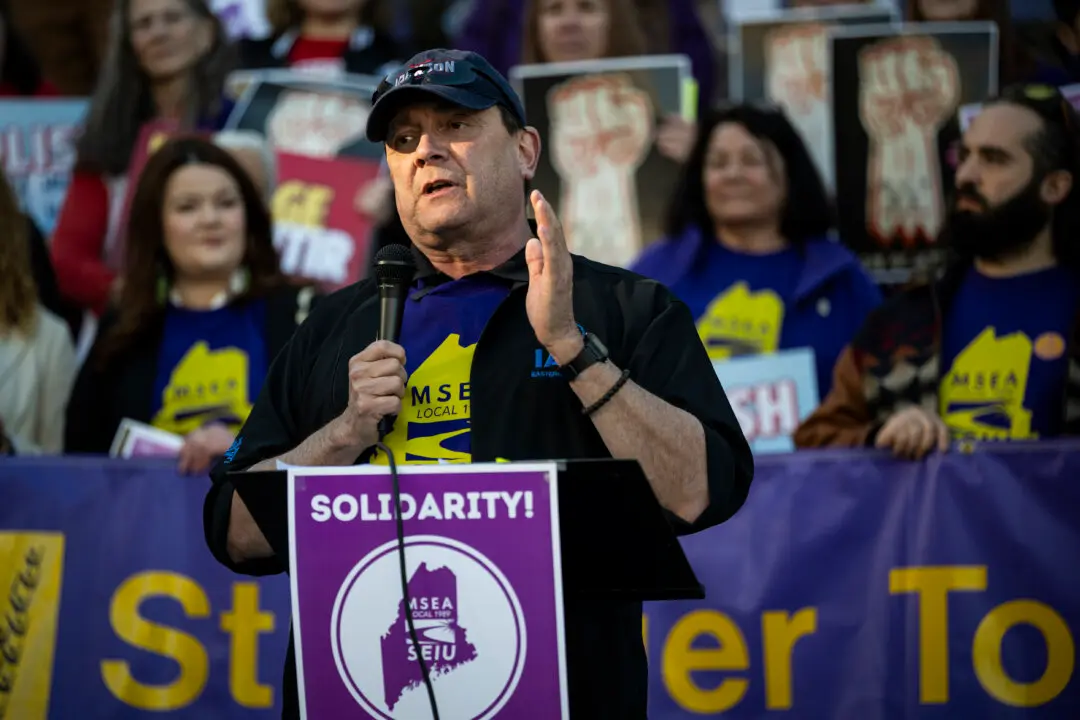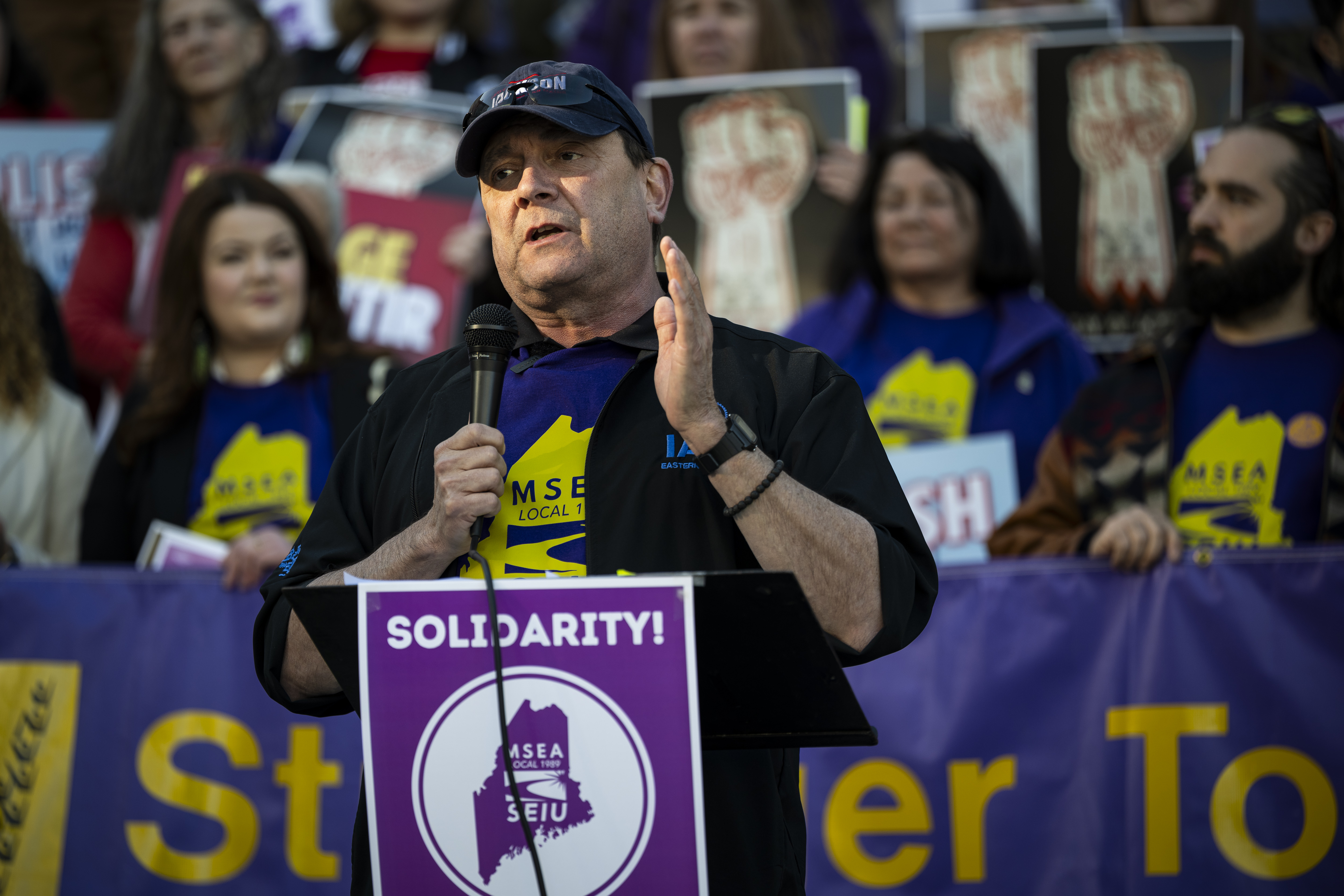

Over the weekend, Maine Democratic Party delegates all-but-formally locked in former state Senate President Troy Jackson as their new pick to take on incumbent Sen. Susan Collins (R-Maine) in the November general election.
Jackson, who was a political unknown outside of his home state before entering the race, now faces the largest stage of his political career.
After the first day of delegate balloting on Saturday, it quickly became clear that support was consolidating around Jackson, a former president of the Maine state Senate, before Maine Secretary of State Shenna Bellows and physician Nirav Shah, who previously served as a top public health official in the state, dropped out. In several county races, Jackson swept entire slates of delegates.
However, Jackson won’t formally become the party nominee until about 600 party delegates vote at the state party convention in Bangor, Maine, on July 25.
The race is one of the most important of the 2026 cycle for Democrats, with Collins standing as the only Senate Republican on the ballot in 2026 representing a state that President Donald Trump lost.
Unlike former nominee Graham Platner—a political novice who dropped out of the race amid allegations of sexual assault and Nazi sympathies, which he has denied—Jackson has a long career in state politics.
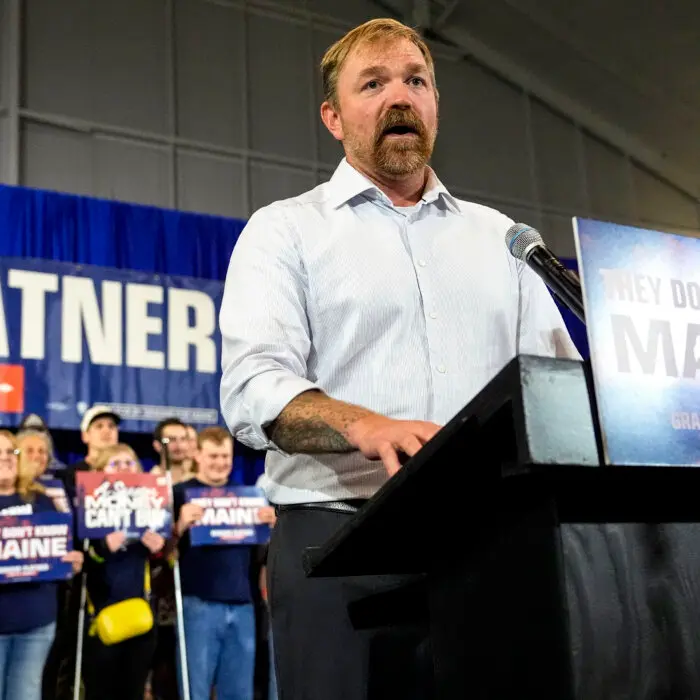

Here’s what to know about Democrats’ presumptive nominee.
Logging
Jackson wasn’t always involved in politics.
Before he entered the state legislature, he worked as a logger in one of Maine’s most prolific industries—a point he’s already made a driving force in his campaign.
“We’re not from the left, we’re not from the right—we’re from the bottom, and we’re rising,” Jackson said in a campaign speech shared on X.
Voters in Maine’s Second Congressional District, which has backed Trump in each presidential election since 2016, are critical to Collins’s reelection bid, and Jackson will likely seek to consolidate support in the district, which is also a logging industry-heavy region, as well as the more Democrat-friendly First Congressional District.
1998 Logging Blockade
Jackson has a history of activism related to the industry where he got his start.
In 1998, amid tensions with Canada’s logging industry, Jackson played a critical role in organizing a blockade of the U.S.–Canadian border. During the week-long blockade, loggers based in Maine physically blocked Canadian trucks from entering the state.
The blockade was driven by Maine loggers’ opposition to the practice of hiring temporary Canadian workers, which had been growing at the time.
Jackson has said that the group of loggers involved in the blockade organized it after more than 100 complaints to the U.S. Department of Labor to address the issue were ignored. At the time, critics expressed concerns that it could harm U.S.–Canadian relations.
Early Career Party Switch
While Jackson is known as a pro-labor, progressive Democrat today, he got his political start running as a Republican.
Following the 1998 blockade, Jackson made a failed run for the Maine House of Representatives in 2000 as a Republican.
At the time, he was opposed to abortion, and later shifted on the issue.
In 2002, Jackson ran again as an Independent, successfully unseating the candidate who had defeated him two years earlier.
Finally, in 2004, Jackson changed his party affiliation to Democrat, and has remained a Democrat since.
Political Insider
Unlike Platner, the former nominee who was a political newcomer, Jackson was elected to Maine’s state Senate in 2008.
After briefly leaving the office between 2014 and 2016, Jackson returned and was elected as the state Senate Democratic leader in 2017; he became the state Senate president in 2019.
Jackson also served as a Democratic delegate for the 2016 presidential election, being one of a handful of Democratic delegates to cast their vote for Sen. Bernie Sanders (I-Vt.) in his progressive bid.
Progressive Leaning
Jackson has aligned himself with the progressive wing of the party.
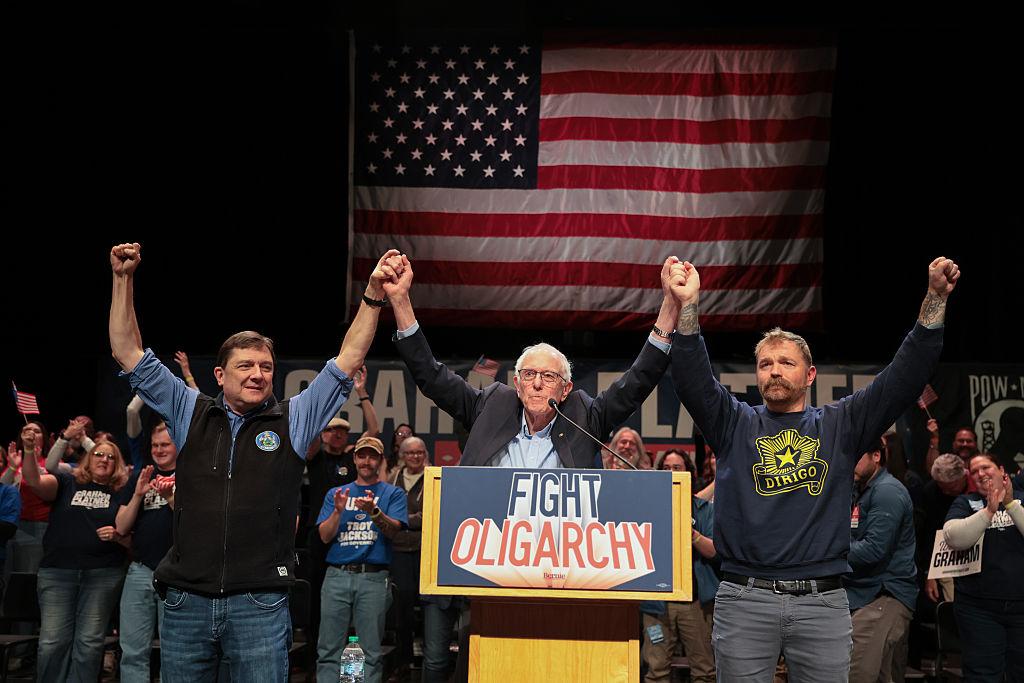
He has maintained close ties with Sanders since 2016, with Jackson winning Sanders’s endorsement during his previous, failed gubernatorial campaign in Maine.
The two men previously campaigned together across Maine as part of Sanders’s “Fighting Oligarchy Tour,” where they spoke in favor of affordable housing, universal healthcare, labor rights, and other progressive causes.
On his campaign page, Jackson’s priorities include passing Medicare for all and lowering prescription drug costs, increasing taxes on billionaires and corporations, and cutting working-class taxes.
He also lists stances on key social issues, saying he would back a federal right to abortion, passage of LGBT “civil rights legislation,” and actions to “dismantle and abolish ICE.”
Re-evaluating the U.S. relationship and financial ties with Israel was a focus in Platner’s campaign. Jackson’s platform reflects a similar position, criticizing Israel’s military operation in Gaza as “genocide” and calling for an end to U.S. monetary aid for the Israeli military.