The Texas House of Representatives on July 24 took up a request by the Department of Justice (DOJ) to redraw congressional district boundaries during a special session.
The DOJ expressed concerns in a letter to Gov. Greg Abbott about how some districts in the Lone Star State are drawn.
This includes concerns that some districts may be drawn on the basis of racial demographics and thus be illegal under the Voting Rights Act.
The push to redraw the congressional map ahead of the 2030 census has prompted pushback by Democrats in the state Legislature, who have threatened filibusters, walkouts, and other acts of opposition to the bill.
President Donald Trump on July 15 expressed hope that Republicans may be able to pick up as many as five seats through a “simple redrawing.”

That could help Trump avoid the midterm losses that have defined many presidents’ second and sixth years in office.
However, the strategy doesn’t come without its risks—if they miscalculate, Republicans could end up losing seats.
DOJ Claims
A July 7 letter to Abbott from the DOJ said that four congressional districts in the Houston and Dallas metro areas—the Ninth, the 18th, the 29th, and the 33rd districts—were racially gerrymandered during the redistricting following the 2020 census.All four of the majority-minority districts are currently represented by Democrats.
Specifically, the DOJ said the listed districts are currently seen as “coalition districts” and therefore unconstitutional under the Voting Rights Act.
A “coalition district” is also known as a minority coalition district.
This means that two or more racial minority groups, none of which make up a majority, form a majority population for the district and vote together to elect the candidate of their choice.
The department cited a 2023 Supreme Court decision in Allen v. Milligan, where Justice Brett Kavanaugh noted that “even if Congress in 1982 could constitutionally authorize race-based redistricting ... the authority to conduct race-based redistricting cannot extend indefinitely into the future.”
The letter went on to say that if the state allowed concerns of race to factor into the redistricting, “the state of Texas must demonstrate a compelling state interest to survive strict scrutiny.”
Among the many legislative items being considered during the session, he cited “constitutional concerns” brought by the DOJ for redrawing the maps.
Republicans have said they plan for the final product passed during the session to comply with the law.
Timing Draws Questions
State congressional redistricting is only required every 10 years, once the U.S. Census results show updated residential data; however, mid-decade redistricting is occasionally undertaken, typically due to a change in political power balance.In this case, the letter from the DOJ asked Texas’s elected officials to consider possible illegal districts that should be restructured, following the 2021 district changes.
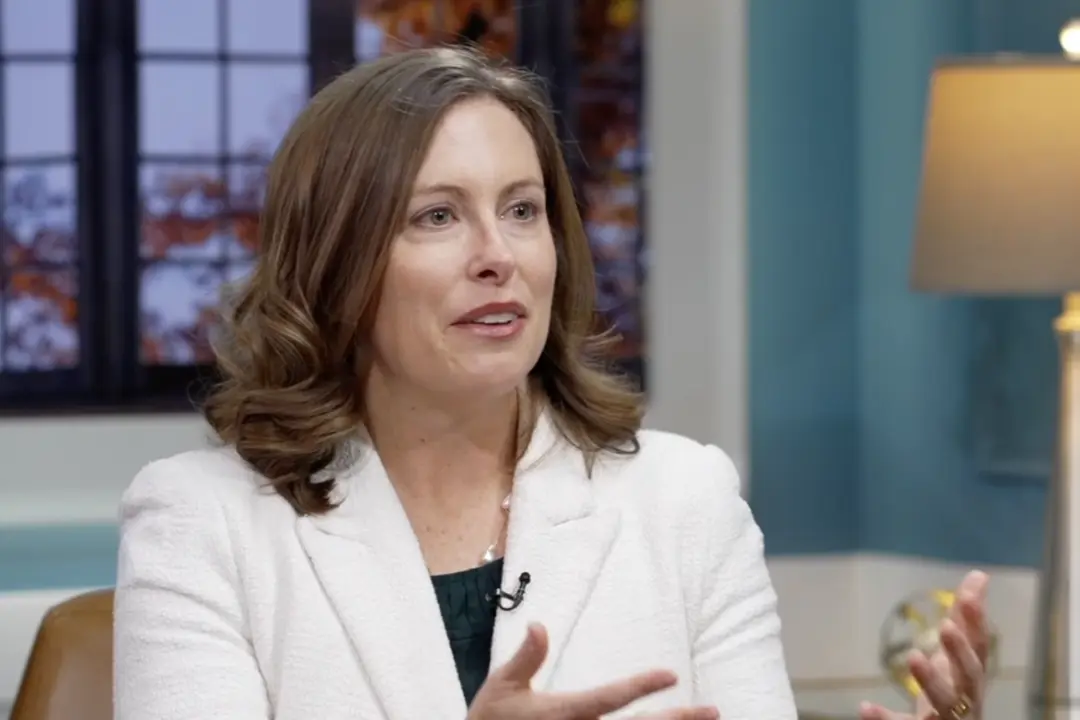
“I can’t think of another situation where the party got what it wanted, did very well, and then decided to redraw its own map,” Li said.
When the Texas GOP redrew the map in 2021, the party sought to maximize Republicans’ control of the state’s 38 House seats.
Currently, 25 of these seats are held by Republicans, and the other 12 by Democrats. One seat is vacant due to the death of the late Democratic Rep. Sylvester Turner.
Democrat Pushback
Democrats have stood staunchly against the change, despite being outnumbered in the Texas Legislature.“Democrats are going to keep all options open and will do whatever is necessary to protect our communities,” state Rep. Gene Wu, a Democrat, said.
Earlier in the week, Democrat leaders made it known that they would make a physical move to block a possible map redrawing if need be.
Democrats could walk out of state house sessions to deny Republicans a quorum to move forward with the redistricting.
They could also attempt to filibuster legislation related to redistricting, which would require Democrats to speak continuously, while standing, about issues pertinent to the bill. Such a tactic could delay Republicans, but likely wouldn’t prevent final passage.
Texas Attorney General Ken Paxton has threatened to arrest any lawmakers who attempt a walkout, on top of the $500 a day fines a lawmaker faces for breaking a quorum.
Democrats say that the attempt to change the maps is a power grab by Republicans, a sentiment that was echoed by U.S. Rep. Joaquin Castro (D-Texas), who spoke during the hearing on July 24.
Other Agenda Items
While congressional redistricting is one of the primary issues the elected representatives will tackle, there are multiple topics on the agenda, including natural disaster warning systems, property taxes, Starr Tests, and other contentious issues.“We delivered on historic legislation in the 89th Regular Legislative Session that will benefit Texans for generations to come,” Abbott said when announcing the agenda.
“There is more work to be done, particularly in the aftermath of the devastating floods in the Texas Hill Country. We must ensure better preparation for such events in the future.”
A spokesperson for Abbott, Andrew Mahaleris, did not comment on redistricting in his statement about the special session.
“While partisan activists focus solely on political issues, Governor Abbott is dedicated to delivering results on issues important to Texans, such as flood relief, property tax cuts, and the elimination of the STAAR test,” he said, referencing standardized testing for Texas students.
Other States’ Plans
Republicans in the state of Ohio are also considering redrawing their House maps, and the White House is looking toward the possibility that several other states might make similar changes.However, not all of the possible changes could be advantageous for Republicans.
Additionally, U.S. House Democratic Leader Hakeem Jeffries (D-N.Y.) says he’s spoken to New York Gov. Kathy Hochul about redistricting their state.
“If there’s other states that are violating the rules that are going to try and give themselves an advantage, all I’ll say is I’m going to look at it closely with Hakeem Jeffries.”