
President Donald Trump on Dec. 18 ordered the suspension of the Diversity Immigrant Visa Program, the same program that granted entry to the United States to the suspect in a recent mass shooting at Brown University.
A citizen of Portugal, Claudio Manuel Neves Valente, on Dec. 13, allegedly shot and killed two students at Brown University in Providence, Rhode Island, and then, on Dec. 15, allegedly shot and killed a professor at the Massachusetts Institute of Technology in his home, according to prosecutors.
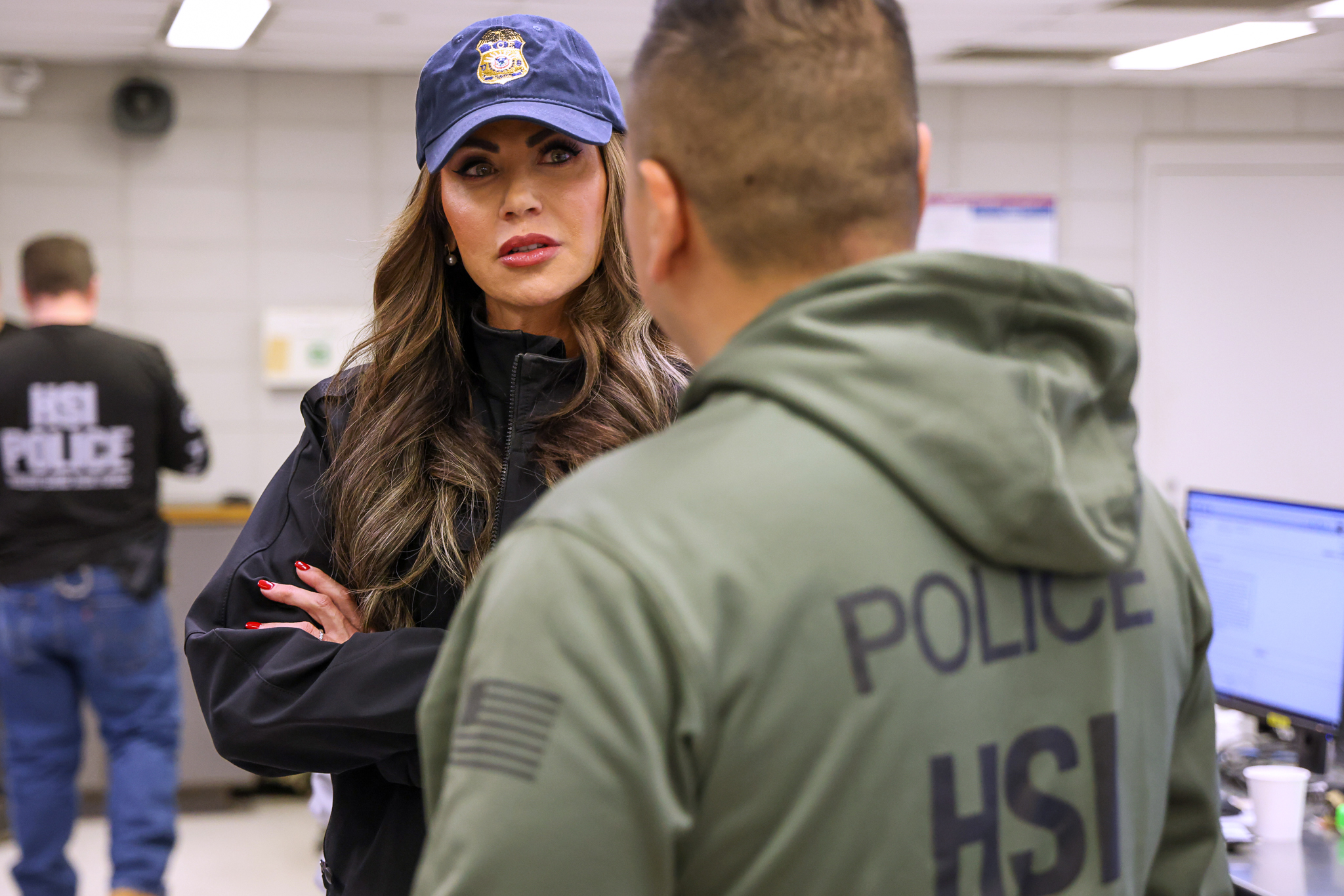
“At President Trump’s direction, I am immediately directing [U.S. Citizenship and Immigration Services (USCIS)] to pause the DV1 program to ensure no more Americans are harmed by this disastrous program.”
Ending the program could significantly reduce legal immigration to the United States, but Noem’s post calls for a pause.
How the Program Works
The program was created by the Immigration Act of 1990, which established several new avenues of legal immigration to the United States. Among them, the diversity visa allowed for nationals of certain countries with low rates of immigration to be granted Lawful Permanent Residency (LPR status, also known as a “Green Card”) to live in the United States.
The program allows for up to 55,000 persons to receive LPR status after entering an annual lottery conducted by the State Department. The winning lots are apportioned across six regions of the world, meaning that each region gets a quota of the 55,000 spots that are filled by candidates from those countries.
A candidate’s geographic apportionment in the lottery is determined by their country of birth, with a few exceptions. Additionally, persons from countries that have sent more than 50,000 immigrants to the United States in the last five years are ineligible. This means that persons born in countries with the highest volume of U.S.-bound immigration—Canada, mainland China, India, Mexico, the Philippines, and several Latin American countries—are ineligible.
Candidates pay a nominal fee of $1 to apply and are required only to have either a high school education or two years of work experience in a job that requires two years of training. Registration usually opens in October, the beginning of the new fiscal year, and closes in November, for admissions scheduled in the following fiscal year.
The lottery, which is conducted in May, then selects around 100,000 people for 55,000 slots, on the assumption that many selectees may either decline to pursue LPR status or be ineligible or inadmissible to the United States on other grounds. If a candidate is deemed ineligible, a winning slot is offered to another candidate with the next-highest lottery number from that region.
A winning candidate who is abroad is processed to receive a DV1 Immigrant Visa, after which they may travel to the United States and permanently reside in the country. Winning candidates who are already in the United States—for instance, on a non-immigrant status as students or temporary workers—may apply to USCIS to adjust their status and become LPRs entirely within the country.
When DV1 immigrants arrive, they are subject to no further terms and conditions, unlike many LPRs who immigrate via employment-based routes (conditional on maintaining their jobs for a period) or family-based routes (conditional on a bona fide relationship or marriage). They may live and work freely in the United States.
Like all LPRs, once a DV1 immigrant has resided in the United States for five years, they become eligible for naturalization as U.S. citizens. Spouses and children under age 21—DV2 and DV3 immigrants, respectively—may also be admitted as LPRs with the principal candidate, and are chargeable to the total cap.
The Suspension
The suspension was first announced by Noem’s social media post.However, DV1 aliens, before they enter the United States, deal primarily with the State Department, which also administers the lottery process.
That review process will require applicants to be interviewed in person—or, if already interviewed for adjustment of status, possibly re-interviewed—for screening on “national security, criminal, and related grounds of inadmissibility and deportation.” It will involve screening applicants through the U.S. Government’s Terrorist Screening Dataset to determine whether they are known or suspected terrorists.
National security screenings are already conducted for applicants, though they are usually routine checks through various databases using basic biographical information. The process outlined by the policy memorandum is additional.
Based on the language of the memorandum, a “suspension” of the program has not formally occurred, in that DV6 applicants could theoretically be granted DV adjustments after the review process concludes. USCIS emphasized the “case-by-case basis” of the review, meaning some decisions may be reached before others.
Still, it is inevitable that the process will delay ongoing applications with USCIS.
“Ultimately, [the Department of Homeland Security] has determined that the burden of processing delays that will fall on some applicants is necessary and appropriate in this instance,” the memorandum read.
Reasons and Reactions
The administration has justified the suspension on national security grounds, following the shootings in Rhode Island and Massachusetts.“Benefits will not be granted to aliens who advocate for, aid, or support designated foreign terrorists or other threats to our national security. Benefits will not be granted to aliens who are a threat to public safety,” wrote USCIS in its memorandum.
Supporters of the suspension said the Diversity Visa program is dangerous and a bad policy. They said any immigrants admitted to the United States on nonfamily grounds should be merit-based.
Republicans in Congress agree.
Supporters of the program say that it ensures a balanced makeup of the U.S. immigrant population. They also say that thwarting the program is unfair to selectees and has poor humanitarian effects.
In 2021, following Trump’s first suspension of immigration to the United States during the COVID-19 pandemic, Rep. Ritchie Torres (D-N.Y.) objected.
One expert pointed out that although the diversity lottery’s requirements may be minimal, many selectees come highly qualified.
Tim Hirschel-Burns, an attorney and global economics expert at Boston University, noted that the program is “widely celebrated abroad.”
The Department of Homeland Security did not immediately respond to a request for comment.