ORANGE COUNTY, N.Y.—Vision Hudson Valley has released its 2025 Orange County Quality of Life Report Card, showing how the county has changed in the eight categories of education, health and health care, economy, environment, arts and entertainment, transportation, public safety, and government.
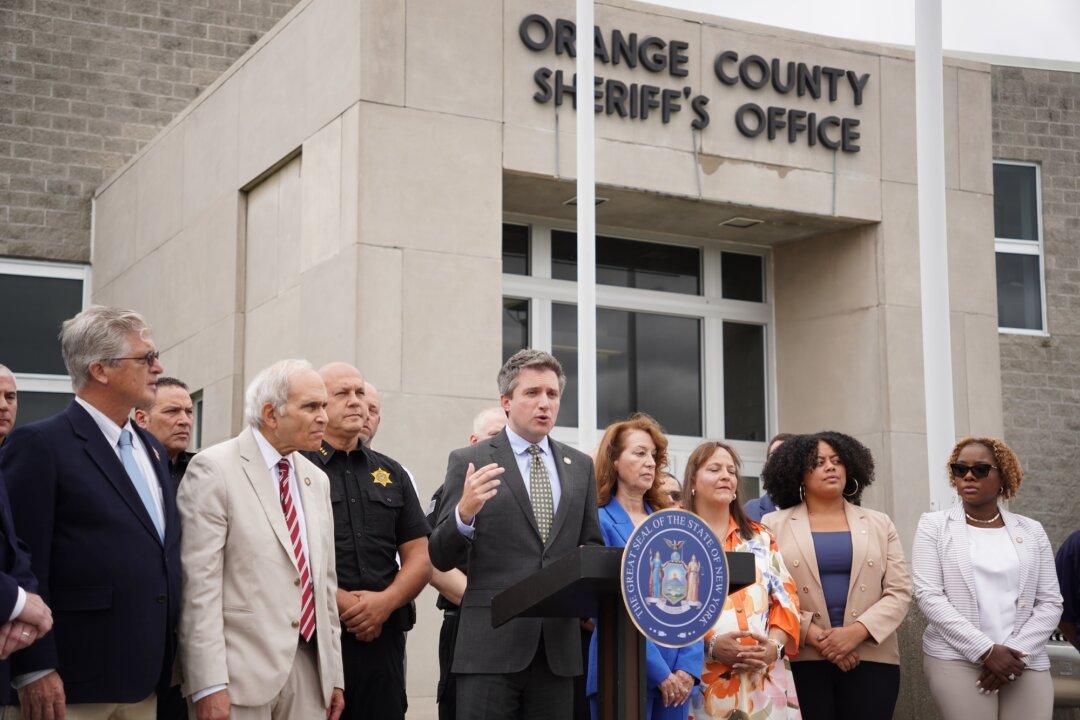
The report was released on Nov. 6 and is the first of its kind since 2015. It received $10,000 in funding from state Sen. James Skoufis on Oct. 2. The report compares Orange County with six other counties in the Hudson Valley: Dutchess, Putnam, Rockland, Sullivan, Ulster, and Westchester.
The Report Card determined that as of 2023, Orange is the second most populous county in the Hudson Valley, with 407,470 residents, behind Westchester’s 990,817.
Orange has grown from 377,647 residents in 2015. Most growth took place between 2019 and 2021, as people moved from urban areas to more rural ones. The age demographic that has grown the most is the 65 and over group, which increased by 9,000 between 2017 and 2023.
The white population of Orange is about the same as it was in 2015: 288,939 now compared with 286,405 then. The white population reached its peak in 2019 at 300,335. The black population was 44,653 in 2015 and has increased to 60,053. It jumped from 50,816 to 61,685 between 2019 and 2021.

The number of people reporting as “some other race” increased from 41,646 in 2015 to 77,509 in 2023. The population jumped from 29,563 to 74,229 between 2019 and 2021. Because Orange County has had a net increase of only 30,000 residents since 2015, at least some of the numbers are attributable to variations in responses based on changes made to Census questions in 2020.
The median family income for Orange County in 2023 was $109,278, while Sullivan had the lowest at $97,869. Westchester had the highest with $157,397.
Education in Orange County has been affected by a decline in student-age residents, economic troubles, and state changes. Enrollment in public schools declined 16.6 percent between 2003 and 2024, and private school enrollments increased 94.1 percent from 2004. The biggest increase in private school enrollments occurred in the Jewish community.
Home schooling has increased 165 percent since 2009.
Orange County has had mixed results on the health and wellbeing front. While the county has had improvements in cancer mortality, uninsurance, and foster-care involvement since 2015, the numbers for child poverty, substance abuse, and obesity rates have not improved.
Tightening medical access is also an issue, as there are more patients per doctor now. There was 1 primary-care physician per 1,314 people in 2016; it is now 1 per 1,498.
Orange County’s strongest industries are health care, social assistance, and retail—making up 34.5 percent of total private sector jobs. That’s a 4.1 percent increase since 2006. Tourism and filmmaking have also started to grow rapidly in the county, while agriculture continues to shrink.
Between 2014 and 2024, the average annual wage increased by 48.1 percent. Median housing prices in 2025 are 50 percent higher than they were in 2005.
Index crimes, a combined measurement of violent and property offenses, have fluctuated. In 2007, Orange had 8,781 total crimes. The number fell to 4,519 in 2015, and has since risen to 5,212 in 2023.
Violent crimes saw a similar fall and slight rise pattern, falling between 2009 and 2013 by 8.5 percent. There were 558 incidents in 2015, and 723 in 2023.
Domestic violence persists in being a major issue in Orange County. There were 1,389 cases in 2009, and 1,897 in 2023.