Vance Says ‘No Immediate Plans’ to Deploy National Guard to Chicago

The remarks come after President Donald Trump on Tuesday said ‘we’re going in’ to the crime-heavy Midwest city.
Vance Says ‘No Immediate Plans’ to Deploy National Guard to Chicago
Vice President J.D. Vance speaks at Mid-City Steel in La Crosse, Wis., on Aug. 28, 2025. Andrew Harnik/Getty Images
|Updated:
0:00

Vice President JD Vance said the administration has “no immediate plans” to deploy the National Guard to Chicago, after some remarks from President Donald Trump indicated that such a deployment could happen.

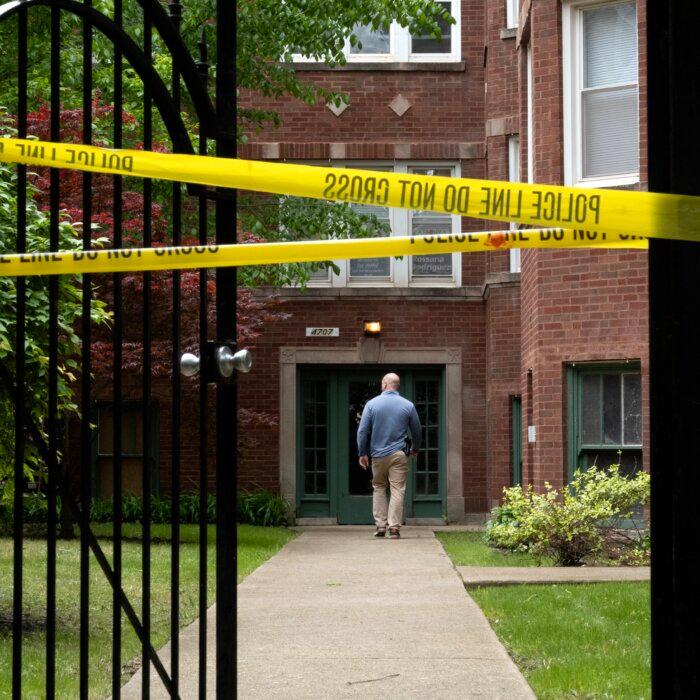
Vance’s remarks come after Trump on Sept. 2 said, “We’re going in,” referring to the crime-heavy Midwest city, where more than 50 people were shot and eight killed during the recent Labor Day weekend.
In a Truth Social post about crime rates in the city, Trump referenced these statistics.

“The last two weekends were similar,” Trump wrote.

“Chicago is the worst and most dangerous city in the World, by far.”

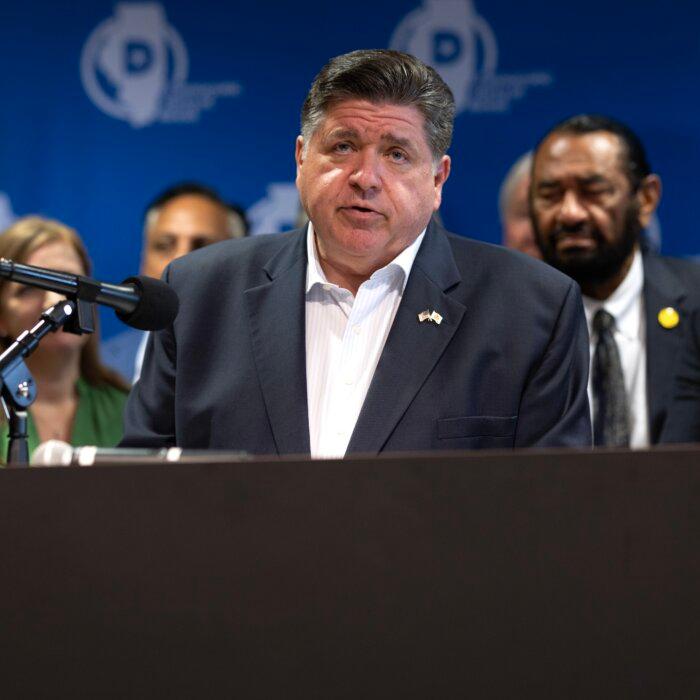
He said that Illinois Gov. JB Pritzker “needs help badly.”
Trump referenced his recent deployment of the National Guard to Washington, D.C., a federal district where he has a path to do so. He suggested the same could happen in Chicago.

“Chicago will be safe again,” he wrote.

Both Trump and Vance have been ambivalent about whether the National Guard will be sent to Chicago. On Sept. 2, Trump noted to reporters, “I didn’t say when we’re going in.”

On Sept. 3, he told reporters that troops could possibly be sent to Chicago “or a place like New Orleans.”

When asked about Trump’s remarks on the issue on Sept. 3, as well as questions about the timing and size of the potential deployment, Vance told reporters that “there are no immediate plans” for deployment of National Guard troops to Chicago.

Last month, Trump federalized the Washington Metropolitan Police Department under a provision of the Home Rule Act.
The administration says the move fits into a larger goal of “beautification” of the capital city, including a crackdown on crime and homelessness. Trump is also requiring that federal buildings in Washington use the classical architectural style.
Prior to his deployment of troops to Washington, Trump sent 2,000 National Guardsmen to Los Angeles to protect federal buildings and personnel amid protests and riots against Immigration and Customs Enforcement activity in the city.
During a Sept. 2 press conference, Trump suggested that Los Angeles will need help again, indicating he may send the National Guard back to the city.

Other Democrat-led cities with high crime rates have also been threatened with National Guard deployment.

On Aug. 24, Trump also said that nearby Baltimore could see troops deployed to the city.

“If [Maryland Gov.] Wes Moore needs help, like [California Gov. Gavin Newsom] did in L.A., I will send in the ’troops,' which is being done in nearby DC, and quickly clean up the Crime,” Trump wrote in a post on Truth Social.

Trump’s legal authority outside the capital is comparably limited, with National Guard troops mostly restricted to defending federal interests and personnel. Federal law largely restricts the use of troops for domestic law enforcement purposes.
Google LogoMark Us Preferred on Google