Utah declared a state of emergency and temporary fireworks ban on June 26 over extreme fire conditions and a growing number of blazes across the state.
Utah was battling 13 large wildfires by Saturday, including the largest wildfire in the nation, the Cottonwood fire, that started on June 22. By Sunday, the number of fires had been reduced to 11.
Utah State forester Jamie Barnes said June 25 that the flames are spreading farther and faster “under conditions that defy historical expectations.”
Utah Gov. Spencer Cox announced a state of emergency Friday as winds picked up, leaving crews with few options for slowing the flames spreading rapidly through tinder-dry forest. Air support from air tankers and helicopters were grounded in the dangerous conditions, with gusts up to 45 miles per hour, forestry officials said.
The Cottonwood fire, burning in a sparsely populated area of southern Utah, ballooned to more than 144 square miles by Sunday. It severely damaged the Eagle Point ski resort in Beaver County and other summer cabins, and forced mandatory evacuations. In the community of Marysvale, the smoke blocked out the sun Friday as ash rained down.
Forestry officials said the fire continues to burn unchecked. Smoke from the fire could be seen for hundreds of miles, from Utah’s Zion and Bryce Canyon National Parks all the way to Colorado.

The critical weather conditions are expected to persist into Sunday.
Federal land managers closed public lands nearby as a precaution.
“There has been a great increase in the fire activity,” Alyssa Mason, a spokesperson assigned to the fire, said Saturday. “We are seeing extreme fire behavior out there with some crown runs and definitely some spotting.”
Fire Restrictions
On June 25, Stage 1 fire restrictions were declared across the state, with all unauthorized fireworks celebrations for July 4 banned due to the high risks to life and property. This was followed by Stage 2 restrictions for some state and federal lands on Friday.
A red flag warning for extreme fire conditions—low humidity and strong winds—was issued for most of the state.
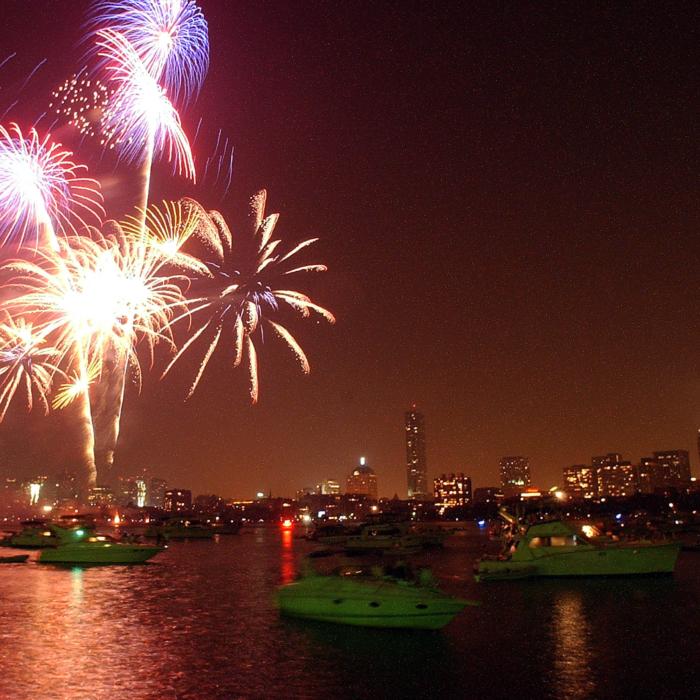
Cox said Friday that the upcoming July 4 celebrations will be “different” amid the critical fire danger.
The governor’s order gave the state forester power to restrict or prohibit fireworks displays in Utah’s cities and towns, instead of leaving those decisions to the communities.
The state forester set a temporary statewide fireworks ban through July 5.
“Municipalities may work with the Forester to designate a discharge area. Each town will decide,” the forester’s office said on X. “We encourage a safe, spark-free July 4th with your family.”
On Friday, the weather service in Salt Lake City, for the first time in the office’s history, also issued a “Particularly Dangerous Situation” warning for five Utah counties, including the area of the Cottonwood Fire.
“Prepare now for rapid fire growth,” it said.
A similar “dangerous situation” warning had been issued for the 2025 Palisades Fire in Los Angeles. A federal judge declared a mistrial Friday in the arson case against Jonathan Rinderknecht, the man accused of sparking that fire. The jury said it couldn’t agree on a verdict.
While the cause of the Cottonwood Fire is unknown, Cox’s order noted that humans have been the cause of 275 out of 384 fires in the state so far this year.
Battling the Flames
Another six large wildfires were burning by the end of Saturday—and a number of new fires had started in the past in 24 hours, with some caused by lightning strikes.
The Iron Fire southwest of Salt Lake City has also been a concern for authorities. Authorities said on June 27 that new fires had started overnight sparking the Maple Peak, Cherry, and Wild Goose Fires that have since merged, prompting further evacuations of nearby towns.
The Wild Goose Fire crossed Highway 50 into the Gap, which prompted the evacuation of four homes, Utah Fire said in an update on X.
“Thanks to firefighters, aircraft, and volunteers, no structures have been lost. The Gap remains under evacuation; Scipio is in ready status,” the fire service said.
Rocky Mountain Power issued a rare public safety power shut-off watch/warning for areas of central, southern and eastern Utah through the weekend on June 24. The company said Saturday it was in the process of restoring supply “in areas where wildfire risk has lessened, and conditions are safe” and called remaining warnings of shut-offs.
“Conditions for Sunday have improved, and no shutoff warnings or watches are planned,” it said. “If weather conditions change unexpectedly, a limited number of additional shutoffs could still occur.
West Under Fire Watch
The entire western United States is on watch for elevated fire risk, with the National Weather Service issuing a rare “Particularly Dangerous Situation” warning amid the dry and windy conditions.
Tim Brown, a research professor and director of the Western Regional Climate Center, said the potential for extreme fire behavior will remain as long as it’s hot, dry and windy. He pointed to parts of the West that have been mired by persistent drought, including Utah, Colorado, Arizona, and New Mexico.
The worst conditions were expected from northern Arizona into central and southern Utah. In New Mexico, a wildfire caused forest officials to close nearby campgrounds and trails in the Jemez Mountains.
Much of Utah already is experiencing severe to extreme drought, while parts of Colorado, Arizona, and New Mexico are experiencing severe drought, according to the U.S. Drought Monitor.
Cox said Saturday on X that he had evacuated from his home 14 years ago to the day due to a wildfire.
“I relived those moments today as we experienced some of the worst fire conditions in our state’s history,” he said. “More evacuations. More property destroyed. It’s as bleak as it’s ever been … and yet there were several miraculous stops and saves.”
“Tonight we celebrate the life of our fire crews, knowing they will be ready for another awful battle tomorrow. Please pray for them and for the rains we desperately need,” the governor added.
The Associated Press contributed to this report.