CHARLESTON, S.C.—To commission a ship is to invoke a legacy. In the case of the destroyer USS Truxtun, there is also a legacy of heroic altruism. Sailors from the USS Truxtun and the USS Pollux, and villagers from St. Lawrence and Lawn, two towns in Newfoundland and Labrador, the easternmost province of Canada, had a fateful meeting 67 years ago.
Mayor Wade Rowsell of St. Lawrence traveled almost 2,000 miles to the ceremony. “This is a living history story, on the legacy of the Truxtun and the history of the province,” he said.
President Franklin Delano Roosevelt wrote a letter to the people of St. Lawrence commending “the magnificent and courageous work rendered, and the sacrifices you made in rescuing and caring for the United States ships grounded on your shores.” The United States gave a hospital to St. Lawrence. The town built a museum and a path with plaques describing the events.
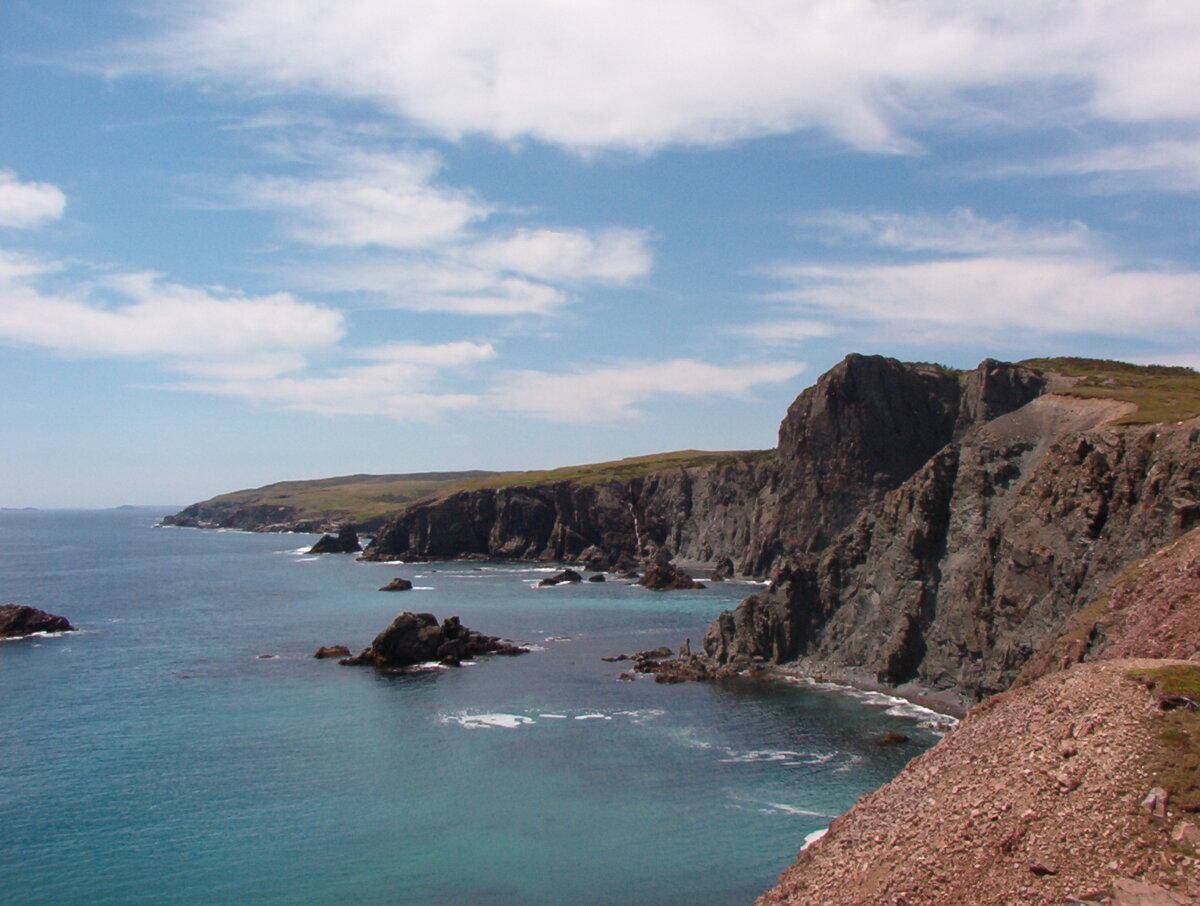
The people of St. Lawrence and Lawn saved the lives of 186 American sailors. The two ships were escorting a supply ship to protect it from submarines. Gale force winds blew, and the ships went off course. They ran aground about two hundred yards from shore and began to leak oil. To fall into the water was to risk death from hypothermia within minutes. It was the middle of the night. The beach ended in ice-covered cliffs.
One sailor made it to land. He cut handholds in the ice with a knife and scaled the cliffs. He roused the villagers. They got ropes and hauled the survivors up the cliffs. They took them into their homes.
Gus Etchegary was a teenager. “We got as many ropes as we could. We walked to the place, to see what was there from the top. I was given the job by my father of building a fire. The weather was really bad, raging seas.”
A small plane tried to drop a line to the ship, but it could not. A small boat tried to reach the ship but capsized. If the sailors clinging to the wreckage did jump into the sea, “there was a big undertow. So when they jumped and tried to swim, it was not a good result,” said Mr. Etchegary.
Tenacious in Trying to Stay Alive
“I can tell you many of those young sailors were pretty tenacious in trying to stay alive,” added Mr. Etchegary.
One of them seemed about 17 years old. “Billy Butterworth. I brought him close to the fire. He said ‘I’m from Boston.’ In about twenty minutes he passed away.” Mr. Etchegary wanted to contact the young man’s family, but he never found them.
South Carolinian Dean Thomas’ father survived the wreck of the Pollux. He and his father made a pilgrimage to St. Lawrence. “In a way it brought our whole family close together.”
His father spoke very little near the end of his life. His memory was poor. In Newfoundland, the Canadian Broadcasting Company asked for an interview. Mr. Thomas thought it would go badly, but “when they put the camera on him, I learned things I had never heard. They asked him, do you think about it? He said, ‘Every night.’ The depth with which he spoke was amazing. The clarity.”
“My father has 21 surviving great-grandchildren. My sisters and brothers, there are five of us. Without the people of St. John and St. Lawrence we wouldn’t exist,” said David Shelley. His father was William F. Shelley, Chief Petty Officer of the Truxtun. His grandmother corresponded with the rescue family until her death in the 1960s.
His wife teaches her students history with the story of Lanier Phillips.
In the 1940s, the Navy practiced segregation. Black soldiers were separated from white soldiers, and the only assignments they were given were menial—preparing food, shining shoes, cleaning. They were not allowed to sit down to eat. They had to eat standing in the mess pantry.
Mr. Philips enlisted to escape the scourge of the Ku Klux Klan in his native Georgia. The group maintained a rule of violence against black people. He found the Navy little better than Klan-infested Georgia.
He is the only black sailor who survived the shipwreck. Others stayed with the wreckage because they thought they would be lynched if they went ashore.
But “he had a lot to live for,” said Tanya Drake. “Lanier changed his mind and took a chance. One of the miners said, you have a will to live.”
Her grandfather was one of the rescuers. She grew up to become a naval architect and helped build the new Truxtun at the shipyard in Passacouglia, Mississippi. She came to the ceremony to honor the history of her family and the ship.
Mr. Phillips lost consciousness on the beach that night. When he awoke, he was alarmed to see that he was naked and surrounded by white women.Violet Pike was trying to revive him by washing the oil from his skin with warm water. This would have been a pretext for murder in Georgia.
But the villagers had no intention of harming him. They loaned him clothes and a warm bed. He said that their kindness helped him imagine another kind of society.
Mr. Phillips went on to become a pioneer for desegregating the Navy. He applied to sonar technician school and learned the skill despite severe opposition. Later, as part of the American civil rights movement, he walked on the Edmund Pettus Bridge in Selma, Alabama, in March 1965.
He received an Honorary Doctorate of Law degree from Newfoundland and Labrador’s Memorial University last June for his resistance to, and capacity to rise above, repression.
“He was a giant, really, in the fight for equal rights. He always acknowledges somebody else’s goodness,” said Mayor Rowsell. “He has a great heart, just inspirational.”
At the commanding officer’s reception before the commissioning, a speaker told the story of Lanier Phillips and asked him to stand and be honored. He rose and stayed standing as his son took pictures and the officers and dignitaries applauded him.
“It’s special for us to see him enjoying the moment,” said his daughter, Dr. Vonzia Phillips.
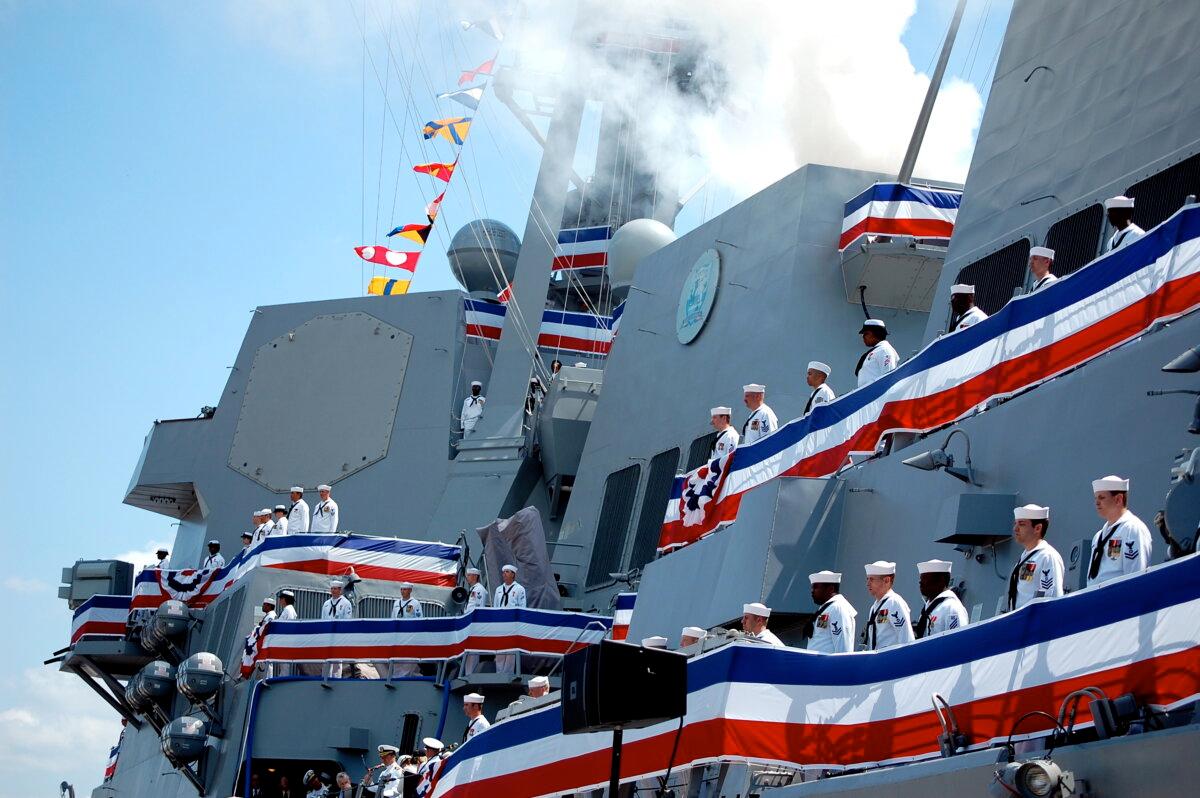
The USS Truxtun is named for American Commodore Thomas Truxtun (1755-1822), who was undefeated against the British and the French. Its motto is “Pursue Attack Vanquish,” after a medal Commodore Truxtun received for his capture of the French warship La Vengeance in 1800. It is one of 53 destroyers of its class, the same kind of ship as the Bainbridge, recently famous for rescuing Richard Phillips from pirates.
Timothy Weber of Decatur, Georgia, took command on April 25. “I’ll tell you what it really is. The hardworking men and women of this generation make it a privilege. It’s all about working with the young men and women,” he said.