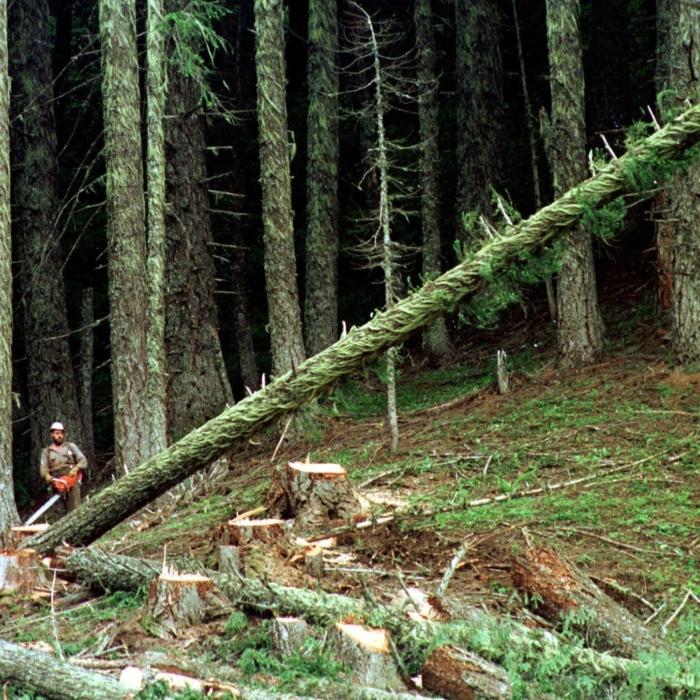
Secretary of Agriculture Brooke Rollins said on Monday that the Department of Agriculture (USDA) is rescinding a 2001 rule designed to protect national forest lands from logging and road construction.
The rule has restricted road development on nearly 60 percent of forest lands in Utah and Montana, while in Alaska’s Tongass National Forest—the largest national forest—about 92 percent of the land is impacted, the USDA said.
Rescinding the rule would open nearly 59 million acres of federal forest lands to timber production and wildfire prevention efforts, according to the department. It stated that 28 million acres of those lands are at high risk for wildfires.
“Once again, President Trump is removing absurd obstacles to common sense management of our natural resources by rescinding the overly restrictive roadless rule,” Rollins said in the statement. “This move opens a new era of consistency and sustainability for our nation’s forests.”

“This is another example of President Trump fulfilling his campaign promise to open up resources for responsible development,” Dunleavy said in a social media post. “Thank you [President Trump] and Secretary Rollins for continuing to roll back unnecessary regulations that stifle economic activity and send opportunity overseas.”
The move has drawn criticism from environmental groups. Drew Caputo, vice president of litigation for lands, wildlife, and oceans at Earthjustice, said the roadless area rule has protected national forest lands from “clearcutting for more than a generation.”
“We will stand for America’s national forests and the wildlife that depend on them,” he stated. “If the Trump administration actually revokes the roadless rule, we’ll see them in court.”
The Epoch Times sought comment from the USDA but did not receive a response by publication time.
Rollins stated that the national forests are in crisis because of “uncharacteristically severe wildfires, insect and disease outbreaks, invasive species, and other stressors.“
Those threats—combined with overgrown forests, the growing number of homes in the wildland-urban interface, and decades of rigorous fire suppression—have contributed to a “full-blown wildfire” and “forest health crisis,” according to the memo.