The U.S. Department of Agriculture (USDA) and the Department of the Interior announced on March 31 a new agreement to support American ranchers and help drive down beef prices for consumers.
Agriculture Secretary Brooke L. Rollins and Interior Secretary Doug Burgum signed a memorandum of understanding between the USDA Forest Service and the Bureau of Land Management. The pact formalizes closer coordination on grazing management across federal lands, aiming to cut bureaucratic delays and deliver faster help to producers who rely on public rangelands for livestock.
The move builds directly on the USDA’s Grazing Action Plan released last fall and carries out President Donald Trump’s February executive order on ensuring affordable beef. It targets more efficient permitting, infrastructure upgrades, and emergency responses, while promoting tools such as virtual fencing and targeted grazing to reduce wildfire risks.
“Today’s signing sends a clear message: the Trump Administration is putting America’s farmers and ranchers first,” Rollins said in a statement. “Building on our action plan for American ranchers announced in the fall, the Forest Service and Bureau of Land Management are already delivering. This is another example of President Trump eliminating costly bureaucracy in order to lower consumer prices.”
“The Grazing Action Plan is built on a collaborative partnership dedicated to strengthening ranching operations while safeguarding our public lands,” Burgum said. “By working closely with American ranchers, we are enhancing communication, investing in innovation, and modernizing our approach to land management practices to deliver real results for the people who feed and sustain this country.”
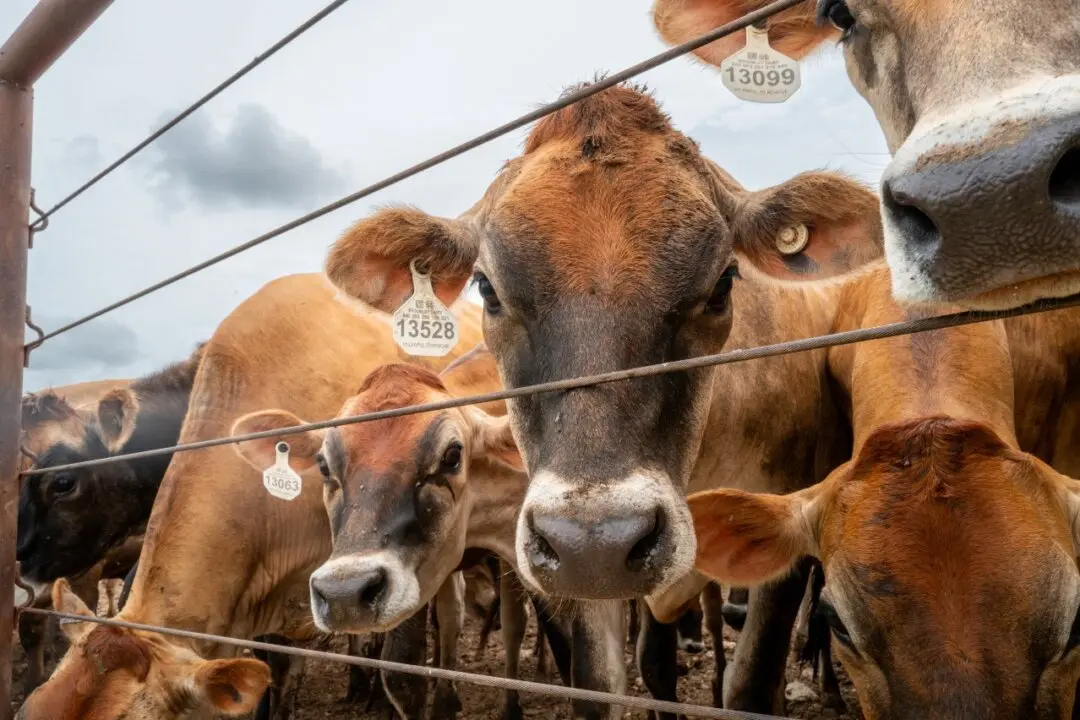
Officials said the changes will increase domestic beef supply by reopening vacant allotments and maintaining grazing capacity with no net loss of animal unit months where legally possible.

Record-high beef prices have squeezed American families for months, driven by shrinking cattle herds, drought, and supply-chain pressures. Ranchers continue to go out of business even as consumer demand for meat stays strong. At the same time, the “Big 4” meatpackers control about 80 percent of the beef supply, which has caused concern over industry consolidation and potential price manipulation and prompted a Justice Department investigation in November 2025.
For generations, ranchers have grazed livestock on public lands, playing a central role in feeding the nation, sustaining rural economies, and stewarding Western landscapes.
More than 20,000 ranchers and farmers in 28 states hold permits on 240 million acres managed by the Forest Service and Bureau of Land Management, according to the USDA. The agencies oversee roughly 23,000 permits covering 29,000 allotments. Livestock grazing on these lands supports about 14,200 jobs and $645 million in annual gross domestic product through national forests and grasslands alone, and BLM-managed grazing adds $2.7 billion in economic output and 35,000 jobs across Western rangelands.
Yet producers have long faced delays in permitting, inconsistent communication, and regulatory hurdles that limit their ability to operate efficiently. The new agreement addresses those long-standing frictions by directing agencies to treat permittees as essential partners, launch ranch-immersion programs for federal staff, and improve data transparency so ranchers can plan with greater certainty.
The departments emphasized that stronger domestic production will reduce reliance on imports and keep food affordable for American families.