US Wins Exemption From Global Minimum Corporate Tax

The 15 percent tax for multinational businesses proposed by the European Union won’t apply to U.S. companies.
US Wins Exemption From Global Minimum Corporate Tax
Treasury Secretary Scott Bessent in Kuala Lumpur, Malaysia, on Oct. 26, 2025. Hasnoor Hussain/Reuters
|Updated:
0:00
U.S. corporations won’t face a global minimum tax proposed by the European Union, according to an announcement Monday in Paris by an international economic policy group.

The United States under President Donald Trump demanded the EU carve out American companies from the international tax regulations and allow the U.S. tax system to work alongside the global minimum tax framework without interference.

Treasury Secretary Scott Bessent lauded Monday’s decision by the Organization for Economic Cooperation and Development (OECD).

“This agreement represents a historic victory in preserving U.S. sovereignty and protecting American workers and businesses from extraterritorial overreach,” he said.

The agreement also protects the value of the U.S. research and development credit and other congressionally approved incentives for investment and job creation in the United States, Bessent said.

The decision represents a reversal of U.S. policy under the Biden administration, which spearheaded the global movement to pass the 15 percent minimum tax.

Former President Joe Biden’s administration strongly endorsed the EU’s tax proposal and actively led negotiations with countries through the OECD to establish it.

The tax was proposed in 2021 by 20 of the world’s biggest economies that sought to impose it on multinational companies with annual revenue exceeding $880 million.

Multinationals oppose the tax, claiming the costs to comply would far outweigh the benefit of the levy.

The agreement released by the OECD details the terms of a “side-by-side arrangement” with the United States that was agreed to by 147 member countries and sets a foundation for the international tax system, according to the organization.
OECD Secretary-General Mathias Cormann called the results a “landmark decision in international tax cooperation.”
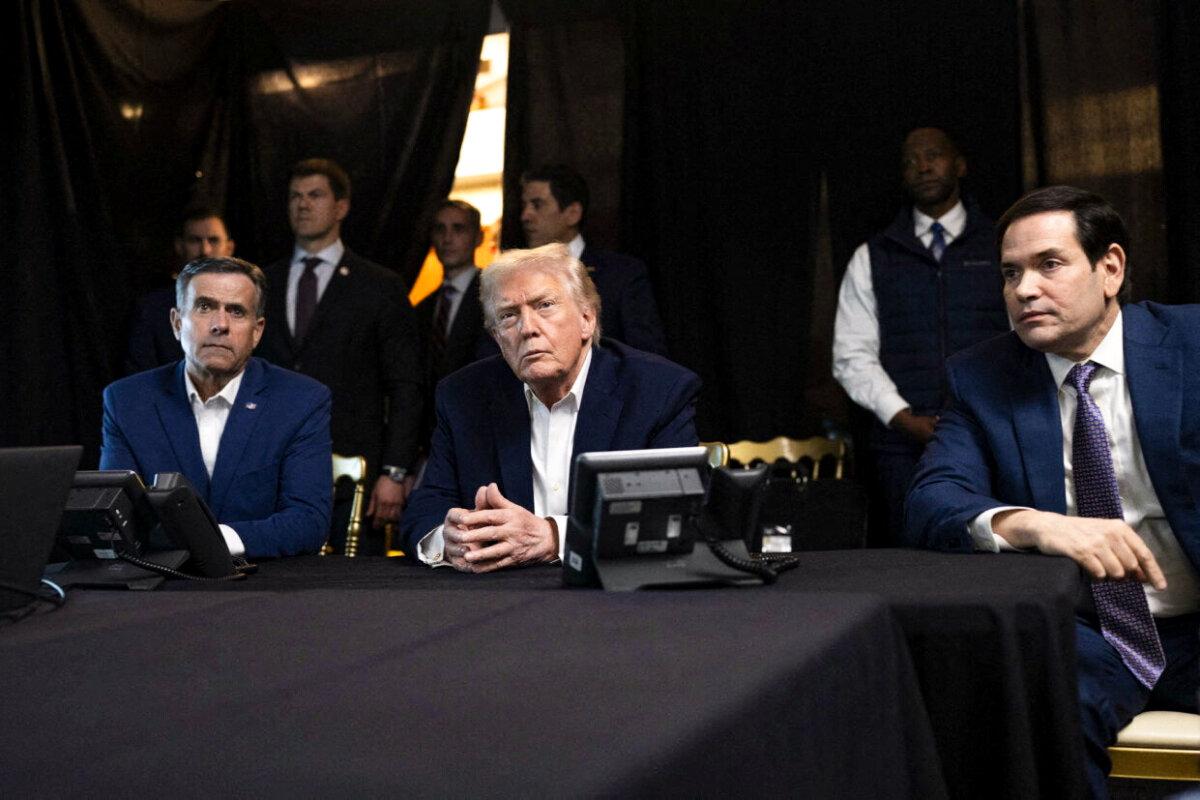
President Trump with CIA Director John Ratcliffe (L) and Secretary of State Marco Rubio as they watch the U.S. military operation in Venezuela on Jan. 3, 2026. (@realDonaldTrump/Handout via Reuters)
President Trump with CIA Director John Ratcliffe (L) and Secretary of State Marco Rubio as they watch the U.S. military operation in Venezuela on Jan. 3, 2026. @realDonaldTrump/Handout via Reuters

“The Members of the Inclusive Framework are to be commended for their work in finalizing this package, which enhances tax certainty, reduces complexity, and protects tax bases,” Cormann said in a statement.

The package includes five components, including simplifying compliance burdens on companies and the treatment of tax incentives.

Trump issued an executive order on his first day in office last year nullifying the Biden-era deal in the United States, along with any commitments made by the prior administration on behalf of the nation in the global tax negotiations.

Congressman Vern Buchanan (R-Fla.), vice chairman of the U.S. House Ways and Means Committee, said the resulting deal was strong and protected American competitiveness.

“President Trump and Secretary Bessent have secured a strong deal that protects U.S. companies from unfair foreign taxes and defends American competitiveness,” Buchanan said in a statement. “The Biden administration’s agreement to a global minimum corporate tax rate was a disastrous mistake that surrendered U.S. tax sovereignty to Europe. It would have crippled American businesses’ ability to compete and create new jobs.”

The Washington-based National Foreign Trade Council’s vice president for tax policy Anne Gordon applauded Monday’s agreement for addressing U.S. business concerns.

“Today’s announcement that the OECD Inclusive Framework created a safe harbor for robust national tax systems like that of the United States is a crucial step forward in the long path toward securing a more certain international tax framework,” Gordon said in a statement.

“Thank you to the administration for its commitment to these negotiations and for ensuring that American companies can compete on a level playing field and are not burdened by superfluous or duplicative requirements, and to Congress for their dedication to the success of American companies globally,” she added.

The FACT Coalition, a group advocating corporate transparency, called the deal “a regrettable setback for the global fight against corporate tax avoidance.”

“The Trump administration has chosen to prioritize maintaining rock-bottom taxes for big corporations to the detriment of ordinary Americans and our allies across the globe,” FACT policy director Zorka Milin said in a statement.


Google LogoMark Us Preferred on Google
Jill McLaughlin
Jill McLaughlin
Author
Jill McLaughlin is an award-winning journalist covering politics, environment, and statewide issues. She has been a reporter and editor for newspapers in Oregon, Nevada, and New Mexico. Jill was born in Yosemite National Park and enjoys the majestic outdoors, traveling, golfing, and hiking.