The number of Americans newly filing applications for unemployment benefits rose slightly higher than expected, signaling further cooling in the U.S. labor market.
This is up from the previous week’s 229,000 and came in above the consensus estimate of 230,000.
The four-week average, which strips out week-to-week volatility in the claims data, edged up to 231,000 from 228,500.
A program for initial claims filed by federal workers declined by 73, to 515. Economists have been monitoring this program to determine if actions by the current administration are leading to a significant reduction in federal workforce numbers.
Continuing jobless claims—a measure of the number of individuals currently receiving unemployment benefits—dipped for the second straight week to a lower-than-expected 1.94 million from a downwardly adjusted 1.944 million.
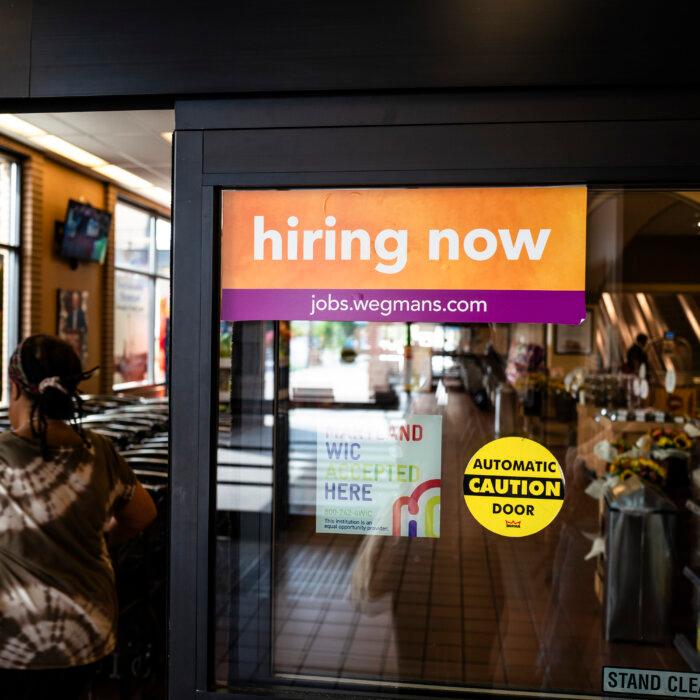
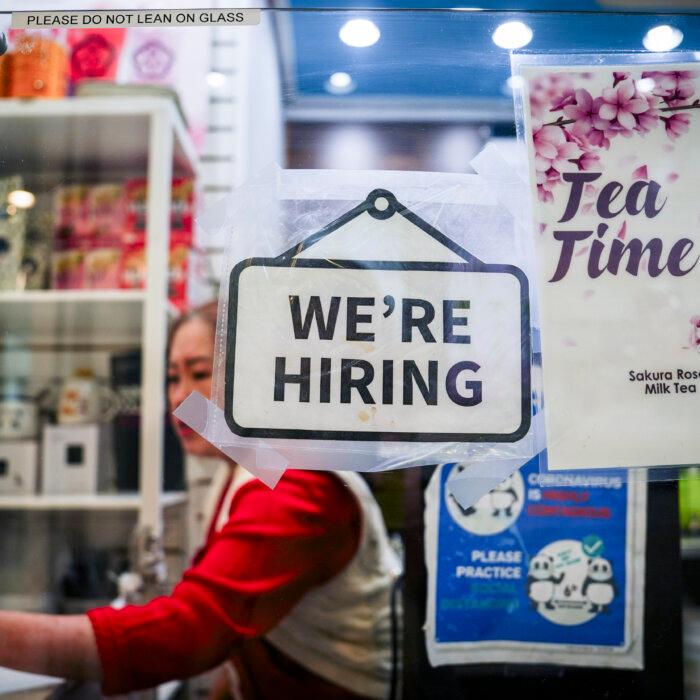
Market watchers have been paying closer attention to recurring claims because they can signal that it is becoming more difficult for jobless individuals to find new employment opportunities.
Still, according to Chris Zaccarelli, CIO of Northlight Asset Management, there is little to garner from the latest employment data ahead of the upcoming nonfarm payrolls report.
“The initial jobless claims and continuing claims data have been remarkably consistent ... and so there is little to be gleaned today as we all await the biggest news of the week—the monthly payrolls report tomorrow, which will be pivotal in setting Fed rate cutting policy for this month and into the end of the year,” Zaccarelli said in a note emailed to The Epoch Times.
The August jobs report will be the week’s main event. The number could cement a quarter-point interest rate cut by the Federal Reserve later this month or contribute to uncertainty about the path of monetary policy.
Early projections suggest that the U.S. economy created 75,000 new jobs last month, and the unemployment rate ticked up to 4.3 percent from 4.2 percent. The increase in average hourly earnings is also anticipated to ease to 3.7 percent year over year.
Assessing the Labor Market
Payroll processor ADP reported that the private sector created 54,000 new jobs, down from the upwardly revised 106,000 in July. This came in slightly below the market estimate of 65,000.Pay gains were also flat, with annual pay growth for job-stayers at 4.4 percent, and 7.1 percent for job changers.
Last month’s announced job cuts were led by pharmaceutical companies (19,112) and financial firms (18,092).
In the first eight months of 2025, businesses have announced 892,362 job cuts, the highest year-to-date total since 2020 and an increase of 66 percent from the same period last year.
Andrew Challenger, the firm’s senior vice president, says employers are citing a number of factors for trimming payrolls.
“After the impact of DOGE [Department for Government Efficiency] on the federal government, employers are citing economic and market factors as the driver of layoffs. We’ve also seen a spike in cuts due to operation or store closings and bankruptcies this year compared to last,” Challenger said in a statement.
Unit labor costs eased in the April–June period, rising by a smaller-than-expected pace of 1 percent from the 6.9 percent in the first three months of the year.
Market Reaction
U.S. stocks were little changed at the opening bell following the latest labor market figures.Jamie Cox, managing partner for Harris Financial Group, says the Fed will no longer ignore the labor market.
“ADP data continue to reinforce the narrative that the rate of positive change in the labor market has slowed significantly, so you can expect the Fed to tilt its balance of risks to cut rates in September,” Cox said in a note emailed to The Epoch Times.