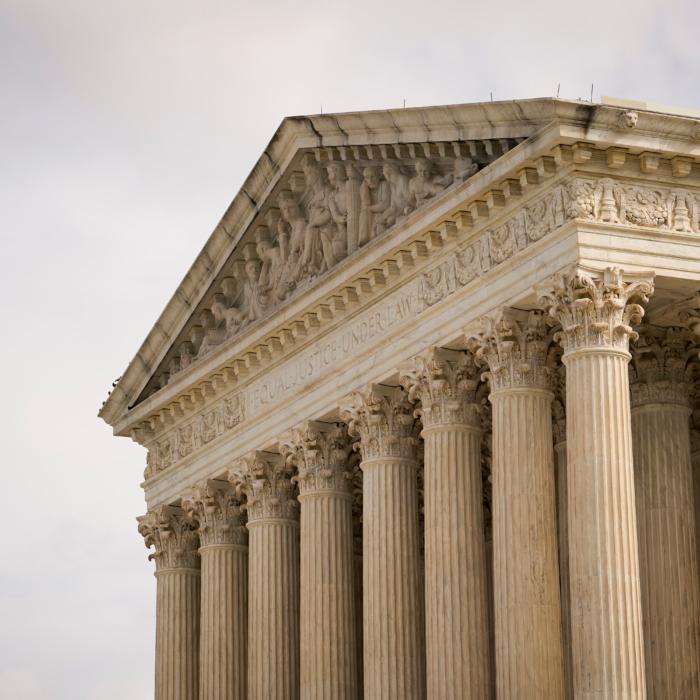
The U.S. Supreme Court on Tuesday declined to hear a case challenging the U.S. Food and Drug Administration’s (FDA) regulatory authority.
The 4th Circuit Court of Appeals ruled in December that the FDA has the power to deny applications for e-cigarette products due to its mandate to prevent younger people from smoking tobacco products. It wrote that the FDA has the “daunting task of ensuring that another generation of Americans does not become addicted to nicotine and tobacco products” as it sided with the federal health agency.
E-cigarettes deliver nicotine by vaporizing a liquid, rather than burning tobacco. In 2016, the FDA determined that e-cigarettes were subject to its regulation, like traditional tobacco products, and gave manufacturers until 2020 to apply for approval of e-cigarettes and related products like liquid.
Avail, once a prominent retailer of flavored e-liquids, sought approval for its products in 2020, telling the FDA that they could help smokers quit by switching to e-cigarettes. The company said it had measures in place, including age verification for online sales and limited distribution through specialty shops, that would ensure that its liquids would not be sold to minors.
The FDA denied the application in 2021, saying that the company had not presented long-term studies supporting its claim that its products, which included fruit flavors, were more effective at helping smokers quit than tobacco-flavored liquids, which the agency has said are less appealing to minors. It declined to consider the company’s plans to restrict sales.
In its appeal to the 4th Appeals Court, the firm argued that the FDA had not said it would need to see studies that compare the e-cigarettes with vaping products that taste like tobacco.
“The FDA says Avail and other retailers should have known what they were going to be looking for. Well, virtually nobody in the industry knew,” Mr. Heyer added
He added: “The lack of those comparative efficacy studies was one of the main reasons why the FDA denied these applications. The FDA had five years to communicate this to applicants and they never did. Not a single word.”
What the FDA Says
The FDA has denied more than 55,000 applications for e-cigarette products. Those denials have been previously upheld by the D.C. Circuit, 3rd Circuit, and 7th Circuit, according to the Reuters news agency.Earlier this year, the health regulator said it issued some 6,500 “marketing denial orders” to several firms’ attempts to make and market flavored e-cigarettes, who cannot “market or distribute these products in the U.S., and retailers who sell these illegal products risk FDA enforcement action,” according to a news release.
Any company that wants to legally market a new tobacco product in the United States must receive a written marketing order from the FDA. But if the health regulator deems it unfit for public health, it issues a marketing denial order.
“The premarket tobacco product applications, which were for a variety of flavored e-cigarette products, did not provide sufficient evidence to show that permitting the marketing of these products would be appropriate for the protection of the public health,” the FDA release said. “Flavors of some of the products denied include Citrus, Strawberry Cheesecake, Cool Mint, and Menthol.”