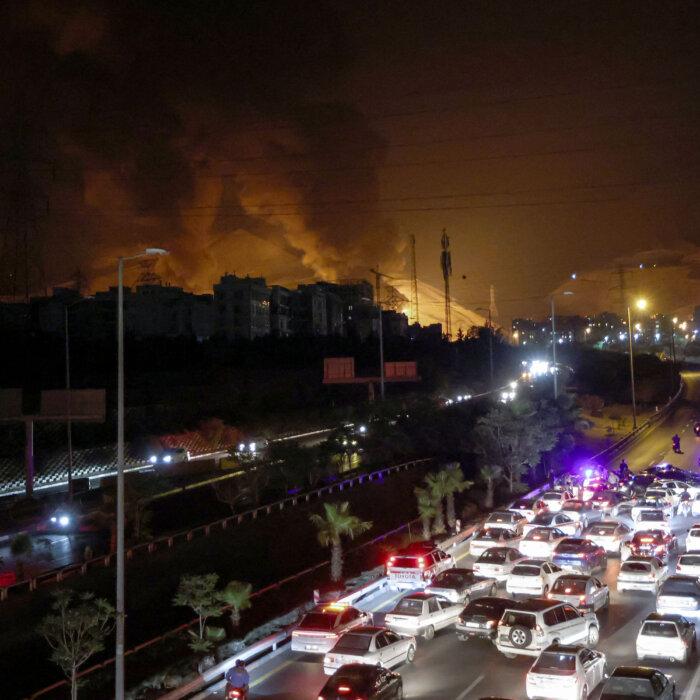
“Some minor damage from concussions of Iranian missile hits near Embassy Branch in @TelAviv but no injuries to US personnel,” he said.
“There will be no passport (emergency or regular) or Consular Report of Birth Abroad services. The U.S. Embassy is not in a position at this time to evacuate or directly assist Americans in departing Israel,” it said in the alert, issued for Israel, the West Bank, and Gaza.
“Ben Gurion Airport remains closed, and there are no commercial or charter flights operating from there.”

Land crossings from Israel to Jordan are scheduled to work only for a limited time on Monday. The Allenby/King Hussein Bridge crossing will be open for 6 1/2 hours, the Northern (Jordan River/Sheikh Hussein) crossing for 6 hours, and the Southern (Yitzhak Rabin/Wadi Araba) crossing for 12 hours.
“Before traveling to the border crossings, U.S. citizens should consult the Israel Home Front Command guidance. Flights are available from Jordan on a limited basis. Please check with your airline and expect delays,” said the alert.
The embassy advised U.S. citizens in Israel to maintain caution and increase awareness of their personal security, including knowing the nearest shelter locations. Attacks from missiles, rockets, and unmanned aircraft systems can take place without warning, it said.
Meanwhile, the embassy directed all U.S. government employees and their families to continue to shelter in and near their residences.
“In response to security incidents and without advance notice, the U.S. Embassy may further restrict or prohibit U.S. government employees and their family members from traveling to certain areas of Israel (including the Old City of Jerusalem) and the West Bank,” it said.
Nuclear Threat From Iran
In a speech on Friday, Israeli Prime Minister Benjamin Netanyahu said that Iran had stockpiled enough enriched uranium to manufacture nine atomic bombs, with Tehran capable of producing the first of these bombs in just a few months.Iran’s nuclear weapons pursuit presents a “clear and present danger to Israel’s very survival,” he said. Israel’s initial strikes on Iran had hit nuclear and military infrastructure across the country, including the Natanz enrichment facility and underground missile complexes located in Kermanshah.
Iran’s Islamic regime, which has frequently made threats against the West, has consistently denied that its nuclear program is to create a weapon, and insists the program is only for civilian purposes.
In a statement to the board on June 9, Director General Rafael Grossi said he was seriously concerned about Tehran’s “rapid accumulation of highly enriched uranium.”
“The U.S. had nothing to do with the attack on Iran, tonight,” Trump said in a June 15 post on Truth Social, but added, “If we are attacked in any way, shape, or form by Iran, the full strength and might of the U.S. Armed Forces will come down on you at levels never seen before.”
“However, we can easily get a deal done between Iran and Israel, and end this bloody conflict!!!” he said.