The U.S. Department of Transportation on Oct. 28 revoked its approval for 13 Mexican airline routes into the United States, citing similar treatment by Mexico that has yet to be addressed.
It also said it was revoking U.S. access for all Mexican “belly cargo” flights that carry both passengers and cargo in and out of Mexico City’s Felipe Ángeles International Airport.
The order also cancels current or planned flights by Mexican airlines Aeroméxico, Volaris, and Viva Aerobus.
The department stated that Mexico has violated the two nations’ bilateral aviation agreement since 2022, when it revoked routes for U.S. passenger carriers and banned U.S. cargo operations from using Mexico City’s Benito Juárez International Airport. U.S. airlines were forced to land at Felipe Ángeles Airport, which is 26 miles outside the city.
Duffy also proposed prohibiting Mexican passenger airlines from transporting belly cargo between Benito Juárez Airport and the United States, which would take effect in about three months if finalized.

The department said the restrictions were a result of Mexico’s continued noncompliance and “may impact travel plans for American citizens.” It advised passengers to contact their carrier for specific information regarding their flights.
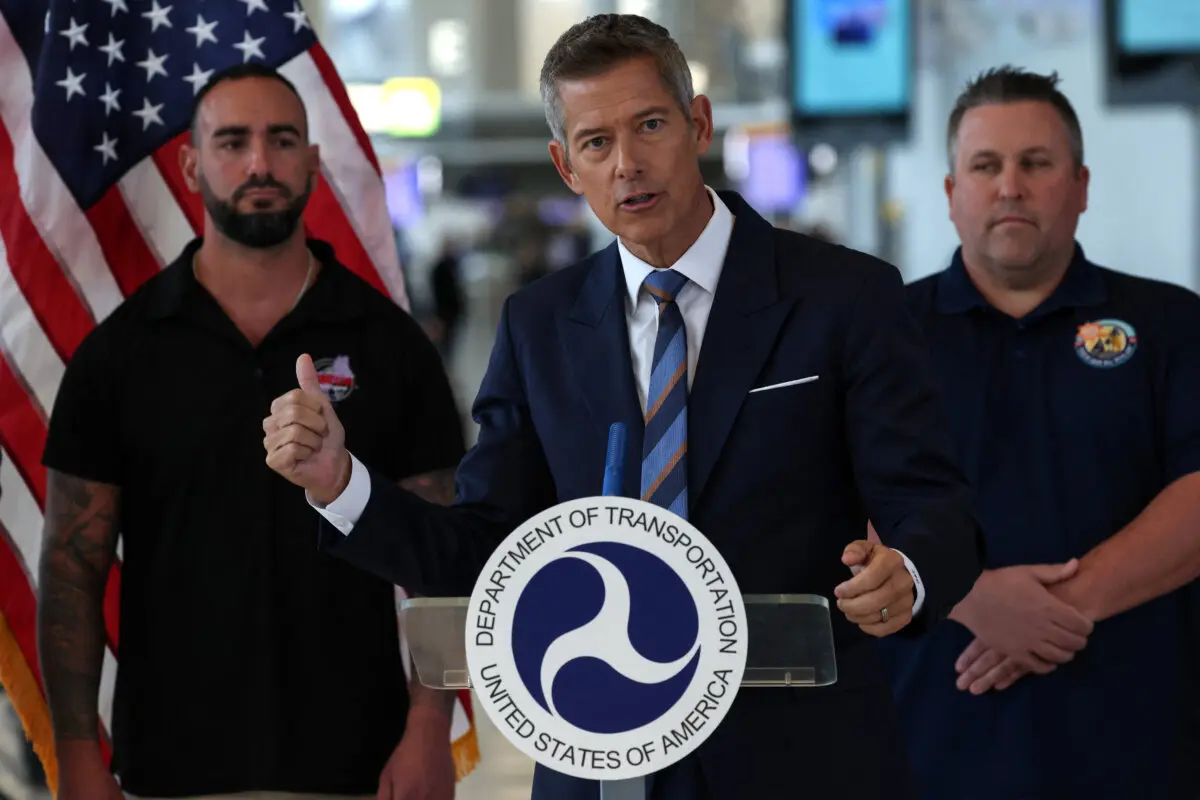
“Until Mexico stops the games and honors its commitments, we will continue to hold them accountable,” Duffy said. “No country should be able to take advantage of our carriers, our market, and our flyers without repercussions.”
The disapproved flights are the Aeroméxico service between Benito Juárez Airport and San Juan, Puerto Rico; Volaris service between Benito Juárez Airport and Newark, New Jersey; Viva Aerobus’s proposed services between Felipe Ángeles Airport and New York City, Chicago, Dallas, Denver, Houston, Los Angeles, Miami, Orlando, and Austin, Texas; and Aeroméxico’s current service between Felipe Ángeles Airport and Houston and McAllen, Texas.
Mexico’s transportation ministry, Aeroméxico, Volaris, and Viva Aerobus did not respond to requests for comment.
The department said it was the result of anti-competitive behavior that provided “an unfair advantage to Delta and Aeromexico,” which was having negative effects on the U.S.–Mexico City markets. The carriers were accounting for about 60 percent of passenger flights between Mexico City and the United States.
In September, Duffy warned European governments against imposing unilateral restrictions on transatlantic travel, saying that Washington is prepared to enforce international agreements, a stance underscored by recent action taken against Mexico over similar concerns.