Just days after the United States fired a one-way attack drone for the first time in combat, a Senate committee on March 5 highlighted an urgent need to increase military unmanned vehicle production, training, and use.
“This issue has profound implications for both our warfighting readiness and our future prosperity,“ said Sen. Roger Wicker (R-Miss.), chairman of the Senate Committee on Armed Services. ”I’m not really sure Americans understand that fully yet.”
During the hearing, Wicker acknowledged the U.S. combat debut of the low-cost unmanned combat attack system (LUCAS) drone during Operation Epic Fury against Iran.
Adm. Brad Cooper, the leader of the U.S. Central Command, said the military had launched “countless one-way attack drones, achieving massive effects.”

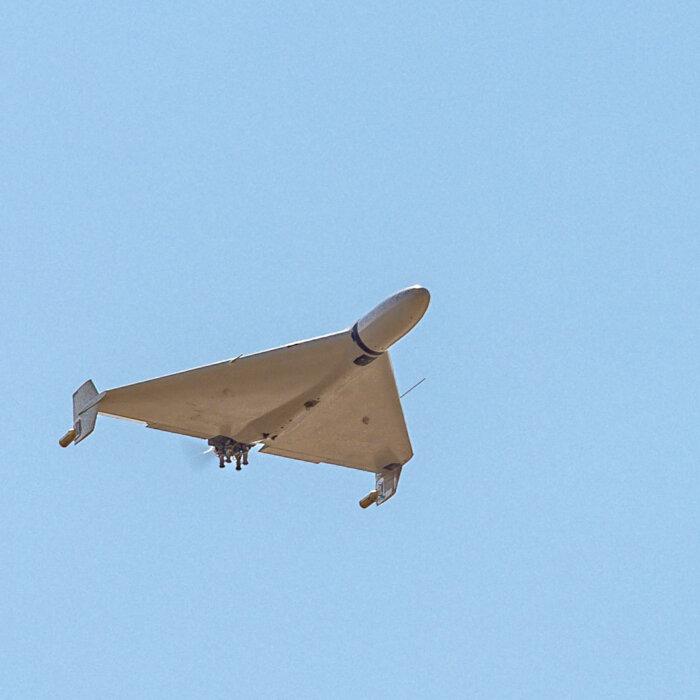
Arizona-based defense contractor SpektreWorks developed the LUCAS drone, basing it on the Iranian Shahed-136 model, according to an independent defense research website, GlobalSecurity.org.
The website states that Iran has supplied that weapon to Russia ever since the Russia–Ukraine war began in 2022.
Test-fired for the first time in December 2025, the suicide-mission LUCAS drone costs about $35,000 each—far less than reusable, more sophisticated models that can cost up to $40 million each.
“[The Russia–Ukraine war] has forever changed the character of modern warfare and demonstrated the growing importance of small unmanned systems—what we colloquially call drones,” Wicker said.

U.S. drone development has lagged, largely because the Chinese Communist Party has heavily subsidized its drone makers.
That strategy has rendered drone companies in the United States and other nations unable to compete with lower-priced and more advanced Chinese drones, according to Wicker.
But now, he said, the United States is “finally on the cusp of charting a future for American drone dominance.”
Sen. Rick Scott (R-Fla.), a committee member, championed the American Security Drone Act of 2023.
That law banned federal agencies from purchasing or operating drones tied to foreign adversaries such as China; it took full effect in December 2025.
“We have to keep fighting to ensure Communist China has absolutely zero role in our drone supply or anywhere in our military, which is critical to American safety,” Scott said during the hearing.
Sen. Jack Reed (D-R.I.), the committee’s ranking member, said, “For too long, the United States was hindered by self-imposed restrictions and bureaucratic red tape.”
China continues to dominate the manufacture of “critical components” of drones such as motors and batteries, he said.

Sen. Jeanne Shaheen (D-N.H.) said a company in her state, ePropelled, is the nation’s sole producer of drone-propulsion motors.
“It’s one of the most glaring deficits in our domestic market,” she said, asking whether leaders are working to assist American businesses such as ePropelled.
A hearing witness, Owen West, senior adviser to the War Department’s drone dominance efforts, said ePropelled supplies several drone makers that have won defense contracts.
He called drones “the most significant battlefield innovation in generations.”
That is why the military must arm its troops with “lethal drone technology” as quickly as possible, he said.
These drones can also be used for counterstrikes or defense.
Another witness, Maj. Gen. Steven Marks, said the organization he directs—the Defense Autonomous Warfare Group—aims to pull together innovation and production to meet operational needs.
The group is tasked with “cutting across the traditional boundaries that have often slowed [the] process.”
Marks said he is confident in the group’s success because it has “collapsed the distance between the warfighter and the developer.”
“Operators and engineers are now working side by side at the tactical edge, solving operational problems in real time,” he said.
“This ensures capability is informed directly by battlefield needs and refined through immediate, real-world feedback.”
A third witness, Travis Metz, manager of the War Department’s Drone Dominance Program, said $1.1 billion is to be spent over the next 18 months to buy drone systems for U.S. forces.
Winners of a recent contest will be given orders for a total of 30,000 small, one-way attack drones, Metz said. Those weapons will be delivered to U.S. forces over the next five months.
The world’s best drones are now made in Ukraine, Metz said, and the United States is trying to lure Ukrainian makers to manufacture their products in America.
Shaheen said she and fellow committee member Sen. Richard Blumenthal (D-Conn.) have visited Ukraine repeatedly and learned that Ukrainians are updating their drones every two weeks.
Lately, the United States has been conducting drone contract contests every six months.
Shaheen said that although she appreciates the work that is being done, she believes that U.S. efforts must accelerate.
“I don’t know how we think we’re going to compete [otherwise],” she said.