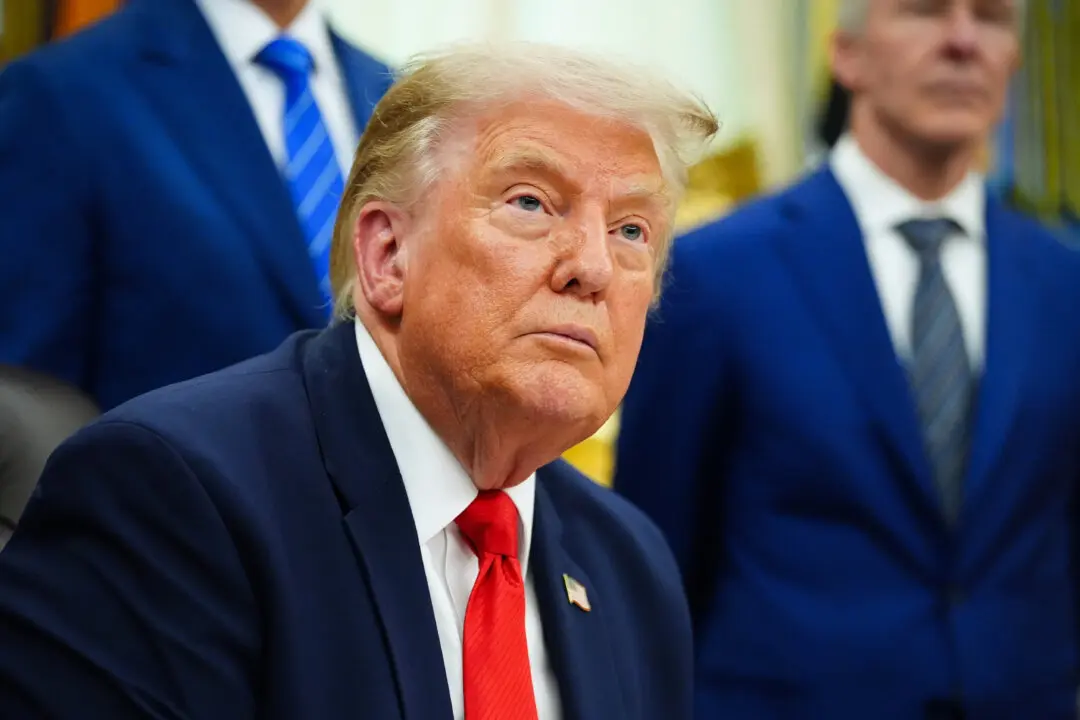
Alongside the International Olympic Committee, International Paralympic Committee, and the 50 U.S. national governing bodies, the USOPC said it will “ensure that women have a fair and safe competition environment consistent with Executive Order 14201.”
The order also referenced federal policy “to recognize two sexes, male and female.”

Compliance with the order would mean that U.S. athletes identifying as transgender women will effectively be barred from competing in women’s events at the 2028 Olympics, but can compete in the equivalent male events.
The policy update was also sent as a letter to national sport governing bodies, who, as recognized under the Ted Stevens Olympic & Amateur Sports Act and operating under the USOPC, are responsible for setting and enforcing the rules for their respective sports in the United States, ranging from elite and Olympic-level competition to supporting grassroots development.
The U.S. Olympic officials told the national governing bodies that they would need to implement the athlete safety policy, adding that “the USOPC has engaged in a series of respectful and constructive conversations with federal officials” since Trump signed the order.
“As a federally chartered organization, we have an obligation to comply with federal expectations,” USOPC CEO Sarah Hirshland and President Gene Sykes wrote in a letter. “Our revised policy emphasizes the importance of ensuring fair and safe competition environments for women. All National Governing Bodies are required to update their applicable policies in alignment.”
The USOPC policy update means that local sports clubs will also need to bring their rules into line with Trump’s executive order.
World Athletics is considering changes to its policies that would mostly fall in line with Trump’s order. A USA Swimming spokesman said the federation had been made aware of the USOPC’s change and was consulting with the committee to figure out what changes it needs to make.
USA Fencing has changed its policy, which will be effective Aug. 1, to allow only “athletes who are of the female sex” in women’s competition and opening men’s events to “all athletes not eligible for the women’s category, including transgender women, transgender men, non-binary and intersex athletes and cisgender male athletes.”
However, some national sport governing bodies, like USA Track and Field, which have been following guidelines set by their world federation, may come under pressure to align with U.S. federal policy.
Refining Sex Rules for Sports
The rules for eligibility to compete in women’s races have been an important issue facing the International Olympic Committee (IOC). Its new president, Kirsty Coventry, has signaled an effort to “protect the female category.”To date, the IOC has allowed individual sports federations to set their own rules at the Olympics, and some have already taken steps on the topic.
Stricter rules on transgender-identifying athletes—barring from women’s events anyone who went through male puberty—have been passed by swimming, cycling, and track and field. Soccer is reviewing its eligibility rules for women and could set limits on levels of testosterone.
Trump has said he wants the IOC to change everything “having to do with this absolutely ridiculous subject.”
Los Angeles will host the Summer Games in 2028, in Trump’s last few months as U.S. president.
The USOPC’s policy update follows similar steps taken by the National Collegiate Athletic Association (NCAA) earlier this year. It changed its participation policy for student transgender-identifying athletes in around 1,100 U.S. schools, limiting competition in women’s sports to athletes born as the female sex, irrespective of gender identity. That change came a day after Trump signed his executive order on women’s sports.