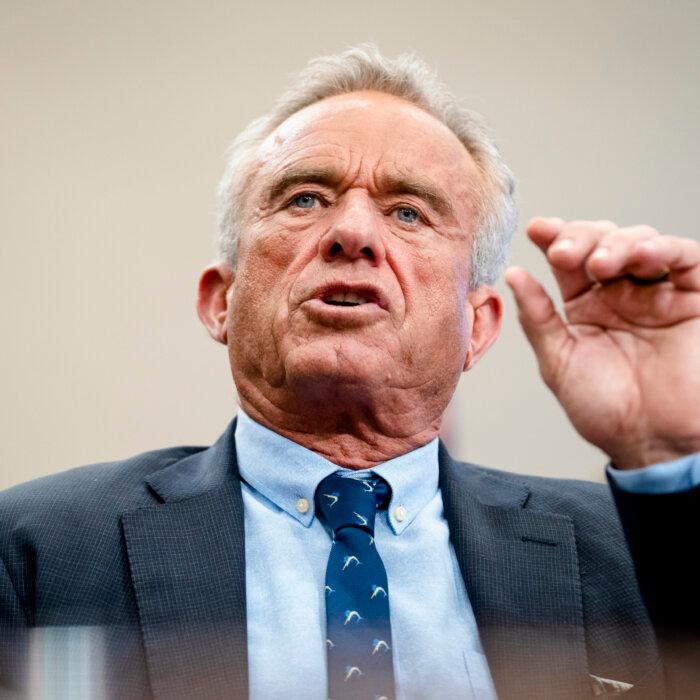
The United States on Sept. 25 objected to a U.N. declaration on noncommunicable diseases (NCDs), U.S. Health and Human Services Secretary Robert F. Kennedy Jr. informed the assembly considering the declaration.
“We cannot defeat the epidemic alone, but the U.N.’s approach is misdirected,” Kennedy said in New York City. “It attempts both too little and too much. It exceeds the U.N.’s proper role while ignoring the most pressing health issues, and that’s why the United States will reject it.”
He said the United States could not accept language pushing “destructive gender ideology” nor “claims of constitutional or international right to abortion.”
It is not clear which section Kennedy rejected.
Other portions of the document align with initiatives he has introduced or discussed introducing in the United States, including the promotion of nutritious eating and physical activity.
NCDs, also known as chronic diseases, are diseases that are not passed from person to person. Examples include heart disease and cancer.
NCDs kill tens of millions of people each year, according to the World Health Organization.
Ahead of a vote on adopting the document, Kennedy spoke at the U.N. General Assembly on the prevention and control of NCDs and the promotion of mental health and well-being.
It would be the fourth version of the declaration adopted by the United Nations, with the first being approved in 2011.
Representatives of other countries voiced support for the declaration during the meeting.
“With the adoption of the political declaration, we are making a bold and essential commitment to tackle NCDs, to promote mental health, and advance equity across every dimension of our health systems,” Armenian Minister of Health Anahit Avanesyan said.
World Health Organization Director-General Tedros Adhanom Ghebreyesus said during the session that the declaration is “the strongest yet with ambitious, measurable and achievable targets” and that it fully integrates mental health.
He said NCDs are preventable and treatable.
“What’s needed is commitment, speed, and scale,” he said.
Kennedy said the United States was rejecting the declaration but that it “will never walk away from the world” or its “commitment to end chronic disease.”
“We stand ready to lead, to partner, to innovate, with every nation committed to a healthier future,” he said.