The U.S. Navy confirmed on July 5 that it has suspended an active search for a service member who went missing on July 1 after a Navy helicopter went down in the Arabian Sea amid a heavy military presence in the region due to hostilities with Iran.
In a lengthy post on X, the Navy said that the search involved multiple military branches, including an aircraft carrier and other naval vessels, and lasted several days.
“For more than 102 hours, an extensive and coordinated search and rescue effort spanning over 14,000 square miles was conducted,” the Navy said. “The efforts concluded following an extensive search by the U.S. Navy and U.S. Air Force in the U.S. Central Command area of responsibility.”
The sailor, whose name was not released by the U.S. military, was reported missing on July 1 after a MH-60S helicopter crashed in the Arabian Sea. The Navy did not disclose the cause of the crash.
On July 1, military officials said that before the helicopter—assigned to the USS George H.W. Bush, an aircraft carrier—went down, there was “no indication the emergency was caused by hostile action” such as from the Iranian military.
Three of the four crew members were found and were deemed to be in stable condition last week, the military said at the time. It also said that the cause of the incident was under investigation.
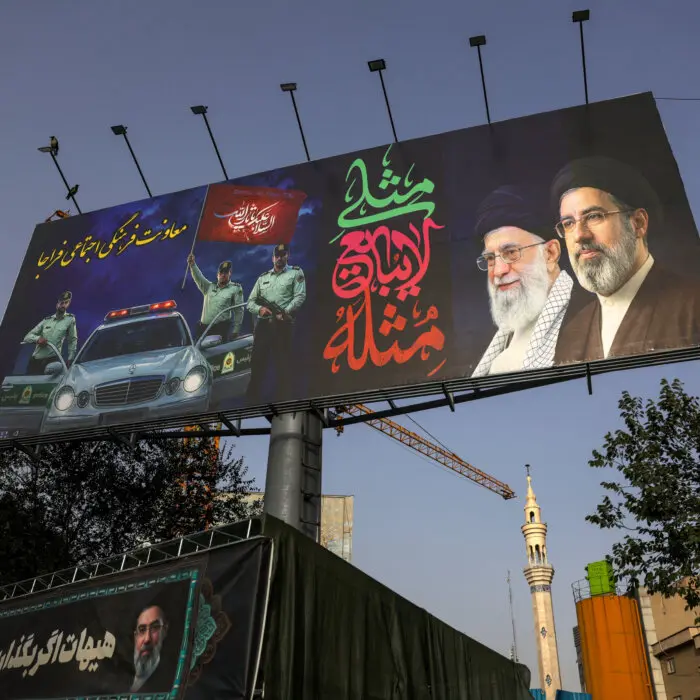
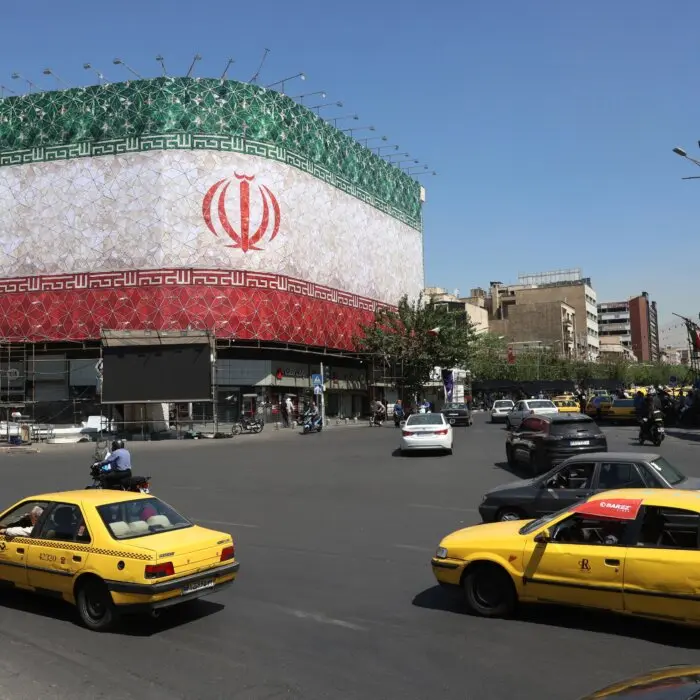
The USS George H.W. Bush carrier strike group was sent to the Middle East in April as part of an increase in American military forces in the region amid the war with Iran, as well as a U.S. blockade of Iranian ports.
Meanwhile, hundreds of thousands of mourners began a days-long funeral on July 4 for Iran’s leader, Ali Khamenei, gathering before the glass case containing his flag-draped coffin in Tehran and calling for revenge against Israel and the United States.
U.S. President Donald Trump said during a speech on July 3, “We knocked the hell out of Iran.”
“They want to settle so badly,” he said. “We gave them a week off for a funeral.”
Efforts to find the soldier also “brought together the USS George H.W. Bush carrier’s HSC 5 and Helicopter Maritime Strike Squadron (HSM) 46, the fixed wing aircraft of Carrier Air Wings (CVW) 7 and 9, aircraft carrier USS Abraham Lincoln’s (CVN 72) helicopter squadrons HSC 14 and HSM 71, Arleigh Burke-class guided-missile destroyers USS Ross (DDG 71), USS Donald Cook (DDG 75), USS Higgins (DDG 76), USS Mason (DDG 87), and USS John Finn (DDG 113) with HSM 51, two P-8 Poseidon squadrons, and multiple U.S. Air Force aircraft,” the Navy said in a statement on July 5.