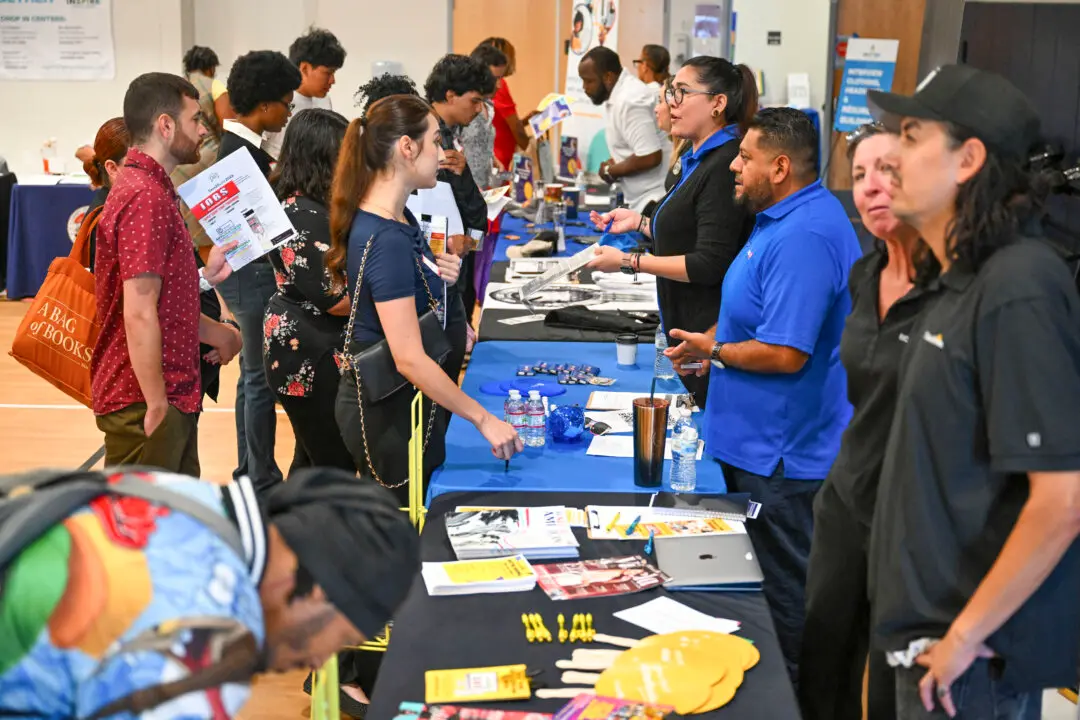
For the week ending Nov. 22, initial jobless claims fell by 6,000 to 216,000—the lowest level since mid-April—from the previous week’s reading of 222,000.
The market consensus indicated a reading of 225,000.
New claims data might be surprising, as scores of companies, such as Amazon, HP, and Verizon, have announced layoffs in the past several weeks.
The four-week average, which strips out week-to-week volatility, slipped to 223,750 from an upwardly revised 224,750 in the previous week.
Federal worker jobless claims fell by nearly 4,000 from the previous week, coming in at 1,724, reflecting the end of the U.S. government shutdown. Economists are closely watching this figure to assess whether the Trump administration’s policies and the Department of Government Efficiency’s measures have had a significant impact on government payrolls.
Continuing jobless claims—the number of unemployed individuals currently receiving benefits—rose by 7,000 to 1.96 million.
Navigating the Labor Market
Recent data suggest employment conditions are mixed, with the nonfarm payrolls report confirming 119,000 new jobs in September. However, payroll processor ADP reported that private businesses eliminated an average of 13,500 jobs per week in the past four weeks.Due to the government shutdown, the October jobs report has been canceled, and the November employment data will not be released until late December.
Regardless of trends in the numbers, consumers are also recording growing consternation surrounding the labor market.
“The labor market differential—the share of consumers who say jobs are ‘plentiful’ minus the share saying ‘hard to get’—dipped again in November after a brief respite in October from its year-to-date decline,” said Dana Peterson, chief economist at The Conference Board.
But Joe Lavorgna, counselor to Treasury Secretary Scott Bessent, is “very confident” that stalling employment conditions will reverse next year.
With concerns about artificial intelligence running rampant across the national labor market, researchers have questioned the economic and professional advantages of holding a college degree.
Cleveland Federal Reserve economists determined that while having a university or college diploma still provides an edge, the benefit is gradually eroding.
“If the job-finding rate of college graduates continues to decline relative to the rate for high school graduates, we may see a reversal of these trends.”

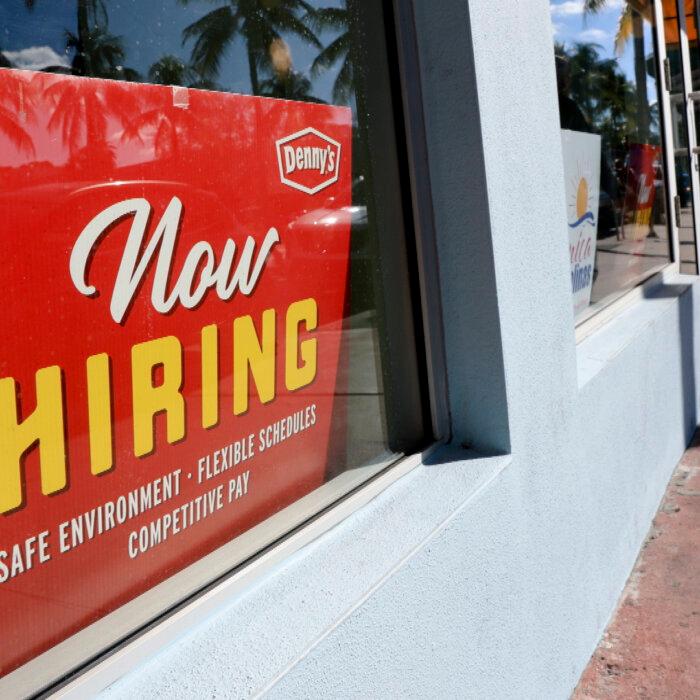
Meanwhile, as the busy Christmas shopping season approaches, fresh data suggest that seasonal hiring is picking up and outpacing last year’s levels, according to Indeed Hiring Labor data.
As of Nov. 14, the level of seasonal job postings rose to 11 percent above 2024 levels.
“The strength relative to last year suggests that businesses are feeling relatively confident about consumer spending as they head into the holiday season. But there are also signs of skepticism and a reluctance to hire for the longer term that are lurking just below the surface,” Cory Stahle, an economist at the Indeed Hiring Lab, wrote in the report.