“While the median sale price is at an all-time high, it’s roughly $26,000 lower than the median asking price of $422,238,” the company stated.
Homes are fetching less than the asking price because the housing market currently has more sellers than buyers, which gives buyers the ability to negotiate down prices, according to the brokerage. Total listings of homes for sale are up by 14.5 percent year over year.
Redfin expects the mismatch between supply and demand to result in a drop in home sales prices nationwide by the end of this year. At $396,500, the median sales price is 1 percent higher on an annual basis.
Home prices are at record highs even though the spring housing market has been “fairly cool.” This is because prices are not reflecting the true imbalance between sellers and buyers in the market, according to the brokerage.
“I’m explaining to sellers more and more that we need to be strategic in our pricing strategy because homes that are overpriced, even slightly, are likely to sit on the market and invite buyers to negotiate,” said Kelly Connally, a Redfin Premier agent in Tulsa, Oklahoma.

“Pricing is most important, but with fewer buyers than usual out there, sellers should also make sure their home is in excellent condition and be ready to make repairs upon inspection. There are a few exceptions: Homes in desirable locations that are in perfect condition are still hot and typically sell at or above asking price.”
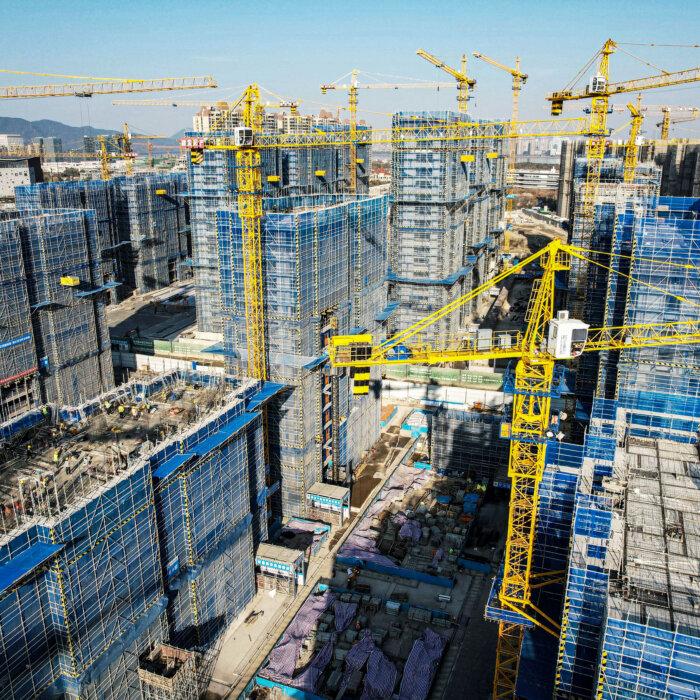
The high home sales prices come amid a decline in construction activity.
The decline in housing starts was because of a “sharp decline” in multifamily construction, the National Association of Home Builders (NAHB) said in a June 18 statement. Meanwhile, single-family starts essentially remained flat because of “economic and tariff uncertainty along with elevated interest rates.”
Robert Dietz, the NAHB’s chief economist, said the group forecasts 2025 to end with a decline in single-family housing starts.
High home prices also pose another major issue—they make buying more expensive compared with renting, thus encouraging many prospective buyers to opt for renting.
Tackling Housing Affordability
In a June 10 statement, the NAHB outlined a key factor affecting affordable housing: the worker shortage.A study conducted in collaboration with the Home Builders Institute, a nonprofit providing trade skills training and education for the building industry, found that skilled labor shortage was responsible for “the lost production of thousands of newly built homes,” the NAHB said in the statement.
Roughly 19,000 single-family homes were not constructed in 2024 because of the issue, resulting in an economic loss of $8.143 billion, according to the NAHB.
As developers suffer prolonged building times and higher construction costs because of the shortage of skilled labor, “the supply of new homes dwindles, exacerbating the housing affordability crisis and hindering economic growth,” it said.
Dietz said the study “underscores the urgent need for strategic interventions to address the skilled labor shortage.”
“The economic implications are vast, affecting not only the home building industry but also the broader economy,” he said.
The Trump administration is taking steps to tackle the issue of housing affordability.
“Nevada is a state of opportunity and promise, but for far too long, our housing options haven’t reflected that,” Nevada Gov. Joe Lombardo said. “By releasing more federal land, we will finally be able to begin building at the scale that Nevadans deserve and need.”