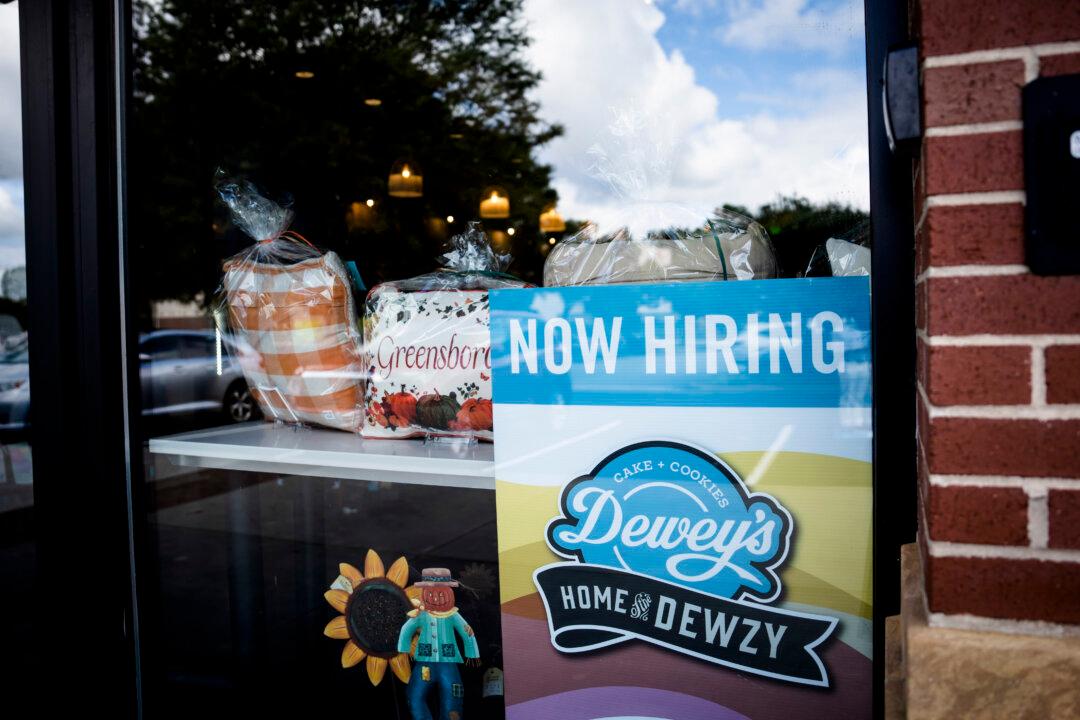
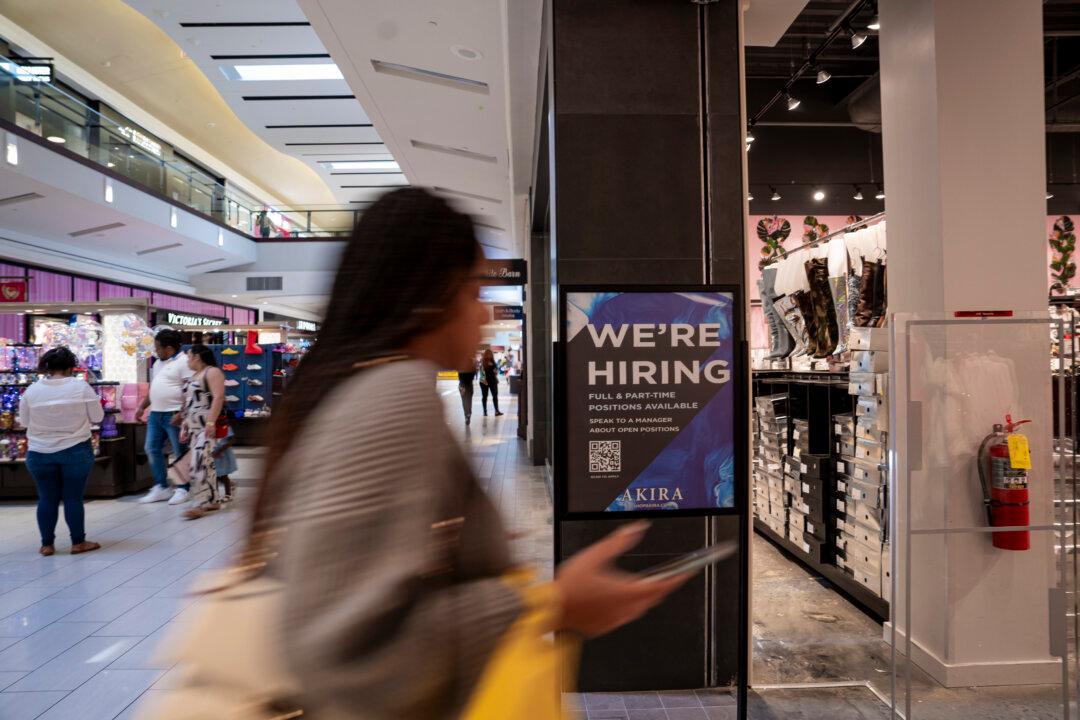
The U.S. labor market stalled last month as the economy unexpectedly lost jobs, new government data show.
Payrolls fell by 23,000 in July, from a downwardly revised 20,000 in the previous month, according to the Bureau of Labor Statistics.
This fell short of the average monthly gain of 34,000 over the last 12 months.
The consensus estimate prior to the July numbers was that 80,000 new jobs were added.
The unemployment rate edged lower, falling to 4.1 percent from 4.2 percent. This also came in below expectations.
Economists widely expect the jobless rate to remain at historically low levels since the breakeven rate—the number of new jobs needed to keep the unemployment rate low—is close to zero due to shifting immigration and labor force dynamics.
Last month’s losses were driven by local government education (negative 50,000), reflecting changes school districts are making to adapt to a changing environment, including shrinking enrollment and severe budget constraints.
Employment in retail trade fell by 19,000, while financial activities dropped by 14,000.
Job gains were centered in healthcare. The sector added 22,000 positions, although the reading was below the average monthly gain of 36,000 over the last year.
“The magnitude of the payroll miss suggests the labor market may be losing momentum and can no longer be considered the pillar of strength,” Charlie Ripley, senior investment strategist for Allianz Investment Management, told The Epoch Times in an emailed note.
The number of employed full-time workers declined by more than 100,000. Part-time employment levels increased by 138,000. The number of people working two or more jobs also accelerated to 8.693 million, from 8.554 million.
Downward revisions were front and center in the July jobs data.
May’s numbers were revised down by 66,000 to 63,000. June’s reading was adjusted lower by 37,000 to 20,000.
National Economic Council Director Kevin Hassett told reporters that the bureau’s employment numbers are “very, very noisy,” so it is important to examine other reports, including ADP’s monthly private payrolls data.
Hassett attributed negative growth to teachers taking summer vacation and the FIFA World Cup ending the festivities.
“The proof will be in the number that we get next month,” Hassett said. “Our expectation is that everything else ... is more consistent with the divide in the unemployment rate that we saw than in the payroll.”
Earnings also came in below market forecasts. Average hourly earnings ticked up by 0.1 percent, down from 0.3 percent and below the estimate of 0.3 percent. On a 12-month basis, they eased to a lower-than-expected 3.2 percent, from a downwardly adjusted 3.4 percent in June.
The average work week was unchanged at 34.3. Excluding the pandemic years of 2020 and 2021, the labor force participation rate of 61.4 percent is the lowest since 1976.
‘Game Changer’
For months, market watchers and the Federal Reserve have focused almost entirely on inflation data, given that the labor market has been performing well.
The July jobs report is a “game changer,” says Chris Zaccarelli, CIO for Northlight Asset Management.
“This morning’s report is a game changer in the sense that all of the recent focus has been on inflation, and this report highlights the risks that are embedded in the labor market as well,” Zaccarelli said in an emailed note to The Epoch Times.
“Before today, many were expecting that the Fed had no choice but to raise rates in order to fight stubbornly high inflation, because the job market was so strong, but this report shows that isn’t the case.”
Futures markets have been betting that the Fed would pull the trigger on a quarter-point interest rate hike at the September policy meeting.
Chairman Kevin Warsh and several of his colleagues have said that inflation is too high and that they will use their monetary tools to ensure the Fed restores its 2 percent target after missing it for 64 consecutive months.
But traders are now pricing in a 58 percent chance that the central bank will keep interest rates unchanged at the sixth consecutive meeting.
Next week’s Consumer Price Index will be watched closely as it could reignite rate-hike expectations or force investors to double down on their pause forecasts.
July’s annual consumer inflation rate is expected to dip to 3.4 percent, according to the Cleveland Fed’s Inflation Nowcasting model. August’s numbers, however, could pick up as global energy prices have been rising again.
The Fed will hold its next two-day Federal Open Market Committee meeting on Sept. 15 and 16.
U.S. stocks rallied after weak employment data suggested the Fed might hold off on raising rates.
The tech-heavy Nasdaq Composite Index surged more than 1 percent. The broad-market S&P 500 and the blue-chip Dow Jones Industrial Average rose 0.5 percent and 0.3 percent, respectively.