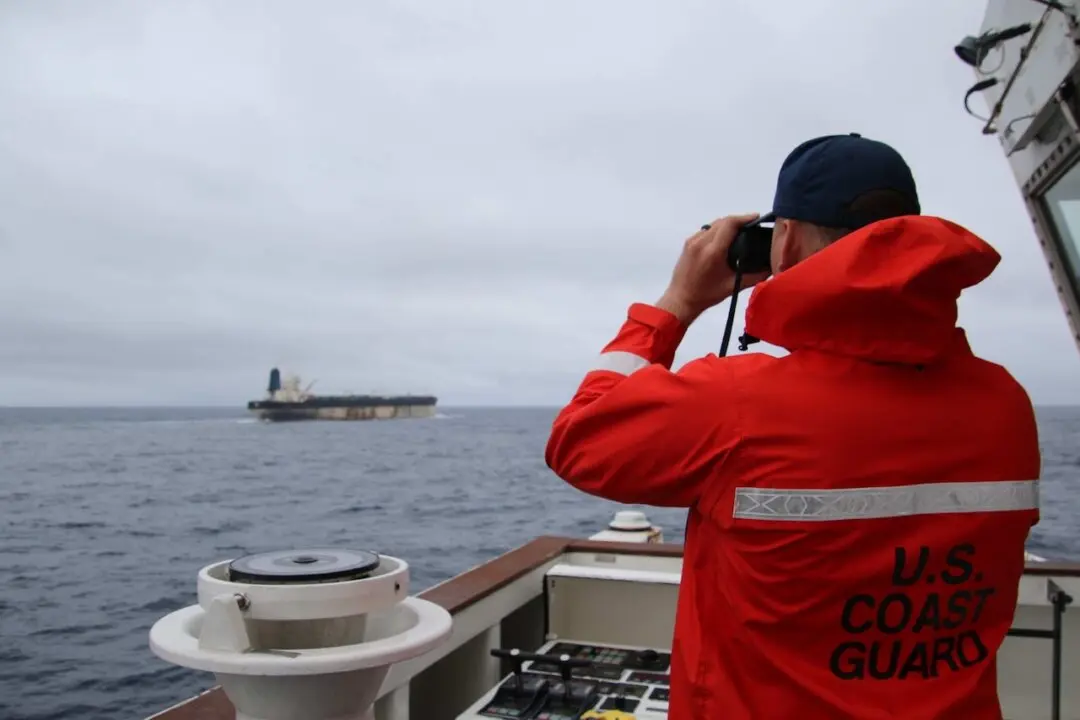
The U.S. Coast Guard (USCG) successfully interdicted three suspected drug smuggling vessels simultaneously on May 8 that combined carried roughly 6,085 pounds of cocaine valued at almost $45.8 million, the agency said in a May 14 statement.
The interdiction was carried out approximately 90 miles off the coast of Cartagena, Colombia.
After identifying the three vessels, the crew of Coast Guard Cutter Tahoma launched two boats and an aircrew to intercept them. Although two vessels stopped, the people running the third vessel were non-compliant, which resulted in the use of aerial force, including precision sniper fire at the boat’s engine. The suspected smugglers jumped overboard but were later taken into custody, USCG said.
“Interdicting three vessels simultaneously is a testament to the unwavering professionalism, precision, and dedication of our crews,” Cmdr. Nolan Cuevas, Tahoma’s commanding officer, said.
“This interdiction prevented a significant number of illegal narcotics from reaching America’s shores, and their teamwork underscores the Coast Guard’s mission to protect our nation and saving lives.”
In addition to the Tahoma, the Coast Guard Helicopter Interdiction Tactical Squadron and the Joint Interagency Task Force (JIATF) South also took part in the operations.
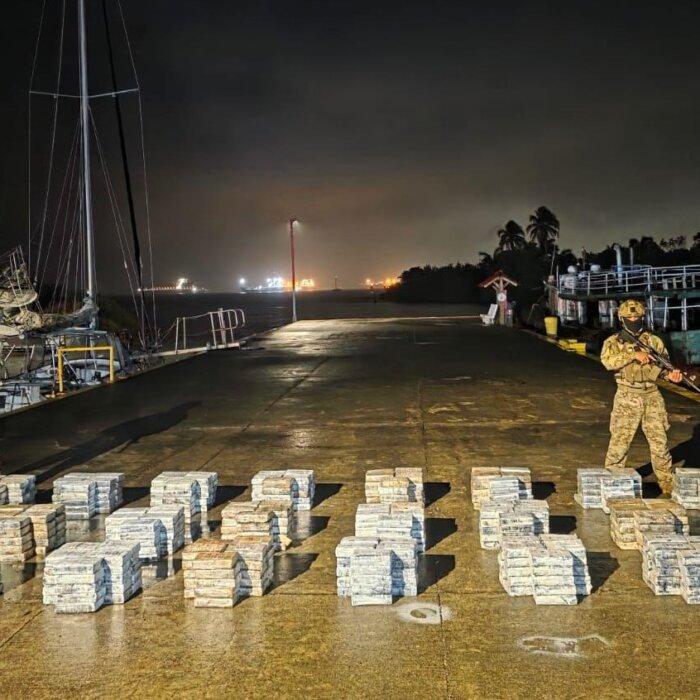
USCG highlighted that 80 percent of interdictions of drugs bound for the United States take place at sea, which underscores the importance of maritime interdiction in protecting American communities.
In 2025, the Coast Guard seized more than 511,000 pounds of cocaine, which was more than three times the agency’s annual average.
Commenting on the recent operation, JIATF South said in a May 14 post on X, “Proud of what teamwork with @USCG is accomplishing to apply total systemic friction to narco-terrorist networks.”
In addition to interdictions, U.S. authorities are carrying out lethal strikes against drug trafficking vessels.
Earlier, on May 5, SOUTHCOM reported another strike in the region that killed three people cited as being involved in narcotics trafficking.
“Instead, the government has acted unilaterally and in violation of international law on the use of force,” Dakwar said.
In December 2025, Pentagon press secretary Kingsley Wilson dismissed arguments that lethal strikes on drug vessels operated by designated terror organizations were illegal, highlighting that such actions were taken to defend critical American assets.
“Our operations in the Southcom region are lawful under both U.S. and international law, with all actions in compliance with the Law of Armed Conflict. These actions have also been approved by the best military and civilian lawyers up and down the chain of command,” Wilson said.
Meanwhile, the Trump administration recently strengthened its fight against drug trafficking in the United States.
In a May 4 fact sheet, the White House said that drug czar Sara Carter released the country’s National Drug Control Strategy, which sets up a roadmap to counter the influx of illicit drugs.
The strategy expands the capacity for detecting illicit drugs using the latest technologies, targets the dismantling of online drug trafficking, prosecutes money launderers, secures the global supply chain from foreign terrorist and transnational criminal organizations, and ensures access to faith-based recovery programs for addicts.
“The Strategy enhances the acquisition and timely use of accurate data to stay ahead of emerging threats, while also ensuring government programs are transparent, accountable, and most of all, effective,” the fact sheet said.
“America’s citizens are our most precious resource. Protecting them from illicit drugs and teaching healthy living through primary prevention are essential to defeating the drug crisis and building a strong future.”