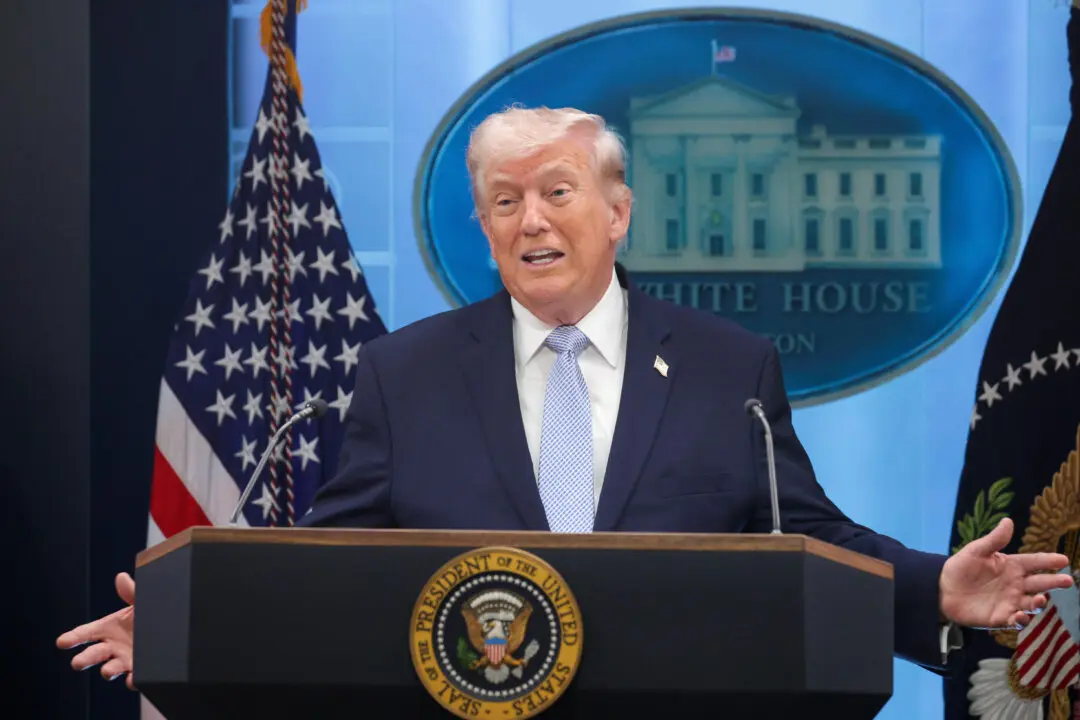
Several Trump aides said that Trump and Chinese Communist Party (CCP) leader Xi are expected to speak soon, with White House economic adviser Kevin Hassett specifying it could happen this week.
Agreement Terms
Trump had written on social media May 30 that China had not stuck to the Geneva agreement, with aides explaining in media interviews the same day that their concern was with the critical mineral export controls Beijing set in early April.U.S. Trade Representative Ambassador Jamieson Greer told CNBC that after Trump’s “Liberation Day” tariff announcements, China had been the only country to issue retaliatory trade actions.
“You can see that Europe, Japan, the United States, elsewhere, we haven’t seen the flow of some of those critical minerals as they were supposed to be doing,” he said.
These minerals are used in the automotive, energy, and defense industries.
Automotive trade industry groups had written to the Trump administration on May 9, warning of an impending work stoppage.
China corners the market on critical minerals processing, and the controls meant that rare earth magnets needed for “critical automotive components, including automatic transmissions, throttle bodies, alternators, various motors, sensors, seat belts, speakers, lights, motors, power steering, and cameras” could slow or stop, the industry wrote in a letter.
Auto executives told Reuters on May 30 that the situation was not yet resolved. Only a handful of licenses have been issued.
Rhetoric Escalates
Chinese regime spokespersons said on May 30 that officials stood ready to continue negotiations but made no mention of rolling back the controls. They claimed that the export controls were aligned with international prices and weren’t targeting specific countries.On June 2, a commerce ministry spokesperson said recent U.S. actions undermined the Geneva agreement and called on the United States to change its stance on several issues.
Although the United States did not agree to any non-tariff measures, the spokesperson said these actions violated the agreement and warned of retaliation.
Chinese regime spokespersons had made similar remarks over the weekend after U.S. Defense Secretary Pete Hegseth’s speech at the annual Shangri-la Dialogue, a high-level defense summit in the Indo-Pacific.
Hegseth said that the Indo-Pacific was the United States’ “priority theater” and conveyed Trump’s vision of peace through strength.