US, Canada, and Finland Seal Agreement to Build Advanced Arctic Icebreaker Fleet

The agreement allows the countries to counter the growing presence of Russia and China in the Arctic region.
US, Canada, and Finland Seal Agreement to Build Advanced Arctic Icebreaker Fleet
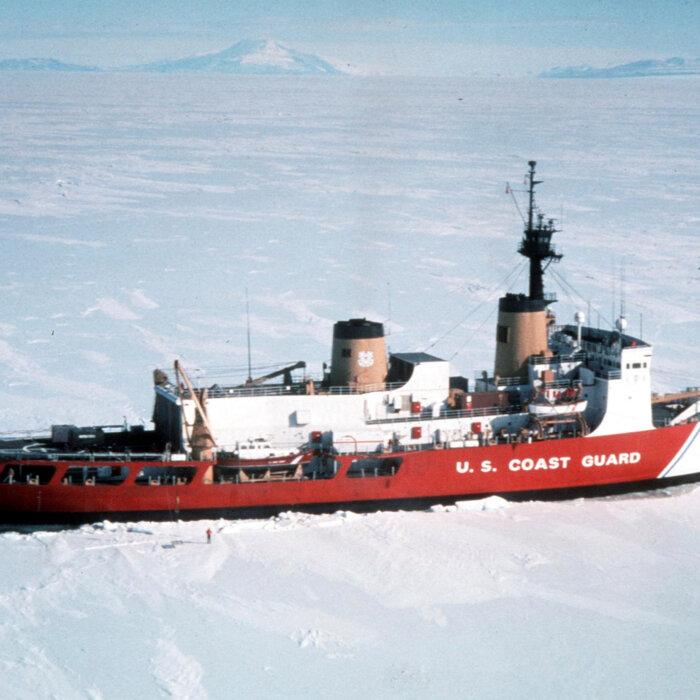
The Coast Guard Cutter USCGC Polar Star breaks through Antarctic sea ice near the National Science Foundation's McMurdo Station on Jan. 15, 2017. U.S. Coast Guard photo by Chief Petty Officer David Mosley/Public Domain
|Updated:
0:00

The United States joined Canada and Finland in signing an agreement to formalize a joint effort to build state-of-the-art arctic and polar icebreaker vessels.

Homeland Security Secretary Kristi Noem met with Canadian Ambassador to the United States Kirsten Hillman and Finnish Minister of Economic Affairs Sakari Puisto for an official signing of the Icebreaker Collaboration Effort (ICE) Pact in Washington on Nov. 13.

The agreement allows the countries to share expertise, information, and resources to expand shipbuilding to meet future demand and counter the growing presence of Russia and China in the Arctic region.

The Biden administration first signed the pact in 2024, formalizing cooperation among the countries on icebreakers.

This year’s agreement focuses on coordinating 2026 priorities and formalizes a longstanding partnership in polar security and sovereignty.

Recent activities in the Arctic have some U.S. officials on guard.
In late 2024, the Chinese coast guard entered the Arctic for the first time to join Russian ships on patrol. In July, Russian and Chinese bomber aircraft conducted a joint exercise off the coast of Alaska.
Noem joined President Donald Trump in the Oval Office on Oct. 10 as he signed a historic agreement with Finland to buy new icebreaker vessels.

“America has been an Arctic nation for over 150 years, and we’re finally acting like it under President Trump,” Noem said about the agreement on Oct. 10.

“Our adversaries continue to look to grow their presence in the Arctic, equipping the [U.S.] Coast Guard with Arctic Security Cutters will help reassert American maritime dominance there.”

Under the agreement, Finland will build four Arctic Security Cutters for the U.S. Coast Guard. U.S. shipyards will then build and deliver up to seven more vessels, according to the Department of Homeland Security (DHS).

Revitalizing the U.S. Coast Guard’s icebreaking capabilities is “crucial” for national security and prosperity, Noem added.

U.S. Coast Guard Acting Commandant Adm. Kevin Lunday said the October agreement would speed up delivery of the new cutters and spur future opportunities for domestic shipbuilding.
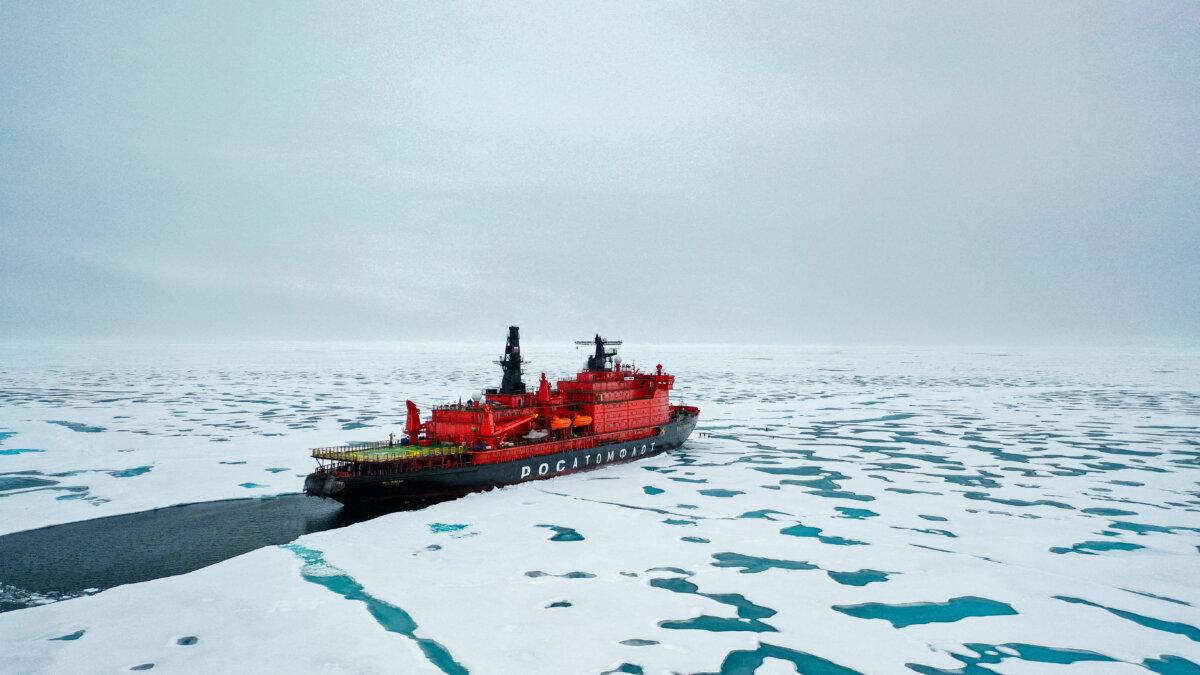
The Russian nuclear-powered icebreaker "50 Years of Victory" at the North Pole on Aug. 18, 2021. (Ekaterina Anisimova/AFP via Getty Images)
The Russian nuclear-powered icebreaker "50 Years of Victory" at the North Pole on Aug. 18, 2021. Ekaterina Anisimova/AFP via Getty Images

“With a strong icebreaker fleet, the Coast Guard will protect America’s sovereignty and interests against global threats in the Arctic for decades to come,” Lunday said in a statement.
In April, Trump issued an executive order to restore America’s maritime dominance. The order calls for building commercial ships, rebuilding the country’s maritime manufacturing capabilities, and expanding the shipbuilding workforce.
Trump’s One Big Beautiful Bill Act included $8.6 billion for the deployment of the Coast Guard’s icebreaker fleet in the Arctic. Of that, $4.3 billion is allocated to buy heavy icebreakers—known as Polar Security Cutters—and $3.5 billion for the Coast Guard to purchase medium-size Arctic Security Cutters.
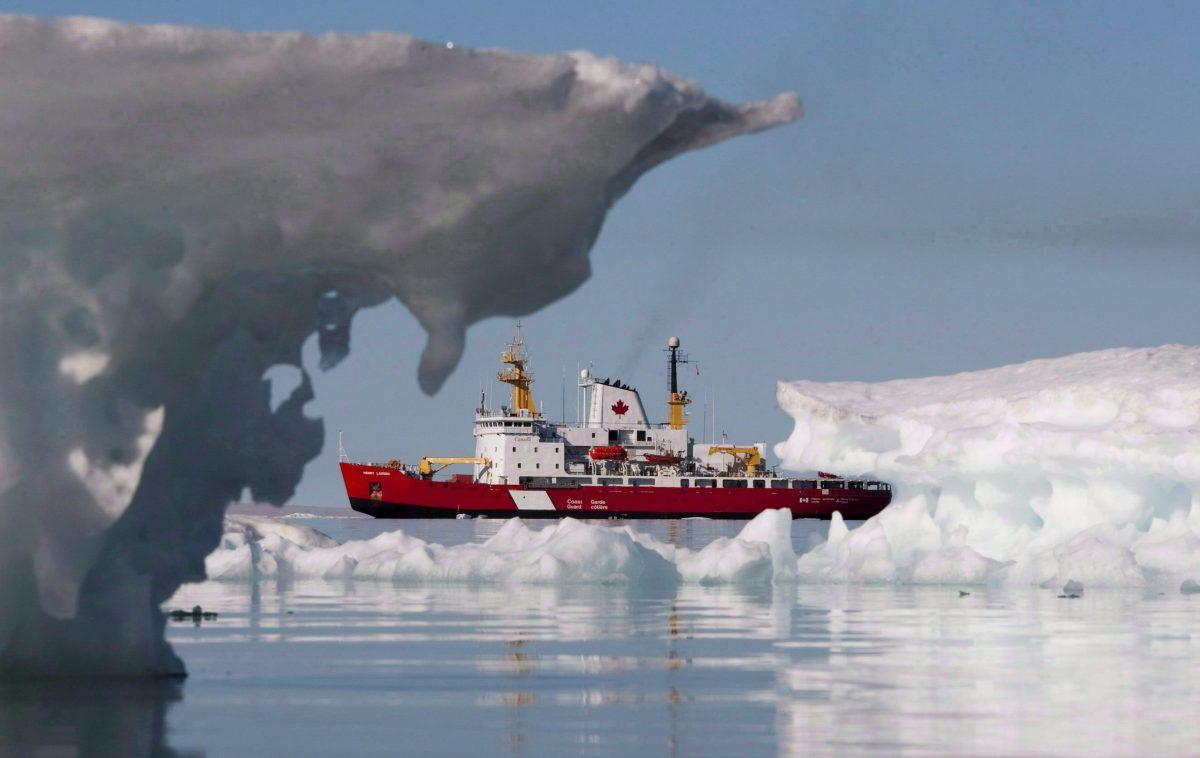
The Canadian coast guard's medium icebreaker Henry Larsen in Allen Bay during Operation Nanook in the Canadian Arctic in a file photo. (The Canadian Press/Sean Kilpatrick)
The Canadian coast guard's medium icebreaker Henry Larsen in Allen Bay during Operation Nanook in the Canadian Arctic in a file photo. The Canadian Press/Sean Kilpatrick

In 2015, then-President Barack Obama called for accelerating the acquisition of new Coast Guard icebreakers, but his plan didn’t result in the purchase of any new vessels during his term.

Last year, the Coast Guard officially welcomed its first polar icebreaker in more than 25 years, named CGC Storis.

Finland, a global leader in shipbuilding and ice flow navigation, claims to have designed about 80 percent of the world’s icebreakers and about 60 percent of the global icebreaker fleet.

“Closer cooperation with the United States is very important to Finland’s maritime industry, economy, and employment,” Finnish Prime Minister Petteri Orpo said in a statement last month during a visit to the White House.

“I am very happy that the U.S. is placing its trust in Finland.”

Finland has an extensive network of subcontractors and partners that work together to build the world’s best icebreakers and large cruise ships, according to Puisto.


Google LogoMark Us Preferred on Google
Jill McLaughlin
Jill McLaughlin
Author
Jill McLaughlin is an award-winning journalist covering politics, environment, and statewide issues. She has been a reporter and editor for newspapers in Oregon, Nevada, and New Mexico. Jill was born in Yosemite National Park and enjoys the majestic outdoors, traveling, golfing, and hiking.