The United States supports “common-sense and pragmatic approaches” to address the toxic problem of plastic pollution in the environment, the State Department has said in response to another round of failed talks at the United Nations to draft a treaty acceptable to all 193 member nations.
“We oppose global regulatory approaches, such as lists banning products or additives, that stifle innovation in manufacturing, drive inflation for consumer products, and limit exports of plastic resin and products,” a department spokesperson told The Epoch Times in an email on Aug. 22.
“These approaches do not account for differing national circumstances and are not as helpful in addressing plastic pollution.”
Inger Andersen, executive director of the U.N. Environment Programme (UNEP) which is governed by the U.N. Environment Assembly, said, “While we did not land the treaty text we hoped for, we at UNEP will continue the work against plastic pollution—pollution that is in our groundwater, in our soil, in our rivers, in our oceans and yes, in our bodies.”
About 1,400 country delegates representing 183 nations and member states, and another 1,000 observers representing 400 organizations, gathered at the U.N. Palais des Nations for the global effort, the U.N. said. But the deep divisions that became clear in 2024 after failed talks in South Korea remained.

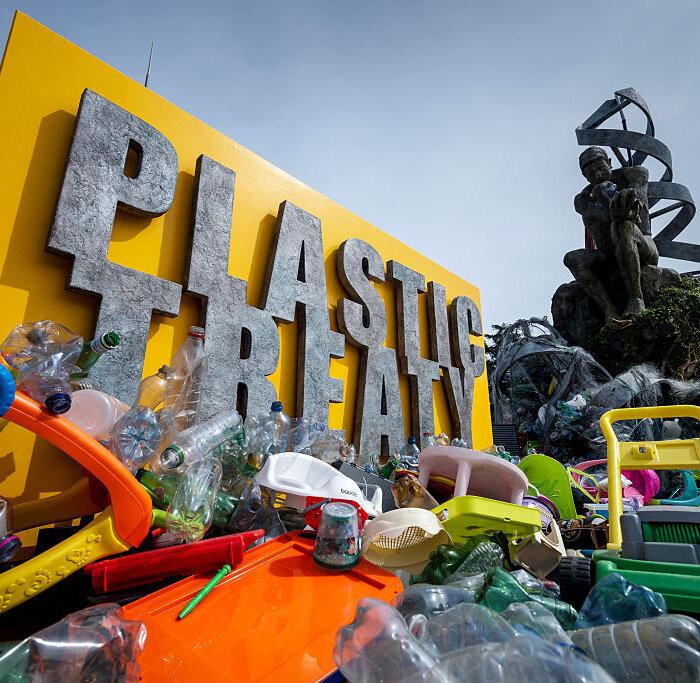
The main points of difference were on the ambition level of the treaty.
Others, including Saudi Arabia, Iran, Malaysia, Morocco, India, Cuba, and Kazakhstan, backed by the United States—many of which are plastic producers—suggested that a global treaty should just focus on the voluntary reduction of plastic waste and improved waste management infrastructure, leaving nations themselves to impose any mandatory regulatory actions.
Australia has proceeded with such a national effort through its federal government’s National Plastics Plan and commitment to the 2025 National Packaging Targets.
There were also differences regarding whether to regulate chemicals of concern related to plastics, such as phthalate additives that make plastics more flexible, as well as the issue of how to effectively and fairly finance the implementation of an agreed treaty, including any monitoring and reporting efforts.
The State Department said after the summit that it supports “an agreement that allows countries to use tailored and cost-effective solutions that will work best in their country,” but will not back mandates that “stifle innovation and drive consumer inflation” around the world.
Plastics play a key role in many sectors of every economy because of their range and properties that make them highly versatile. It is also a relatively affordable material that can be adapted for properties such as weight, strength, transparency, and UV resistance.
The Biden administration was supportive of a global treaty, but the Trump administration has generally rejected these efforts, instead favoring a nation’s sovereign rights to take action appropriate for itself.
Resolution 5/14, titled “End plastic pollution: Towards an international legally binding instrument,” was supported by 175 of 193 member countries and established the INC to convene on developing the global plastics treaty.
Member nations are now working on finding consensus on a way to reduce or potentially end plastic pollution.
Some members called for national approaches without the need for a global U.N. legal framework. But others were keen to push forward with a U.N. treaty, even calling for dropping the requirement for a consensus to allow progress with a majority vote, which would help the process overcome any objections by a minority of countries.
The resolution agreed to require a consensus to be reached for any decision-making, which some delegates said was essential.
The UNEA convenes in December and could be called on to consider further action on the treaty.
U.N. Secretary-General António Guterres expressed his support for a global treaty.
“I deeply regret that, despite earnest efforts, negotiations to reach an international legally binding instrument on plastic pollution, including in the marine environment, concluded without achieving a consensus,” he said of the failed talks.
“I welcome the determination of Member States in continuing to work to beat plastic pollution and keep engaged in the process, united in purpose, to deliver the treaty the world needs to tackle this monumental challenge to people and the environment.”
According to the Organisation for Economic Co-operation and Development, plastic production is set to triple by 2060.