U.S. Customs and Border Protection (CBP) announced Tuesday that the United States has collected more than $200 billion in tariff revenue so far this year, which it said sets a record.
“CBP’s enforcement delivers results,” CBP Commissioner Rodney Scott said in a statement. “By combining intelligence-led targeting, rigorous oversight, and swift action, we are safeguarding the U.S. economy, protecting American industries, and holding accountable those who seek to break our trade laws.”
The Supreme Court is set to issue an order on the legality of many of the tariffs that Trump imposed under a 1977 emergency law, after several courts declared the duties illegal.
Starting in April, Trump imposed a broad swath of tariffs on most countries in the world while saying they are needed as a form of reciprocity because other nations have imposed tariffs on U.S.-produced goods for decades.
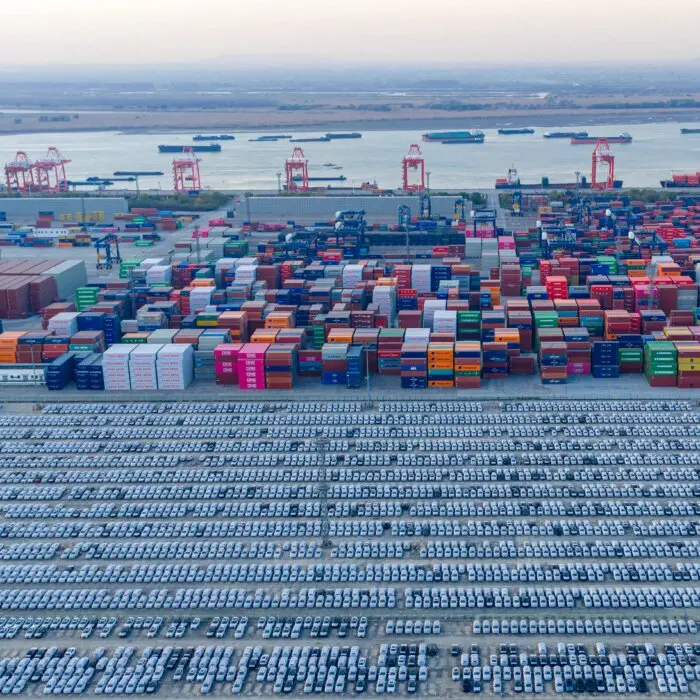
In the weeks prior, Trump also imposed tariffs targeting Canada and Mexico for what he said was lax border and immigration security, as well as on China in a bid to push the communist regime into curbing the production of fentanyl precursor chemicals.
The U.S. Court of Appeals for the Federal Circuit, in a 7–4 ruling, upheld a lower court finding that the administration didn’t have the authority to impose the tariffs without congressional approval. The Trump administration appealed the decision to the Supreme Court shortly after.
“The core congressional power to impose taxes such as tariffs is vested exclusively in the legislative branch by the Constitution,” the circuit court said in an August ruling. “Tariffs are a core congressional power.”
Multiple lawsuits were filed against the administration, arguing that Trump lacks the power to impose tariffs under the International Emergency Economic Powers Act, which allows presidents to regulate import taxes after they declare a national emergency.
As he awaits the Supreme Court decision, Trump has said that any ruling to overturn his tariffs could be disastrous for the U.S. economy and national security mandates. He argued that tariffs are needed for leverage in his foreign policy initiatives, while also saying that they could be used to lower Americans’ taxes and provide a $2,000 dividend payment next year, as well as to pay down the national debt.
“There would be an economic disaster. It would be a national security disaster if we lost the case in the Supreme Court,” he said. “We would be financially defenseless.”