Headwinds and Tailwinds
“The airline industry had some challenges this year. At the start of the year, air travel declined sharply,“ Steve Schwab, CEO of Casago, told The Epoch Times. ”This came alongside an increase in road trips. Whether due to financial or broader uncertainty, many people chose to travel differently.”“There was also a slight decline in international travel to the U.S. In the second half of the year, domestic demand for air travel improved a bit, but then, of course, we had the government shutdown, which had such a significant impact on air travel and airports.”
At the same time, the industry benefited from several tailwinds, including a resilient economy supported by strong consumer spending that defied earlier pessimistic forecasts.
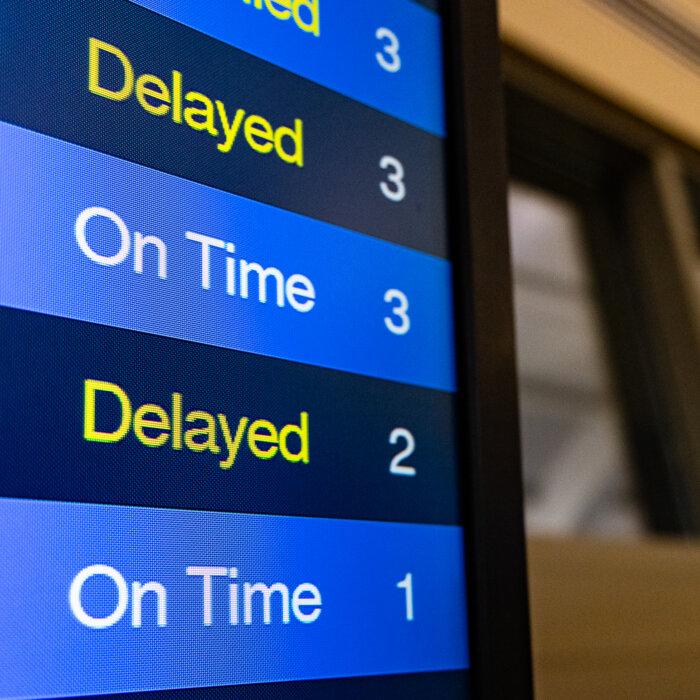
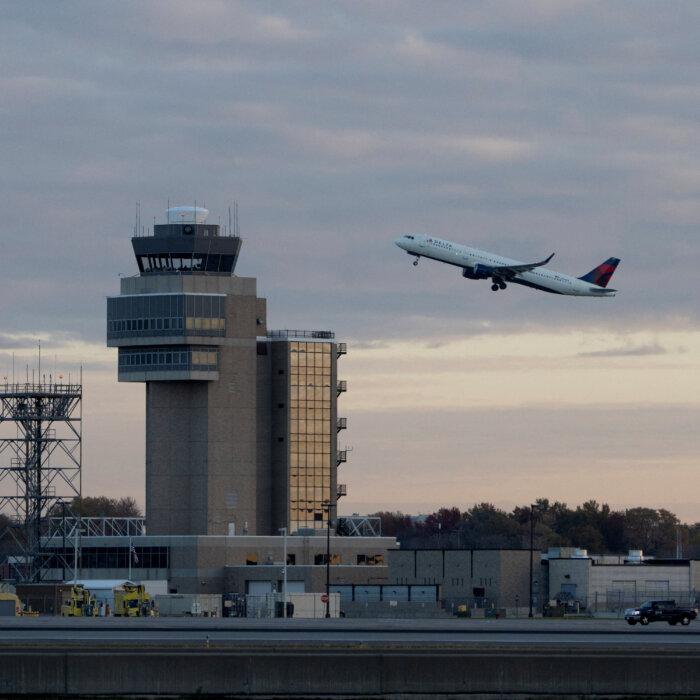
Steady travel demand and lower fuel expenses helped most major U.S. airlines report solid revenues and earnings in 2025, with the notable exception of American Airlines.
A key driver of improved profitability at Delta and other large carriers has been a greater focus on monetizing aircraft cabins by expanding seat options, including new premium and premium select products that command higher fares.
Optimism Toward 2026
Bastian expressed optimism heading into the new year, citing continued revenue growth and margin expansion.Supporting Delta’s outlook for 2026 are several large-scale events expected to drive increased travel to the United States, including the 2026 FIFA World Cup, America’s 250th anniversary, the 2028 Summer Olympics in Los Angeles, the men’s and women’s Rugby World Cups in 2031 and 2033, and the 2034 Winter Olympics in Salt Lake City.
However, the transport association expects industry profit margins to remain unchanged at 3.9 percent. Net profit per passenger is forecast at $7.90, below the 2023 peak of $8.50 and flat compared with 2025.
As a result, returns on invested capital are projected at 6.8 percent, unchanged from 2025 and below the weighted average cost of capital, estimated at 8.2 percent for 2026.
When returns fail to exceed the cost of capital, companies erode rather than create value for capital holders. This dynamic helps explain why airline stocks underperformed in 2025 despite solid earnings. Shares of Delta and United Airlines rose more than 13 percent over the past 12 months, below the gains in the S&P 500.
That balance could shift in 2026 if interest rates decline, lowering capital costs, while increased international travel linked to significant events boosts returns.
Anton Radchenko, CEO and co-founder of AirAdvisor, highlighted another potential tailwind that emerged in 2025: improved operational reliability.
“Based on the latest available statistics covering January to September 2025, only 1.51 per cent of flights were canceled,” he told the Epoch Times. “During the same time periods in 2024 and 2023, 1.58 percent and 1.63 percent of services were grounded.”
“If this trend continues, then the hope for consumers is that flight punctuality and reliability will continue to improve, and part of this may be due to government investment into the aviation sector starting to show results,” he continued. “The big swing factor for 2026 is ATC capacity: staffing shortages and system constraints can quickly amplify localized disruptions, but continued modernization and hiring momentum could make flight schedules more predictable into 2026–2028.”