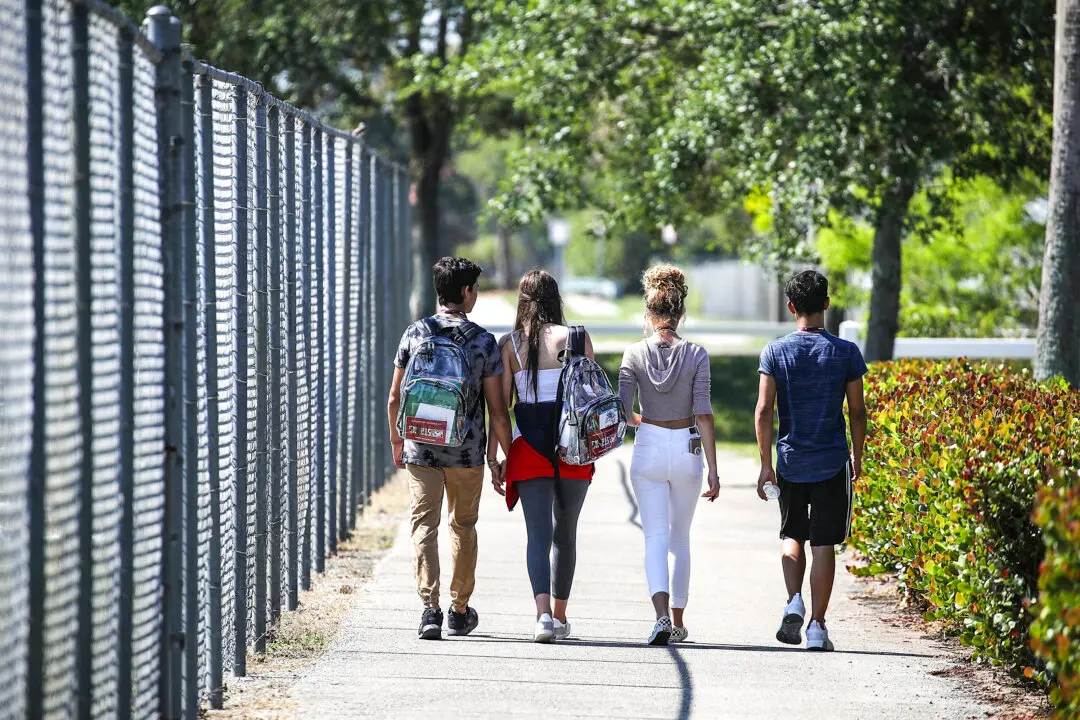
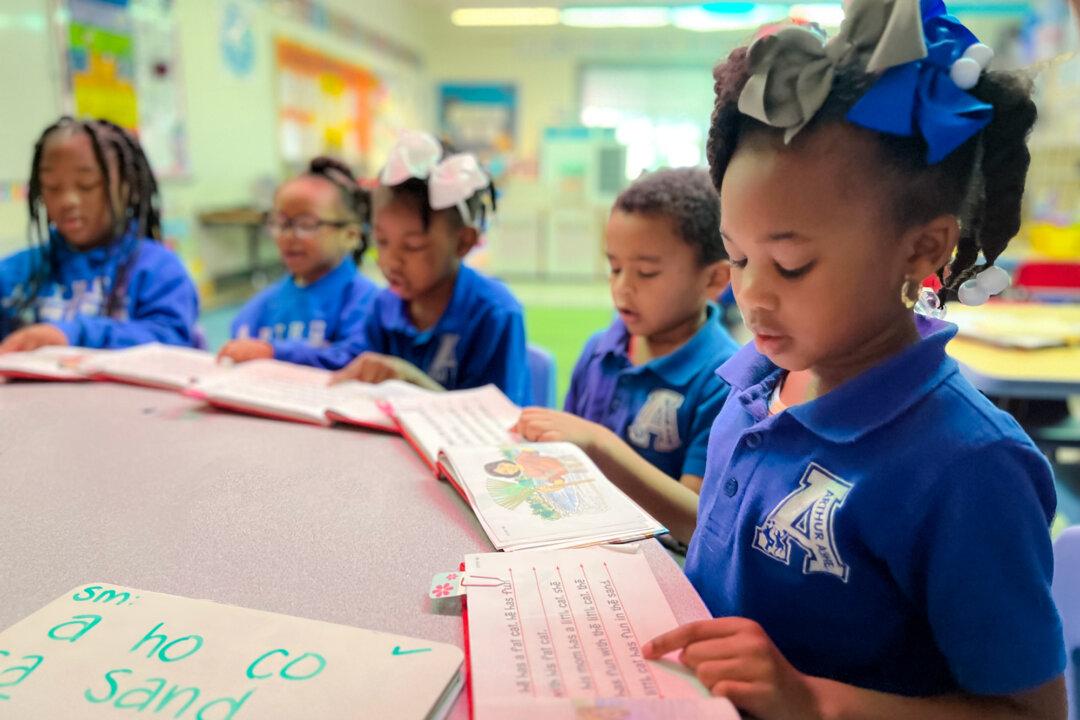
The vast majority of K–12 students in the United States would be eligible for scholarship money under the federal Education Freedom Tax Credit program scheduled to begin in the 2027–2028 academic year, a new report indicates.
If the 19 remaining states and Washington sign on as well, that total will increase to 51.7 million children, or 91.7 percent of the K–12 population.
Those figures are based on eligibility guidelines set at or below 300 percent of local median incomes across the nation, although scholarship-granting organizations selected by states are expected to prioritize lower-income families.
The federal scholarship tax program was permanently added to the tax code under the One Big Beautiful Bill Act approved by Congress in 2025.
It allows each American taxpayer to receive up to a $1,700 dollar-for-dollar credit for contributing to a private school scholarship-granting organization in his or her state.

Governors decide whether to participate.
In addition to private school tuition vouchers, the scholarship-granting organizations would provide money for transportation associated with attending a private school or for supplies for homeschoolers, depending on state regulations.
“It’s an experiment that gets away from the bureaucratic top-down approach,” said American Federation for Children senior fellow Patrick Graff, who analyzed federal data and wrote the report.
“This is more bottom-up and working through families.”
He said the federal program would especially benefit students in rural areas who historically haven’t had access to private schools.
In Florida, for example, most of the 700 private schools that opened within the past decade are in smaller communities or rural areas.
Additionally, at a time when districts in many parts of the country are closing public schools because of declining enrollment, there will be opportunities for private schools to buy or lease those abandoned learning spaces.
“People are trying to find good policy solutions,” Graff told The Epoch Times. “We’re seeing that public school districts are coming to understand there are opportunities.”
Much of the resistance to the federal program and universal school choice is tied to state and federal per-pupil funding formulas.
Educators don’t like the idea of students and their assigned allocations moving elsewhere, even though their parents still fund local schools with property taxes, sales tax, and income taxes.
Plus, the quality of education often improves when the ratio of students per teacher decreases.
“This proposal is not school choice,” the June 10 letter said. “It is a federally subsidized tax shelter designed to accelerate privatization while reducing investment in the schools that serve every student, in every community, every day.”
Of the four largest states, Florida, Texas, and New York have said they will opt in, while California has not announced a decision yet.
All but 18 states already have a state-level education savings account, voucher, or tax credit scholarship program, and many have opted in for this federal initiative as well, according to the report.
The policy design works through private philanthropy rather than direct federal spending, the report says.
Unlike a deduction, this credit reduces taxes owed by the full amount of the gift.
Unused credits carry forward for up to five years, and the credit is reduced by any state tax credit claimed for the same contribution.
The program has no national cap on total donations.
Graff said it is too soon to estimate donation amounts, especially because this arrangement—contributing up front and getting the tax credit later—is unusual to many taxpayers.
“[New York] Gov. [Kathy] Hochul saw that it’s a new way to keep money in the state,” Graff said.
He also said that average annual per-pupil spending in New York exceeds $30,000 and that it exceeds $40,000 in New York City.
“It’s not a partisan issue,” Graff said. “There are 20 million kids that live in states that haven’t opted in. This is a wake-up call.”