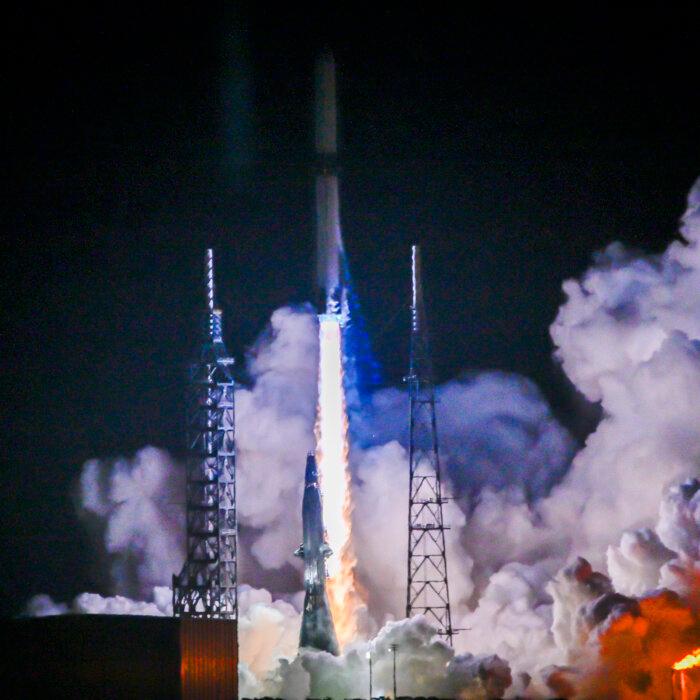
The new red-and-white United Launch Alliance (ULA) Vulcan Centaur rocket roared into space on its first mission for the U.S. Space Force and the Department of Defense (DOD) from Cape Canaveral Space Force Station’s Launch Complex 41 in Florida on Aug. 12.
Dubbed USSF-106, the mission is part of the Space Systems Command’s National Security Space Launch Program. Two national security satellites were sent into geosynchronous orbit 22,000 miles above Earth. ULA said it was one of its longest launches ever, taking more than seven hours to put its payload in the correct position.
The payload includes demonstrations and experiments from DOD customers, in addition to the Navigation Technology Satellite-3, tasked with testing technologies designed to protect against threats that try to jam GPS-type data that is critical for national security.
Built by L3Harris Technologies for the Air Force Vanguard program, this navigation satellite experiment is the first of its kind to be launched in 50 years. According to the Space Force, its predecessors, the Navigation Technology Satellite-1 and Navigation Technology Satellite-2, “paved the way for the current GPS constellation [of satellites].”
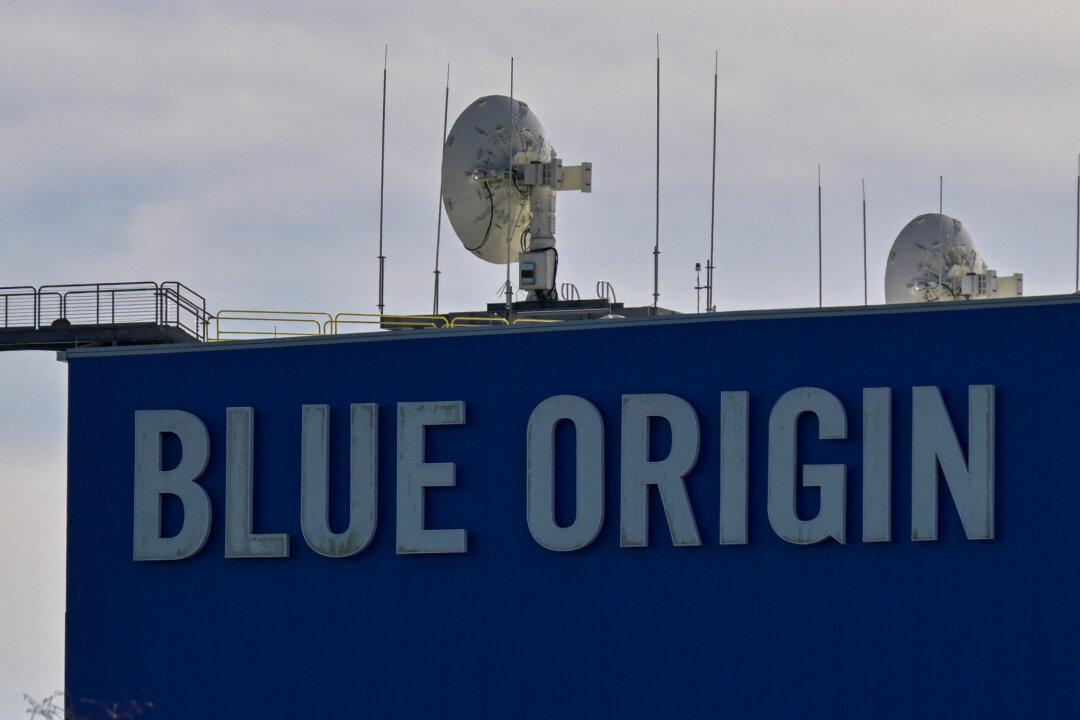
As its name suggests, ULA and its rockets are the culmination of several U.S. companies coming together. While ULA itself is a joint venture between Boeing and Lockheed Martin, the engines for the Vulcan’s main stage are two of Blue Origin’s BE-4 liquid fuel engines featured on the New Glenn orbital rocket, its exterior booster engines are made by Northrop Grumman, and its Centaur second stage is powered by two RL-10 engines built by Aerojet Rocketdyne, which have already been used in nearly 400 successful flights.
The Space Force emphasized that the key game-changing aspect of the Vulcan Centaur launch system is its engines.
For decades, ULA used Russian-made engines on its rockets, including the Atlas V and Delta IV. The switch to the Blue Origin’s follows direction from Congress to end U.S. reliance on Russian engines, and is the result of an active national security strategy to invest in the United States. The goal is to not only bolster U.S. space access but also to leverage commercial innovation.
“We certified the Vulcan Centaur Launch System in March 2025, and now we’re on the pad and ready to launch Vulcan,” Col. Jim Horne, USSF-106 mission director, said in a statement. “That’s progress, that’s teamwork, and there are a lot more coming after this one.”
Unlike Blue Origin’s New Glenn or SpaceX’s Falcon 9 rockets, though, the Vulcan Centaur is not reusable.
Still, this new all-American-made launch system is expected to launch critical capabilities for the Space Force, DOD, and National Reconnaissance Office into space over the next several years.
That increased capability to get to space was also highlighted in the launch location itself. Space Launch Complex 41 was the first launch pad configured to launch two different rockets: the Vulcan Centaur and the Atlas V. The latter is still set to host the Boeing CST-100 Starliner manned spacecraft as part of NASA’s Commercial Crew Program.
ULA has now launched more than 100 national security missions. In April, it was awarded $5.4 billion from the Space Force to fly 19 of the National Security Space Launch program’s upcoming missions through fiscal year 2029.