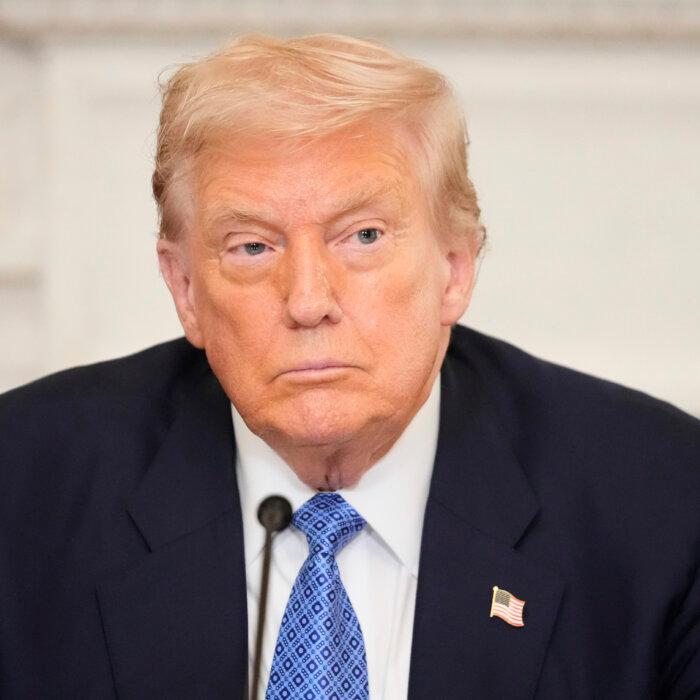
President Donald Trump is seeking to change how the U.S. Census Bureau collects data and to exclude illegal immigrants from the U.S. Census.
Those in the country illegally “will not be counted in the census,” Trump wrote in capital letters.
The proposed change continues a long-running effort by the president to reduce the political and fiscal impact of illegal immigration on the United States.
It’s unclear whether Trump is calling for a new census ahead of 2030, or if the proposed changes would apply only to future counts.
The U.S. Census is also crucial to the distribution of political power in the United States—and Trump’s move is certain to face challenges in federal courts, as have past efforts at making such alterations.
The Census
The census, a count of the people living in the United States conducted every 10 years at the turn of each decade, is a major component of the federal political system mandated by the U.S. Constitution.While every state receives two seats in the Senate regardless of its size, the number of seats that a state receives in the House of Representatives—as well as the number of Electoral College votes that it receives—is based on its population.
Every state gets at least one seat in the House, but populous states receive far more—as is the case for California, with 52 representatives, and Texas, with 38.
The number of votes that a state gets in the Electoral College is determined by adding the number of seats that a state has in the House to its two Senate seats.
It’s also responsible for determining how to distribute about $2.8 trillion in federal funding for roads, health care, education, and other purposes.
During his first presidential term, Trump attempted to have illegal immigrants excluded from apportionment of House seats, Electoral College votes, and federal funding.
Is Trump Considering an Early Census?
Trump’s announcement leaves it unclear whether his plans would apply to the upcoming 2030 Census, or if he’s considering a new census ahead of schedule.The Department of Commerce, which oversees the census, didn’t immediately return a request for clarification on the plan.
The redistricting effort has been encouraged by Trump, who has also sought similar changes in Republican states such as Missouri and Louisiana.
A new census excluding illegal immigrants—who are highly represented in blue states such as California and New York, as well as battleground states such as Arizona—could see blue states lose representation and electoral power.
However, conducting an early census would be difficult, and ordering such a move without congressional sign-off could expose the administration to legal challenges.
The decennial census represents the largest nonmilitary undertaking by the federal government, requiring an army of employees to receive responses from as close to 100 percent of U.S. households as possible.
That makes it an expensive endeavor.
Judicial Challenges
Any move to change the census is likely to face scrutiny in the courts—and in the past, federal judges haven’t been friendly to Trump’s efforts to exclude illegal immigrants.The 14th Amendment dictates that the census count “the whole number of persons in each state” for the apportionment of House seats.
In 2019, the Supreme Court blocked the first Trump administration from adding a citizenship question to the census.
Such a question was last on the census in 1950.
Critics of Trump’s plans say that adding such questions will likely lead to underreporting of household size by those in the country illegally.
Despite being blocked by the Supreme Court, Trump made another push to exclude illegal immigrants from apportionment decisions, but lost in the lower courts.
The Supreme Court didn’t weigh in on this second issue until after the 2020 election, throwing out the case on procedural grounds.
In an unsigned decision at the time, the Supreme Court wrote: “We express no view on the merits of the constitutional and related statutory claims presented. We hold only that they are not suitable for adjudication at this time.”