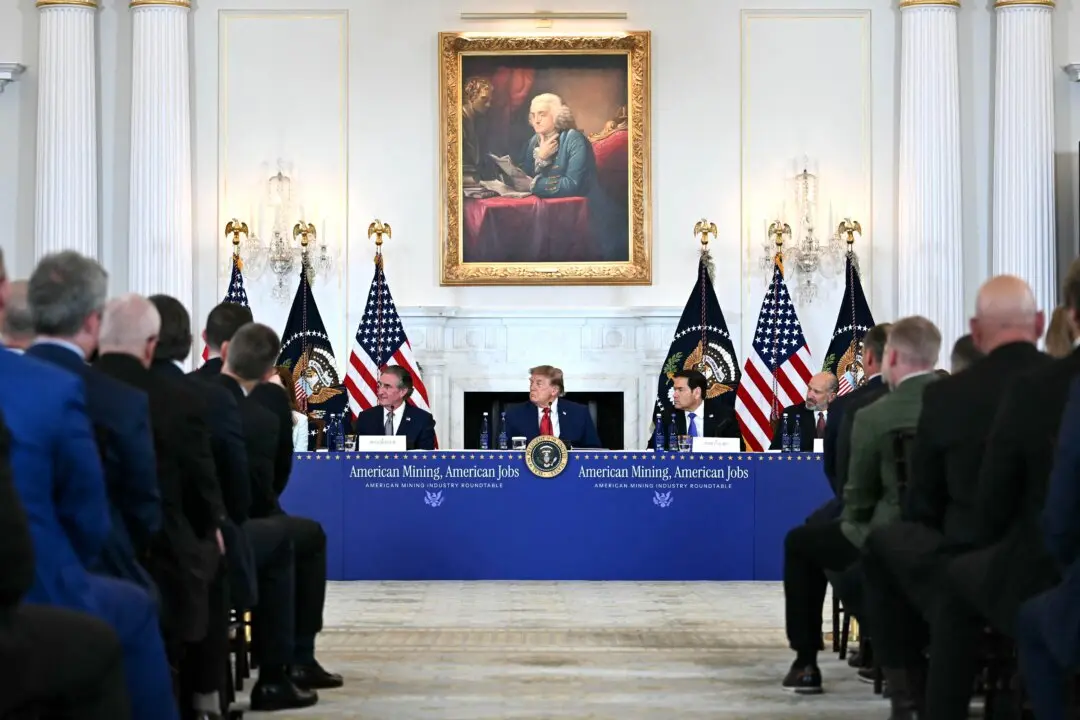
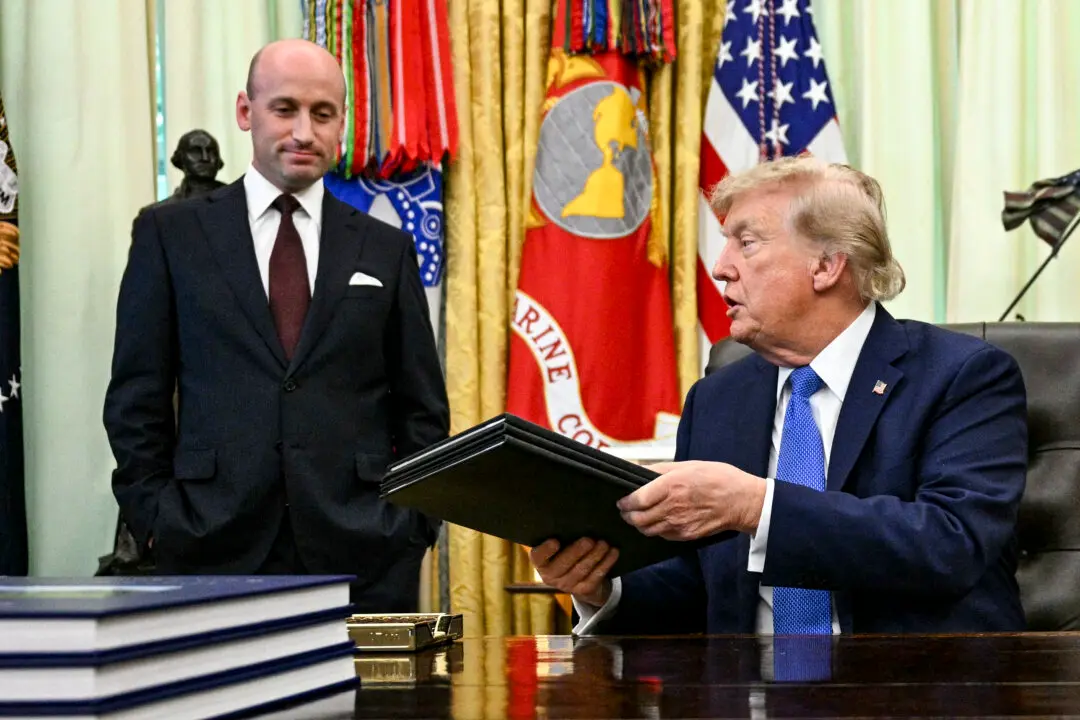
WASHINGTON—U.S. President Donald Trump welcomed South Korea’s newly elected president, Lee Jae Myung, to the White House on Aug. 25 to discuss trade, investment, and defense collaboration. Ahead of the meeting, Trump commented on Seoul’s push to renegotiate a recently finalized trade deal.
“I hear they want to renegotiate the deal, but that’s OK. I don’t mind that,” Trump said in the Oval Office, sitting alongside Lee. “That doesn’t mean they’re going to get anything, but I don’t mind.”
The U.S. president stated that he and the South Korean leader would engage in “very serious discussions” covering multiple issues, including trade and partnership in shipbuilding.
On July 30, Seoul agreed to a 15 percent tariff on its goods entering the United States, while allowing U.S. products to enter South Korea duty-free.


Trump added that South Korea would be “completely open to trade,” including accepting American cars, trucks, and agricultural products.
Under the deal, Seoul will invest $350 billion in U.S.-owned assets chosen by Trump and purchase $100 billion in liquefied natural gas and other energy products from the United States.
Trump said South Korea plans to “invest a large sum of money” in the United States, with further details to be announced during Lee’s visit to Washington.
According to Victor Cha, the Korea chair at the Center for Strategic and International Studies, while both sides have reached a trade and investment framework, many details still need to be ironed out during the upcoming meeting at the White House.
During a news briefing last week, Cha said that both sides are hoping that the two leaders will develop “good chemistry.”
This will be Lee’s first trip to Washington since he took office following a snap presidential election in June.
Just hours before the White House meeting, Trump posted on Truth Social, prompting speculation about whether the two leaders would be able to build a good relationship.
“WHAT IS GOING ON IN SOUTH KOREA? Seems like a Purge or Revolution,” Trump wrote. “We can’t have that and do business there. I am seeing the new President today at the White House. Thank you for your attention to this matter!!!”
When asked to clarify his post, Trump told reporters that he had heard about “very vicious raids” on churches in the country over the past few days.
Make American Shipbuilding Great Again
South Korea has proposed a $150 billion investment plan called Make American Shipbuilding Great Again as part of the tariff deal with the Trump administration.During a news conference in July, South Korean finance minister Koo Yoon-cheol said the goal of the project is to help rebuild the U.S. shipbuilding industry using Korea’s expertise in the field.
South Korea’s shipbuilding giants Hanwha and HD Hyundai have been active in the United States, prior to the tariff talks. Hanwha bought the Philly Shipyard in Philadelphia in 2024 and secured three U.S. Navy contracts for maintenance, repair, and operations, and HD Hyundai signed a memorandum of understanding with Huntington Ingalls in April to accelerate ship production.
According to Cha, cooperation on shipbuilding is a big priority for Trump.
“The South Koreans have worked very hard at engaging Trump on this. They’ve created their own sort of moniker for this,” he said, referring to the shipbuilding plan.
Yet many details of the plan have not been finalized, according to Cha.
Defense and Security Alliance
The two leaders are expected to discuss modernizing the U.S.–South Korea security alliance to better address North Korea’s nuclear threats, Russia’s growing influence, and communist China’s aggressive military actions in the Indo-Pacific region.In addition, Trump may push for higher defense spending during the meeting. He has called for defense spending closer to 5 percent of gross domestic product for all allies, and South Korea currently stands at 3.5 percent. South Korean Foreign Minister Cho Hyun recently said during a National Assembly session that his country would be open to increasing its defense budget.
The exercises, which began on Aug. 18 and will continue through Aug. 28, are focused on the threat from North Korea’s advancing missile and nuclear programs. They include training to respond to missile attacks and deter nuclear use.