President Donald Trump on Nov. 18 announced that the United States would designate Saudi Arabia as a “major non-NATO ally,” a substantial elevation of the Muslim kingdom’s diplomatic standing with the United States.
Trump made the announcement during a dinner at the White House with Saudi Crown Prince Mohammed bin Salman. Other high-profile figures such as Elon Musk—who had a public falling out with Trump earlier this year—and Amazon owner Jeff Bezos were also in attendance.
“I’m pleased to announce that [the U.S. and Saudi Arabia] are taking our military cooperation to even greater heights by designating Saudi Arabia as a major non-NATO ally,” Trump said.
That means the two nations have agreed to work more closely on military, economic, and related initiatives.
“A stronger and more capable alliance will advance the interests of both countries, and it will serve the highest interests of peace,” Trump said.
The designation means in part that the Saudi government will gain priority access to U.S. military equipment, including F-35 fighter jets.
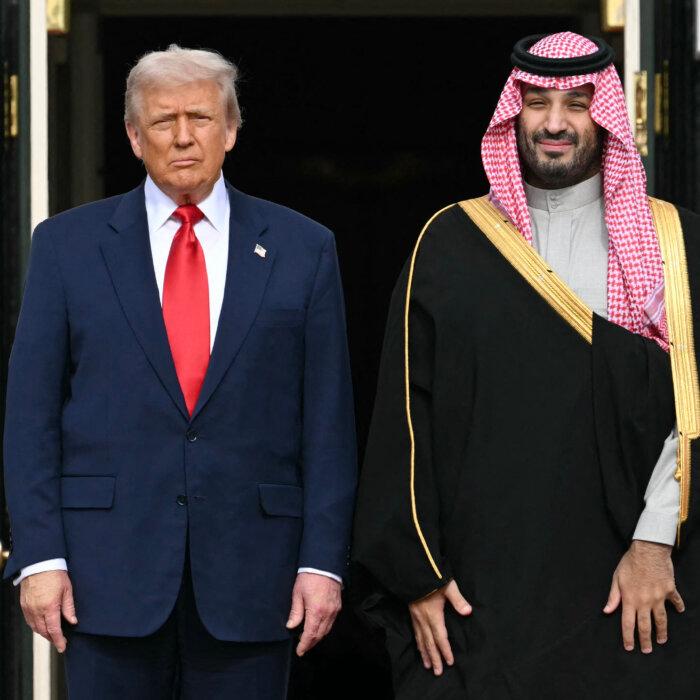
Trump told reporters on Nov. 17 that he plans to sell the high-technology aircraft to Saudi Arabia.
As bin Salman arrived at the White House, he was greeted by a flyover from the top-of-the-line U.S. jets.
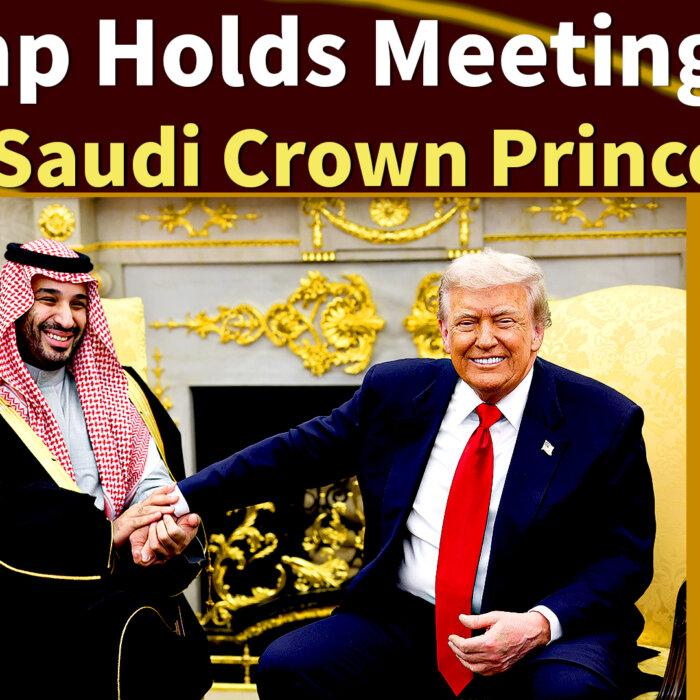
During the meeting in the Oval Office, plans were unveiled to increase investment commitments in the United States from $600 billion to $1 trillion, as part of the kingdom’s efforts to diversify its economy away from oil.
Speaking to reporters in the Oval Office, the crown prince said the new investments would target what he called “real opportunities” in the areas of emerging technology, artificial intelligence, data centers, and magnets.
As a major non-NATO ally, Saudi Arabia joins 20 nations, including countries in the Middle East such as Israel, Qatar, Egypt, and Jordan.
The two nations have closely cooperated for decades, although lingering disagreements over Israel and the Palestinian Territories have long been a sticking point in the relationship.
Saudi Arabia has called for a two-state solution, which remains the nation’s official position on the issue.
The crown prince didn’t commit to signing the Abraham Accords—Trump’s sweeping multilateral agreement aimed at bringing peace to the region—during the meeting.
However, Trump reported that the two leaders “had a very good talk” on the subject.
“A lot of progress has been made with respect to Gaza, and just about everything else we touch,” Trump said.
He said that the board to oversee peace in Gaza would feature representative heads from “every major country.”
The move to elevate Saudi Arabia’s diplomatic status could raise controversy, as concerns about Saudi Arabia’s record on human rights remain.
In 2021, American officials ruled that bin Salman had approved the 2018 killing of Saudi journalist Jamal Khashoggi.
On Nov. 18, Trump expressed skepticism about this finding, telling reporters that he believes bin Salman “knew nothing” about the killing of Khashoggi, whom Trump described as “extremely controversial.”
Bin Salman said it had been “really painful” to hear about the killing, maintaining his past disavowal of any involvement in the incident.