WASHINGTON—President Donald Trump suggested on Aug. 28 that he may call on the Republican National Committee (RNC) to host a Republican National Convention midway through his presidential term, sometime before congressional elections in 2026.
Trump suggested that the convention would be a way to showcase his administration’s initiatives to voters before the elections, which will involve the entire U.S. House of Representatives and a third of the U.S. Senate.
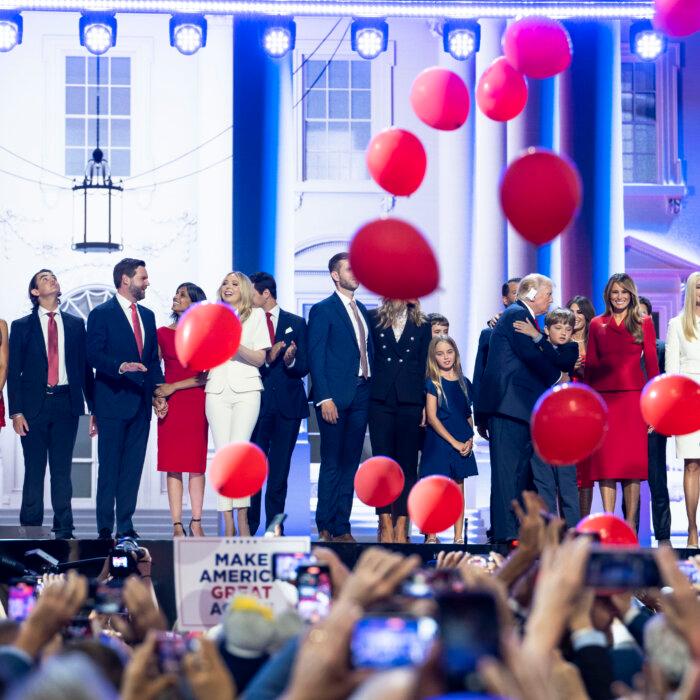
Party conventions are usually held every four years, in the final year of a president’s term. The locations are chosen years in advance, and preparations are extensive. Although the conventions bring together party officials from across the country to discuss ideas and policies, their primary purpose is to elect the party’s nominees for president and vice president of the United States in the upcoming election, and the convention’s main attendees are delegates chosen through the process of primary elections.
The Democratic Party has an identical arrangement of party conventions, whose planning is often coordinated with the Republican Party to ensure each convention runs unimpeded. Conventions are usually held in major U.S. cities, which benefit from the sizable effect on the region’s local economy in the form of travel, tourism, hospitality, food, and spending on other services.
Miniature party conventions between presidential elections have been conducted before; the Democratic Party held them in 1978 and 1982. They were discontinued after the 1984 election, when Republican President Ronald Reagan won reelection in a landslide victory that carried 49 of 50 states, amid concerns about a waste of resources.
In response to a question from The Epoch Times about whether the committee could host such a mid-term convention, Kiersten Pels, the RNC’s press secretary, wrote: “[The president] is leading with bold, innovative ideas to energize our Party and keep us on the path to victory.
“The results speak for themselves: President Trump and Republicans are strengthening and uniting the country, delivering historic wins, and undoing the disastrous policies of Democrats and the Biden Administration.”