This copy is for your personal, non-commercial use only. Distribution and use of this material are governed by our Subscriber Agreement and by copyright law. For non-personal use or to order multiple copies, please contact The Epoch Times Reprints.
Trump Starts Process to Replace Fed Chair, Won’t Oust Powell Early, Bessent Says
The treasury secretary said a formal search has started for Powell’s successor amid Trump’s frustration over Fed interest rates the president said are too high.
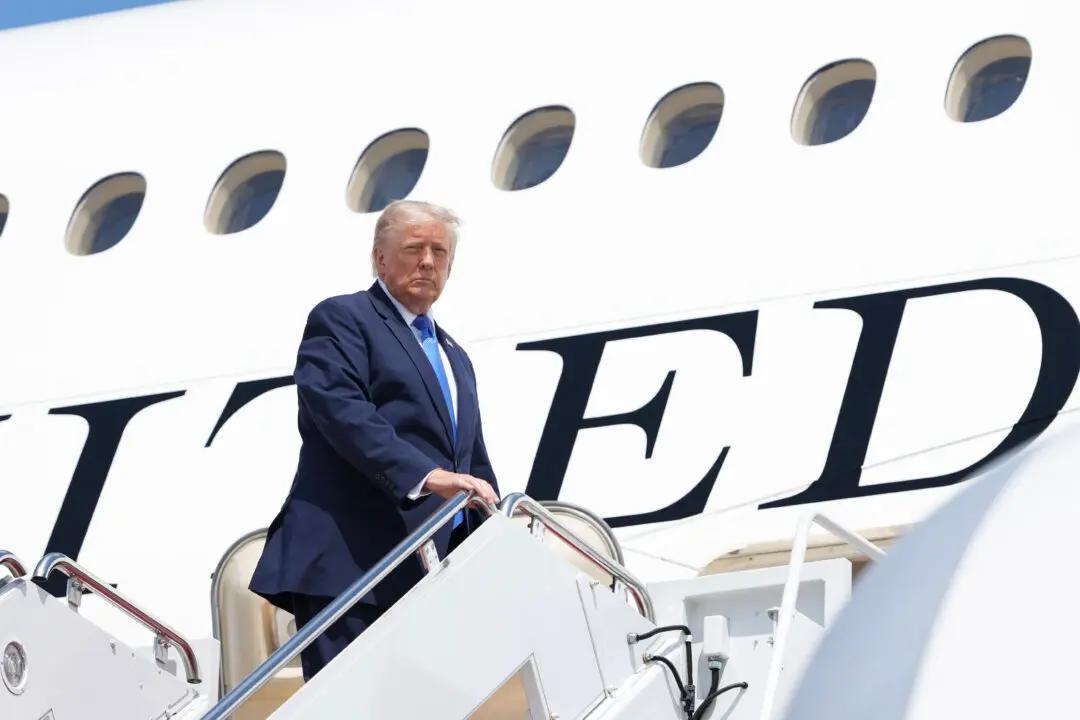
Treasury Secretary Scott Bessent said on July 15 that the “formal process” for selecting a successor to Federal Reserve Chairman Jerome Powell is already underway, but he emphasized that President Donald Trump has no plans to remove Powell before his term expires in May 2026, despite the president’s criticism of the Fed chief’s performance.
In an interview on Bloomberg Television on Tuesday, Bessent was asked whether there have been any updates to his prior indication that work on finding Powell’s replacement would start sometime in the fall.
“There’s a formal process that’s already starting,” Bessent replied, adding that “there are a lot of great candidates” being considered.
“We'll see how rapidly it progresses,” he continued. “It’s President Trump’s decision and it will move at his speed.”
Trump has repeatedly criticized the Fed chair, accusing him of being “too late and slow” to lower interest rates. The president has argued that inflation has dropped significantly—in June it was an annualized 2.7 percent—and that by holding rates at their current level of 4.25–4.5 percent, the Fed is unhelpfully hitting the brakes on economic growth.
Lower interest rates translate into cheaper borrowing costs for both consumers and businesses, fueling economic activity. On Tuesday, Trump said he believes the Fed funds rate should be three percentage points lower, which he said would save taxpayers around a trillion dollars a year in interest payments on the national debt.
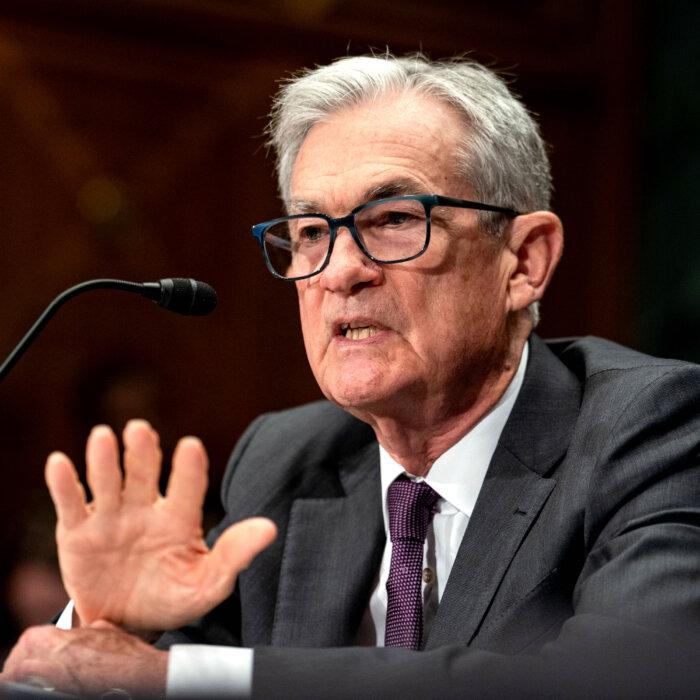
Powell, originally appointed Fed chair by Trump in 2017 and later reappointed by President Joe Biden, has defended the Fed’s rate-setting process as data-driven and independent of political influence. He has stressed that interest rates are determined collectively by the 12-member Federal Open Market Committee, not by any single official. Powell has recently signaled that the committee remains cautious about cutting rates given lingering inflationary pressures and uncertainty stemming from Trump’s tariffs.
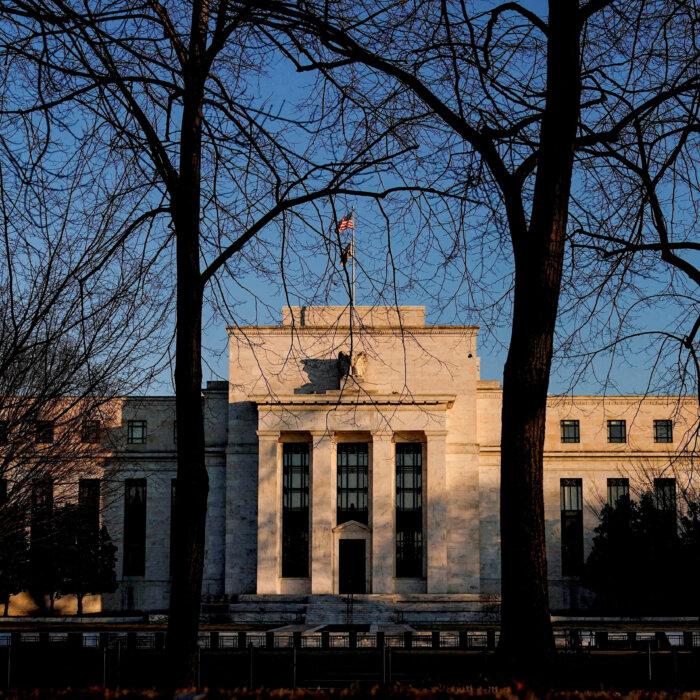
The possibility of Powell’s removal has surfaced in recent months as Trump has escalated his criticism of the Fed’s leadership and rate policies. In April, White House economic adviser Kevin Hassett said the administration was exploring whether Powell could be legally dismissed before the end of his term. On July 13, Hassett suggested that Powell might be removed “for cause” in light of a $2.5 billion renovation of the Fed’s headquarters, a project now running $700 million over budget and criticized by Office of Management and Budget Director Russell Vought.
The Fed has defended the renovation as necessary to replace outdated systems for health and safety reasons and to lower costs associated with leasing commercial office space.
Meanwhile, at the Economic Club of Chicago in April, Powell noted that Federal Reserve officials are protected by law from arbitrary dismissal.
“Our independence is a matter of law,” he said. “We’re not removable except for cause. We serve very long terms, seemingly endless terms. So we’re protected by law. Congress could change that law, but I don’t think there’s any danger of that. Fed independence has pretty broad support across both political parties and on both sides of the Hill.”
Speaking to Bloomberg on July 15, Bessent reiterated the administration’s commitment to central bank independence. “I think an independent central bank is very important for the conduct of monetary policy, and we can see that in terms of both the financial markets, the term premium, and longe-term debt,” Bessent said.
While Bessent said that Trump would not fire Powell before his term as chair ends, he said it would be confusing if Powell were to remain at the Fed as a regular governor after the end of his chairmanship. Powell’s term as a Fed governor formally runs through 2028.
“Traditionally, the Fed chair also steps down as a governor, and there’s been a lot of talk of a shadow Fed chair causing confusion in advance of his or her nomination,” Bessent said. “And I can tell you, I think it’d be very confusing for the market for a former Fed chair to stay on.”
Tom Ozimek is a senior reporter for The Epoch Times. He has a broad background in journalism, deposit insurance, marketing and communications, and adult education.