“Well, I don’t think we’re going to necessarily ask for a declaration of war,” Trump said to a pool of reporters at the White House. “I think we’re just going to kill people that are bringing drugs into our country. OK? We’re going to kill them.”
“Now [drugs] are coming in by land ... you know, the land is going to be next,” the president said, in comments similar to those he has made in recent weeks.
Trump said from the White House that his team has full legal authority to destroy suspected drug vessels at sea without the need for formal war declarations, and that he would like to inform Congress of any ground incursions.
“We’re allowed to do that, and if we do it by land, we may go back to Congress,” Trump said.
U.S. forces have targeted what officials said are drug-trafficking vessels operated by cartels in the Caribbean, as well as the eastern Pacific. The strikes destroyed nine vessels, including the destruction of a submersible on Oct. 16, and killed approximately 37 people.
The Pentagon said that several of the targets operated near Venezuelan shores, tying them to narco-terrorist networks.
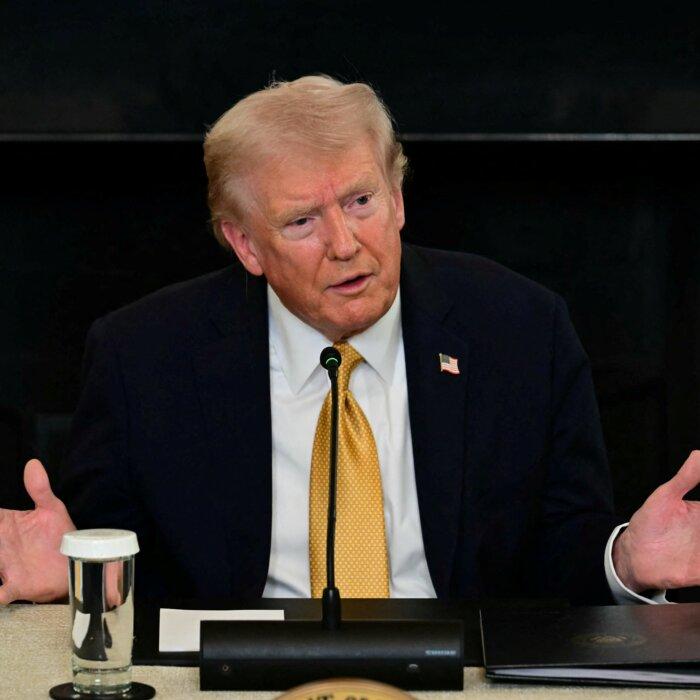
“In those conflicts, we captured thousands on the battlefield and handed over 99 percent to host-nation authorities,” Hegseth said alongside Trump at the White House on Thursday. “Did we always like the outcome? Not always. But it was the standard, and it’s the same here.”
Venezuelan leader Nicolás Maduro, during a live broadcast in Caracas on Oct. 22, said that any U.S. incursion would kickstart a nationwide backlash.
“If the U.S. ever intervened in the country, the working class would rise and a general insurrectional strike would be declared in the streets until power is regained,” Maduro said.
The U.S. government has accused Maduro of running drug-trafficking operations in the country. Maduro has denied the accusations.