This copy is for your personal, non-commercial use only. Distribution and use of this material are governed by our Subscriber Agreement and by copyright law. For non-personal use or to order multiple copies, please contact The Epoch Times Reprints.
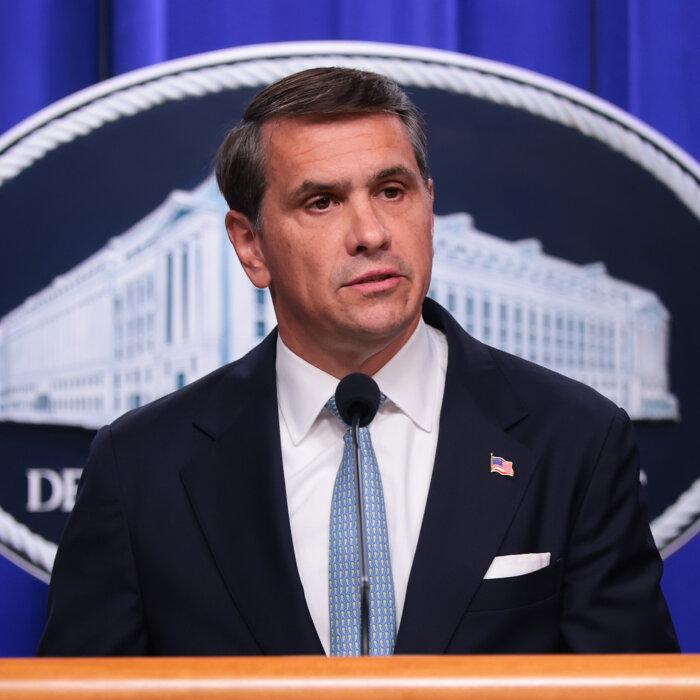
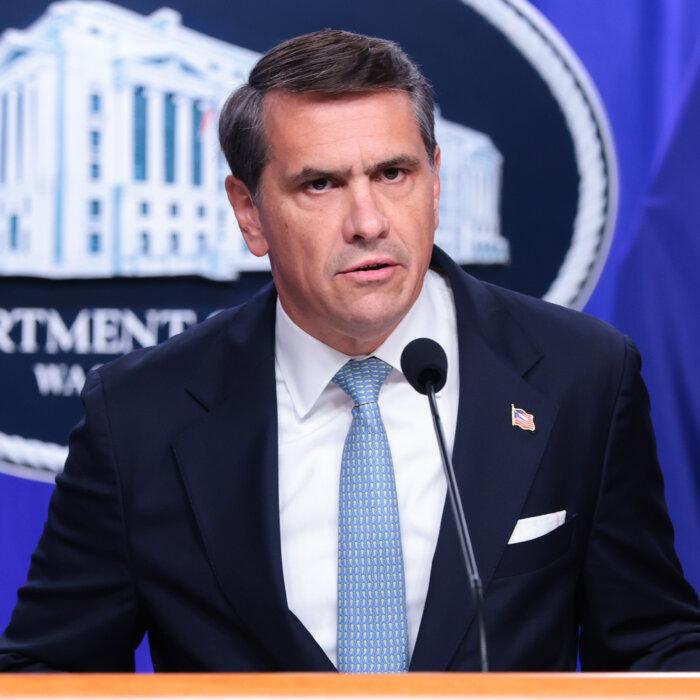
Acting U.S. Attorney General Todd Blanche speaks during a news conference at the Robert F. Kennedy Department of Justice building in Washington on Aug. 5, 2026. Anna Moneymaker/Getty Images
President Donald Trump suggested on Aug. 10 that it would be up to newly appointed U.S. Attorney General Todd Blanche to decide whether to revive the $1.8 billion “anti-weaponization” fund in the future.
The anti-weaponization fund was created as part of a settlement in Trump’s lawsuit against the IRS over alleged leaks of his tax returns. It was intended to provide compensation to individuals who alleged they had been targeted by lawfare under the previous administration.
Blanche, in an acting capacity, formally rescinded the fund on Aug. 2 after facing resistance from key Republican senators who had blocked his nomination to become attorney general.
During a press conference in the Oval Office, Trump was asked whether the administration was considering any options to revive the anti-weaponization fund.
“Well, that’ll be up to Todd Blanche, our new … who will be, I think, a great attorney general,” Trump told reporters, without elaborating.
Blanche’s nomination was confirmed in a 50–49 vote on Aug. 8, with Sens. Susan Collins (R-Maine) and Lisa Murkowski (R-Alaska) voting in opposition. He was officially sworn in on Aug. 10.
In a letter announcing the termination of the anti-weaponization fund on Aug. 2, the Justice Department (DOJ) said Blanche’s latest order “officially rescinds the May 18, 2026, order” that established the fund.
The department said the order also narrows the scope of a separate order issued on May 19—which gave Trump, his family members, and his affiliates immunity from any past tax liability—by stating that it applies “only retroactively.”
Brandon DeBot, policy director for Tax Law Center, said in an Aug. 3 statement that Blanche’s order was not enough to prevent the Trump administration from reviving the fund.
“These assurances are not worth the paper they’re written on,” DeBot said. “They don’t do anything new to stop the president from trying to bring back the fund, as he threatened to this weekend. It’s abundantly clear we need congressional action.”
The DOJ did not immediately respond to a request for comment.
Prior to the termination, Trump told the Cabinet in a July 31 meeting that the fund was already dead but said he still wished to compensate people he believed had been unjustly prosecuted under the previous government.
“It is dead,” the president said. “But I wish it weren’t, to be honest with you. I think people were horribly treated, horribly abused … and I’d like to see them compensated for their pain.”
A federal judge issued a preliminary injunction in May to block the fund from taking effect and extended it through June. Blanche stated in his Aug. 2 order that no members were appointed to operate the fund before its formal termination.