President Donald Trump put another dent in the environmental, social, and governance (ESG) movement, withdrawing the United States from the U.N. Framework Convention on Climate Change (UNFCCC) and 65 other international organizations dedicated to climate and social justice.
Trump’s order caps a recent trend in which many corporations have also canceled their decades-long commitments to left-wing global alliances, undermining what had been a highly influential worldwide movement that once included the world’s largest nations and companies.
Corporate Alliances Proliferate
Thereafter, a number of net-zero corporate alliances emerged to align the private sector with climate initiatives. At its peak, this network included financial and corporate alliances, such as the Net-Zero Banking Alliance, the Net-Zero Insurance Alliance, and the Net Zero Asset Managers initiative.These alliances operated under the umbrella of the Glasgow Financial Alliance for Net Zero, a U.N.-backed multitrillion-dollar coalition. The alliance focused on financial institutions because they were not only financiers but also dominant shareholders of publicly traded corporations and thus a critical means of leverage over the private sector.

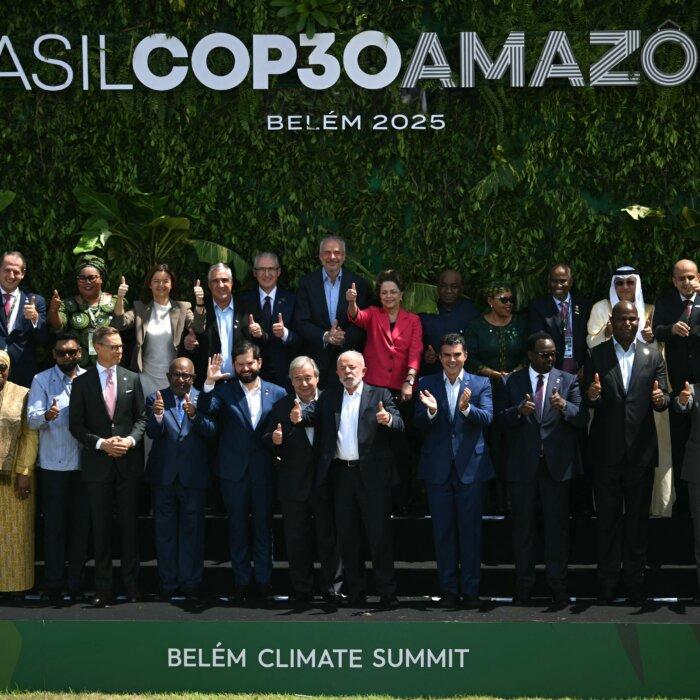
Over the past several years, however, members have begun to exit these organizations amid conservative backlash and allegations of conflicts of interest and collusion. Much of this backlash occurred in conservative U.S. states, where Republican lawmakers, treasurers, and attorneys general launched boycotts and antitrust investigations of banks and fund managers accused of colluding against oil, gas, and coal companies and of violating their fiduciary duties to investors.
ESG Critics Cheer
Trump’s Jan. 7 order to withdraw the United States from the UNFCCC aligns the U.S. federal government with the U.S. private sector and comes as the Trump administration endeavors on many fronts to spur U.S. oil and gas production.The move was applauded by many critics of the ESG industry, who claim that the net-zero movement has reduced living standards by driving up energy costs while failing to control the earth’s temperature.
“President Trump at one stroke has removed the United States from a long list of harmful foreign entanglements, headlined by the UN Framework Convention on Climate Change and the Intergovernmental Panel on Climate Change,” Myron Ebell, chairman of the American Lands Council and former Trump Environmental Protection Agency transition team adviser, said in an email to The Epoch Times.
“Getting out of the UNFCCC is great news for Americans and can also be great news for people all over the world suffering from energy poverty policies if it hastens the collapse of the international climate racket.”
H. Sterling Burnett, director of climate and environmental policy at The Heartland Institute, called Trump’s order “the biggest single step taken by any administration“ in his lifetime to ”advance U.S. sovereignty, national interests, and Americans’ liberty.”
“So many of the treaties and organizations benefit politically connected elites and unaccountable bureaucrats, and enriching corrupt political leaders, while delivering little or no benefit to average people, often keeping the poor in subservience and poverty,” Burnett said in an email to The Epoch Times.
Climate Activists Respond
Advocates for net-zero policies were less complimentary.“With diminishing credibility and competitiveness in the industries of the future, the United States will be missing out on job creation and innovation, ceding scientific and technological leadership to other countries.”
Trump’s order removes the world’s largest economy and oil and gas producer from the UNFCCC and cuts off one of its major funding sources.
Before Trump’s reelection in 2024, the United States had been paying 22 percent of the UNFCCC’s budget of 75 million euros (about $87.3 million), which was increased to 81.6 million euros (about $95 million) for 2026, but Trump halted these payments upon taking office in 2025.
In response, China increased its share from 15 percent to 20 percent, and Bloomberg Philanthropies, funded by billionaire Michael Bloomberg, stepped in to pay the amounts that Trump cut off.