A possible initiative by the Federal Communications Commission (FCC) to repeal or revise a rule and allow companies to have increased ownership of television stations has been opposed by President Donald Trump.
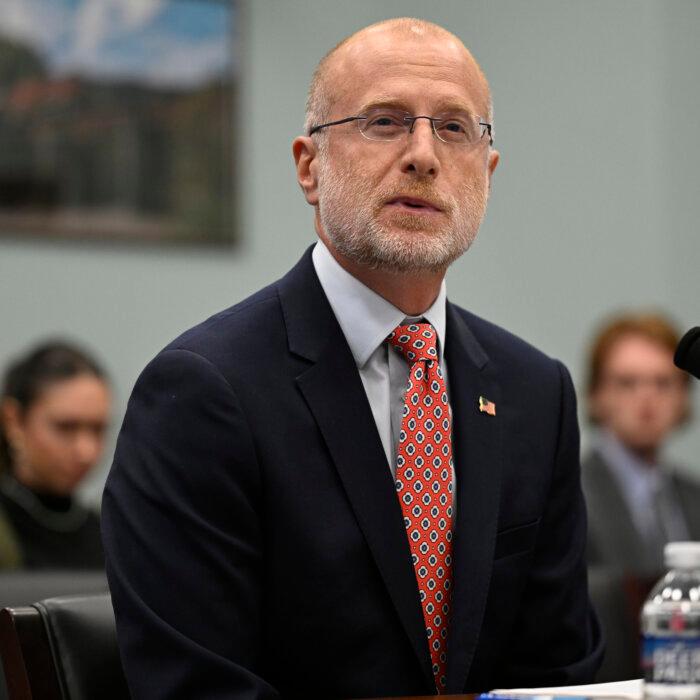
FCC Chairman Brendan Carr has publicly mulled changing the body’s “national television multiple ownership rule” or “national audience reach cap,” a federal regulation that limits any one entity from owning television networks that reach more than 39 percent of television households in the country.
On Nov. 23, Trump said that he opposed repealing the rule, saying lifting it would help media corporations such as the American Broadcasting Company (ABC) and the National Broadcasting Company (NBC), which he has said produce favorable coverage of the Democratic Party and left-wing politics.
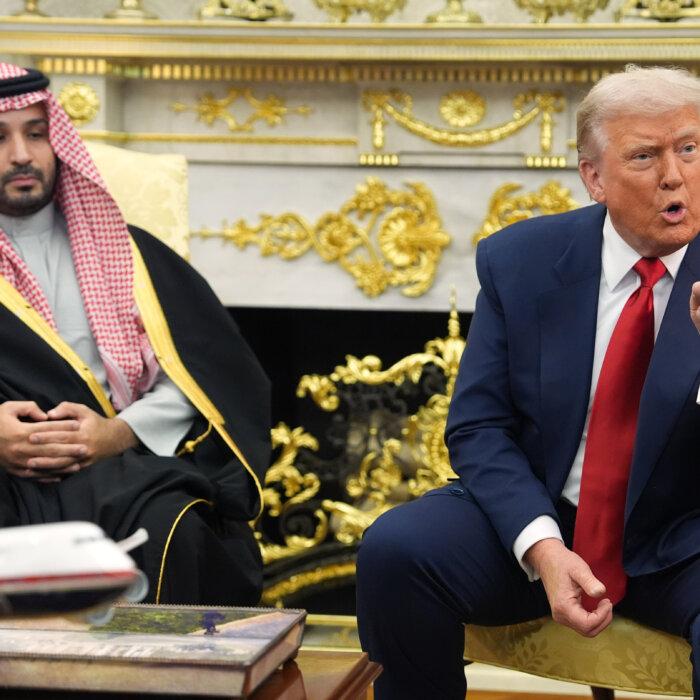
Trump’s post included an article by Newsmax, which outlined the opposition from the broadcaster’s CEO, Christopher Ruddy, to repealing the rule.
Newsmax’s competitors would benefit from the rule’s repeal, which would be required for the commission to approve the acquisition of Tegna Media Group by Nexstar Media Group for $6.2 billion, according to Newsmax. Tegna owns 64 local news channels nationwide.
“If you have left-wing networks like ABC, NBC and CBS – or groups like Nexstar today controlling every local station and their local news — Republicans would have little chance to win in state and federal elections,” Ruddy said.
In contrast, other broadcasting industry advocates have publicly supported repealing the rule, saying lifting it would increase competition and ensure fairness for their industry, as other mass media industries—such as video services such as Netflix and Hulu, cable television, and social media—face no such limitation.
Kaplan disagreed with Newsmax’s position.
“Newsmax isn’t worried about local journalism; it’s worried about competition,” he said. “And it fears a stronger broadcast industry because a stronger broadcast industry could lead to additional conservative voices with larger audiences—voices with whom Newsmax would have to actually compete.”
Some Republican members of Congress also support repealing the rule.
Controversy has ensued over whether the commission can unilaterally increase or repeal the cap, or whether Congress must act to do so.
On Nov. 3, professor Brian T. Fitzpatrick of Vanderbilt University Law School filed an ex parte brief with the FCC.
“Let me state at the outset that there may or may not be good policy reasons for lifting the ownership cap. I do not know the answer to that question because I am not a scholar of policy. But I am a scholar of law and I know that even the best policy reasons cannot override textual commands from Congress.”
In 2004, Congress amended the Telecommunications Act and specified 39 percent as the cap. Carr said in 2017 that the commission had the authority to modify the cap on its own.
ABC News and NBCUniversal did not immediately respond to a request for comment.