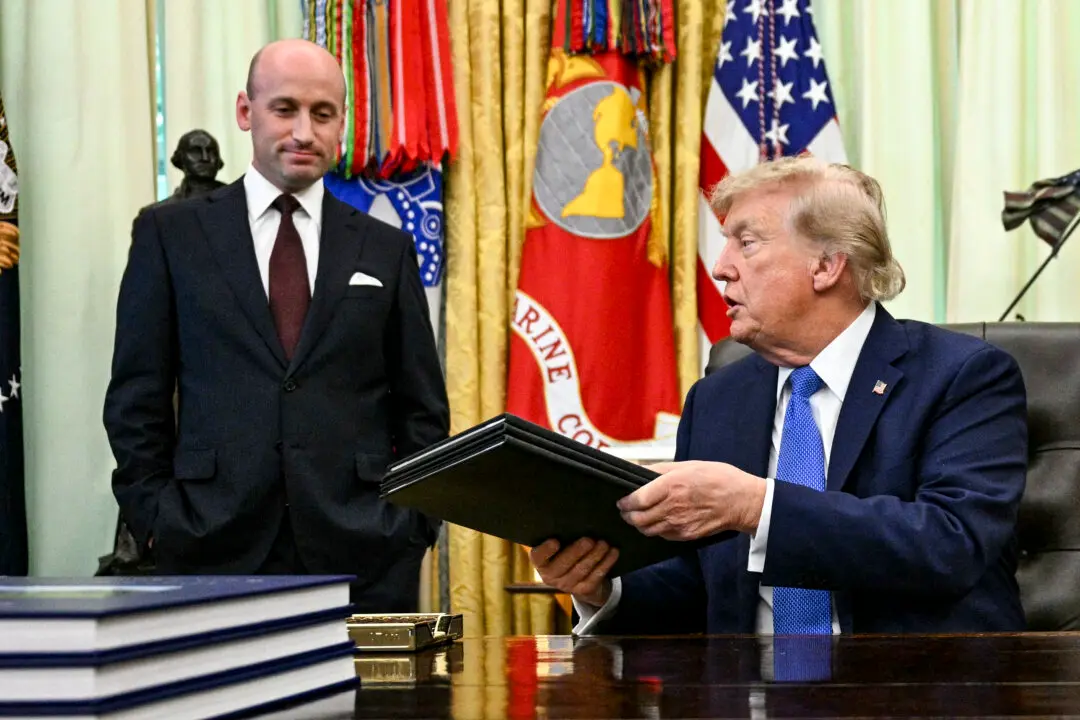
President Donald Trump on July 1 marked the opening of a new detention facility for illegal immigrants in Florida, called “Alligator Alcatraz” for its remote location deep in the Everglades and the surrounding wildlife.
While touring the site, Trump received the news that the Senate had narrowly passed his sweeping legislative package, known as the “One Big, Beautiful Bill,” delivering him a significant political victory.
The trip highlighted Trump’s core message: the pressing need for congressional funding to expand immigration detention centers nationwide, a key component of his mass deportation agenda.
Located at the Dade-Collier Training and Transition Airport, about 36 miles southwest of Miami in the small community of Ochopee, the new facility is designed to host nearly 3,000 illegal immigrants.
It is located in remote swampland teeming with alligators, crocodiles, and pythons, drawing comparisons to the infamous Alcatraz prison for its inescapable nature.
It’s designed to detain illegal immigrants and accelerate deportation processing.

Construction was completed in just eight days after Florida Gov. Ron DeSantis invoked emergency powers.
“I looked outside, and that’s not a place I want to go hiking anytime soon,” Trump said at a roundtable discussion in Florida after touring the place.
“We’re surrounded by miles of treacherous swamp land, and the only way out is really deportation.”
Trump said his administration used a portion of FEMA funds to build the detention facility, money that was originally allocated by President Joe Biden to pay for hotel stays for illegal immigrants.
Upon landing at the airport, the president complimented DeSantis on the completion of the new Immigration and Customs Enforcement (ICE) facility in 8 days, saying he did a “fantastic job.”
DeSantis praised the cooperation between his state and the federal government.
“It’s made a huge difference on any given day. Florida constitutes about 20 percent of all immigration arrests nationwide,” he said.
DeSantis also announced that Florida will deputize National Guardsmen as immigration judges. So instead of waiting three years for a deportation decision, he said, it will be made in less than three days at Alligator Alcatraz.
During the roundtable, Kevin Guthrie, director of the Florida Division of Emergency Management, said that the facility has room for expansion.
The 158,000-square-foot aluminum structure is hurricane-resistant and includes backup power, housing for 1,000 staff, medical and legal services, air conditioning, hot meals, recreation areas, and more than 200 security cameras.
“As soon as Air Force One departs, it will be swept and it will be open for business,” DeSantis said during the roundtable.
While the current facility will hold 3,000 people, there is an additional 2,000-bed facility at Camp Blanding, he added.
He urged other red states to take similar action to expand their detention capacity.
“This is a model, but we need other states to step up,” he said.
One Big, Beautiful Bill
It was a pivotal day for the president. As he toured the new detention facility in Florida, his attention remained fixed on Capitol Hill, closely monitoring the Senate’s vote on his signature legislation.“Did they take the vote yet?” he asked reporters while touring the facility.
Soon after, the Senate narrowly passed the bill by a 51–50 vote.
Vice President J.D. Vance cast the tie-breaking vote.
Republican Sens. Thom Tillis, Rand Paul, and Susan Collins sided with Democrats in opposing the measure.
The legislation now heads back to the House, where its future remains uncertain.
“Wow. Thank you,” Trump said after learning that the bill had passed the Senate.
As for resistance in the House, he remained optimistic.
“It’s a great bill. There is something for everyone. And I think it’s going to go very nicely in the House. Actually, I think it will be easier in the House than it was in the Senate,” he said.
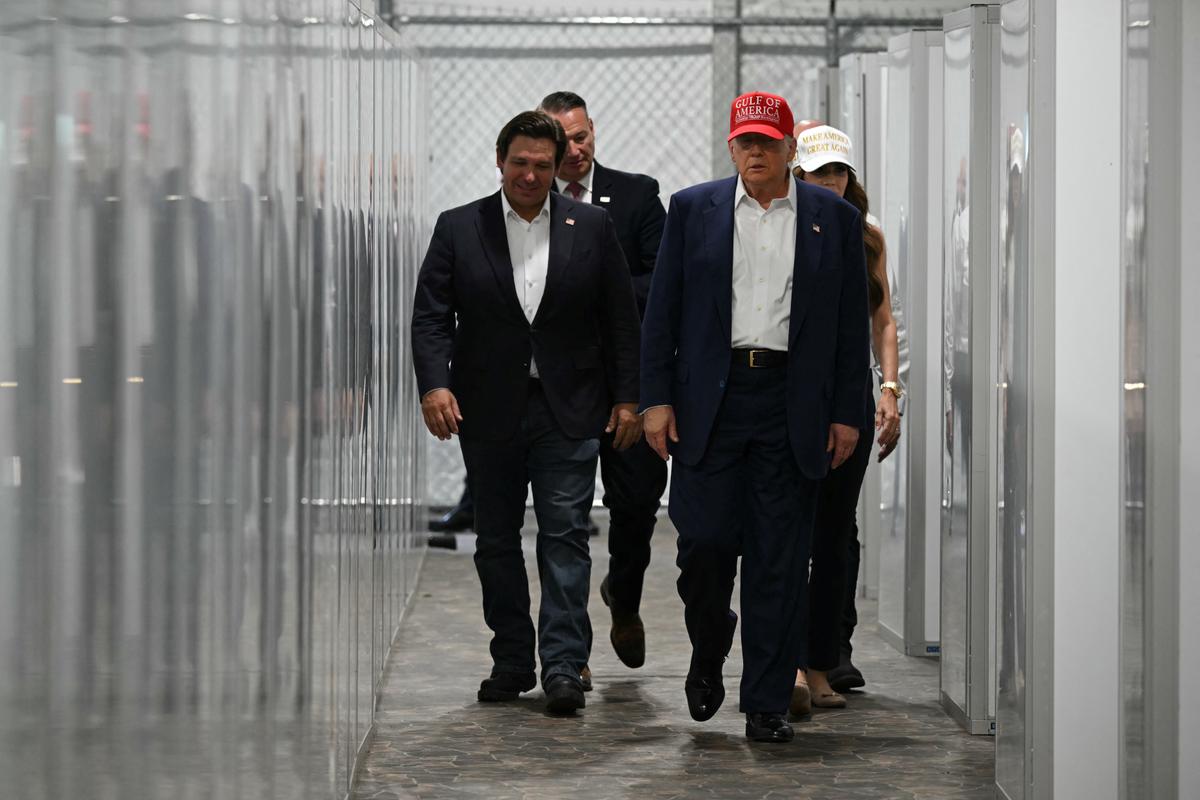
Trump and DeSantis
The visit also came included Trump’s first friendly encounter with DeSantis since their rivalry in the presidential primary.During the roundtable, Trump called him a friend, noting their strong, longstanding relationship.
Alligator Alcatraz
Florida Attorney General James Uthmeier, who coined the term “Alligator Alcatraz,” previously said the site’s location offered a key strategic advantage.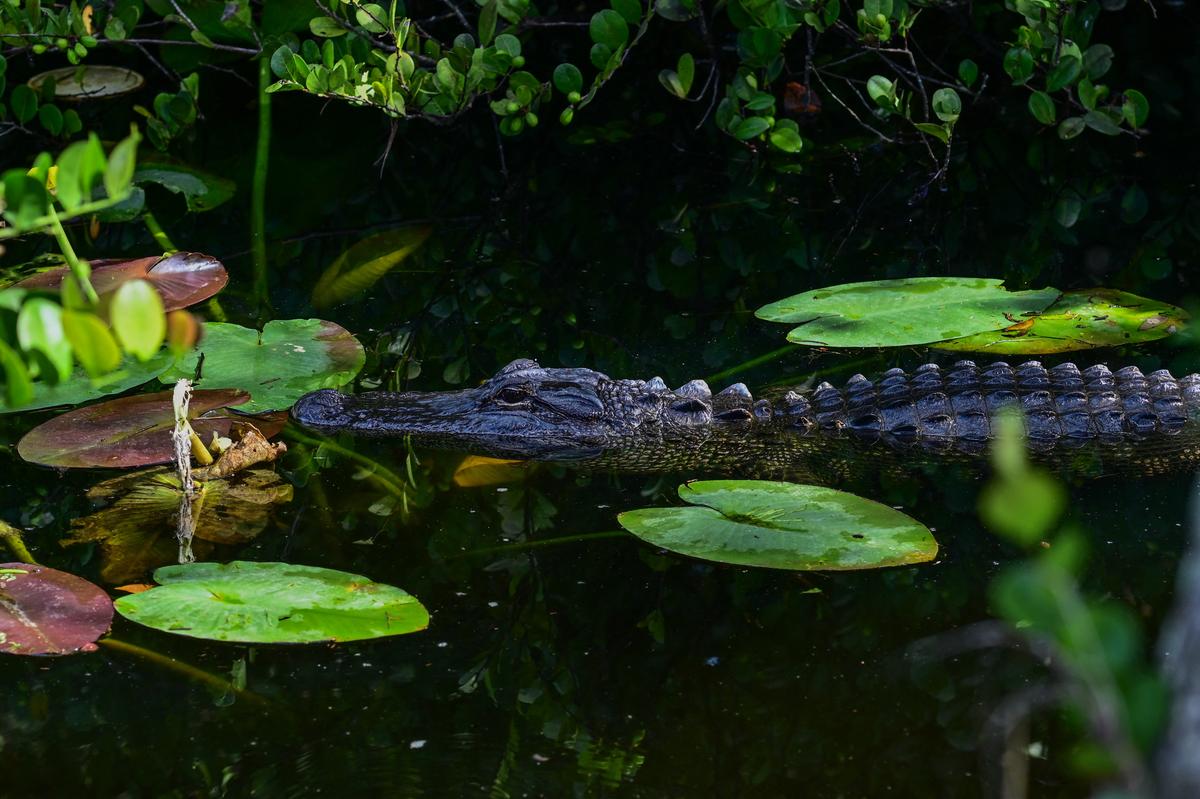
The facility plans were drafted by the Florida Division of Emergency Management and submitted to the Department of Homeland Security, receiving final approval from Noem on June 23.
The plaintiffs requested a preliminary injunction, arguing that the detention and deportation center was approved without the required environmental reviews.
The governor’s office previously stated that the site would be used without “the removal of vegetation, additional paving, or permanent construction.”