President Donald Trump indicated on Thursday that he was open to allowing illegal immigrants who work on farms to continue with their work in order to prevent unnecessary disruptions to farming across the country.
During a speech given at the Iowa State Fairgrounds on July 3, Trump said he was working with the Department of Homeland Security to figure out a solution for alien farm workers.
“If a farmer is willing to vouch for these people in some way, Kristi, I think we’re going to have to just say that’s going to be good, right?” he said, referring to Homeland Security Secretary Kristi Noem.
Trump said the government does not want to take all workers off farms because, in many cases, some of the people have been working for more than a decade.
“We’re working on legislation right now,” Trump said, adding that alongside farmers, the government is also working with people who have hotels and leisure properties.
“We’re going to work with them and we’re going to work very strong and smart and we’re going to put you in charge. We’re going to make you responsible.”
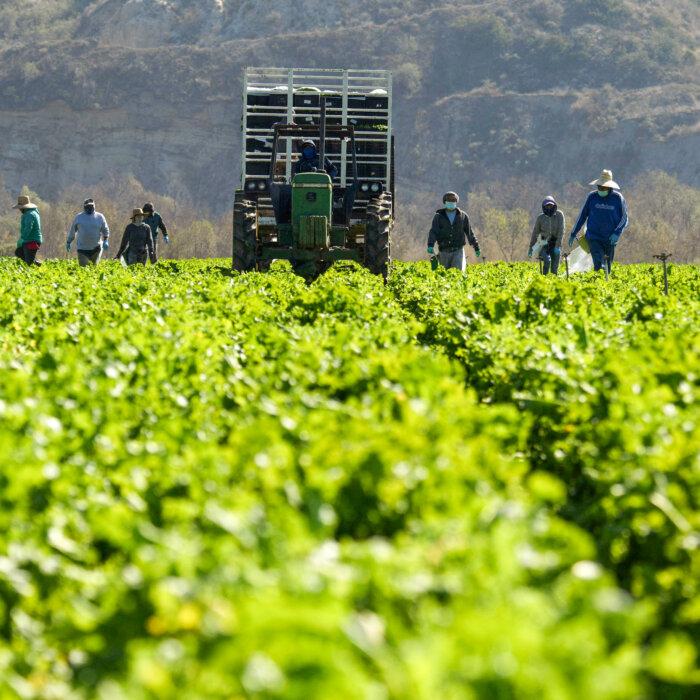
Trump has taken a softer stance toward farm labor as the sector will be severely impacted by the strict implementation of immigration laws.
In an analysis published in April, KFF said, 47 percent of agricultural workers in the country were noncitizens without work authorization; 18 percent were noncitizens with work authorization; and the rest, 34 percent, were U.S. citizens. A majority were Hispanic.
According to the American Business Immigration Coalition, 73 percent of U.S. farm workers are foreign-born. These workers, it says, are “critical” to the U.S. agricultural sector, which generates more than $400 billion annually.
Leniency for Positive Contribution
Trump’s stance on enforcing immigration laws has led to some complaints from farmers that their crops are at risk due to a depleted workforce. However, he noted that many illegal immigrants with criminal backgrounds may also be applying for jobs.“So we’re going to have an order on that pretty soon,” Trump said. “I think we can’t do that to our farmers and leisure and hotels.”
In a June 12 CNBC interview, Secretary of Agriculture Brooke Rollins said the president’s options are limited. Most of what needs to happen depends on Congress, she said.
“The president understands that we can’t feed our nation or the world without that labor force, and he’s listening to the farmers on that,” Rollins said.
“Restaurant operators, farms, and hotels rely on longtime, law-abiding workers in order to better serve our national food and hospitality supply chain. Today, there are more than 1 million unfilled jobs in the foodservice and hotel industries,” she wrote.
Korsmo asked Trump to “implement targeted workforce solutions, ensuring sectors like agriculture, hospitality, and foodservice can hire and retain essential immigrant workers,” likely referring to illegal immigrants.
“Consider deferred action with work authorization on a select basis for long-serving employees who pass background checks, pay taxes, and meet rigorous vetting standards,” Korsmo said. “This targeted relief has precedent and would provide continuity and workforce stability.”