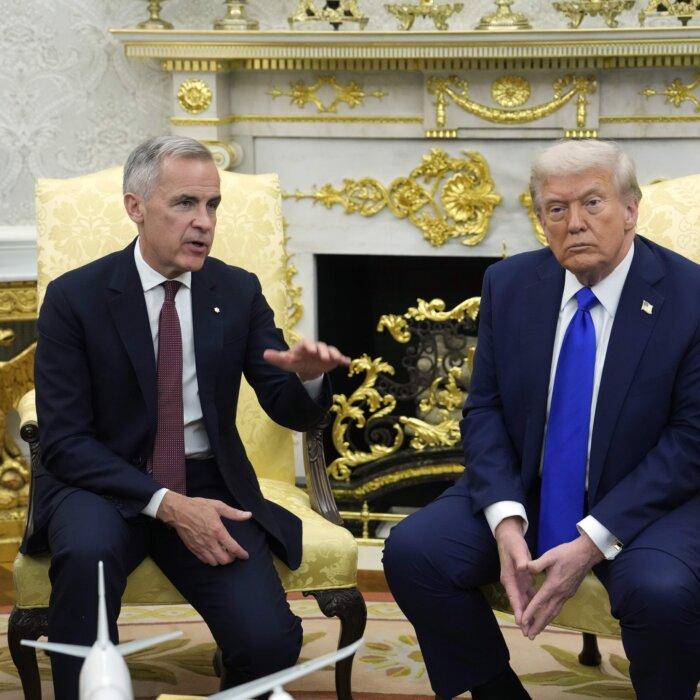
U.S. President Donald Trump imposed an additional 50 percent tariff on some Canadian goods on July 20, saying that the country has discriminated against American dairy, alcohol, and auto exports.
“President Trump is taking action to hold Canada accountable for its continued discrimination against and unreasonable and unequal treatment of U.S. commerce that has burdened and disadvantaged hardworking Americans,” the White House said in a statement.
The tariffs take effect in 30 days.
Trump signed three proclamations on July 20 to “level the playing field” on dairy, cars and auto parts, and alcohol, he said.
Each proclamation sets a 50 percent tariff covering nearly $20 billion in products ranging from wine to hockey sticks and cement.

The tariffs apply to all covered goods, regardless of whether they originate under the U.S.–Mexico–Canada Agreement.
The tariffs will not apply to energy, potash, and other goods needed to protect domestic manufacturing vital to national security under the Trade Expansion Act, such as fish or critical minerals, according to the White House.
Trump is using a trade law, Section 338 of the Tariff Act of 1930, to set the tariffs, which he said gives him the power to impose presidential tariffs.
U.S. Trade Representative Jamieson Greer said Canada is continuing to retaliate against the United States, unlike other trade partners.
“While the Administration continues to secure fair and reciprocal trade deals with our trading partners, Canada, unlike other partners and allies, continues to retaliate against the United States for its efforts to rebalance trade and protect U.S. industry in national-security sensitive sectors,” Greer said in a statement.
Canada has taken U.S. alcohol products off shelves and given better market access to dairy products from the European Union. Canada has also capped U.S. vehicle exports, Greer said.
Premier of Ontario Doug Ford said Canada should retaliate against Trump’s latest tariffs.
“I’ll never stop fighting to protect Ontario,” Ford said in a post on X. “If these tariffs proceed, Canada should respond tariff for tariff, dollar for dollar.”
Flavio Volpe, president of Automotive Parts Manufacturers’ Association in Canada and a policy expert on national trade and industry, said he was not worried about the tariff announcement.
“I’m not panicked,” Volpe posted on X. “Their justification for Section 338 tariffs is that [Canada] is specifically discriminating [versus U.S.] commerce. ... Keep calm & carry on.”
Volpe said the White House cited terms of tariffs already in effect.