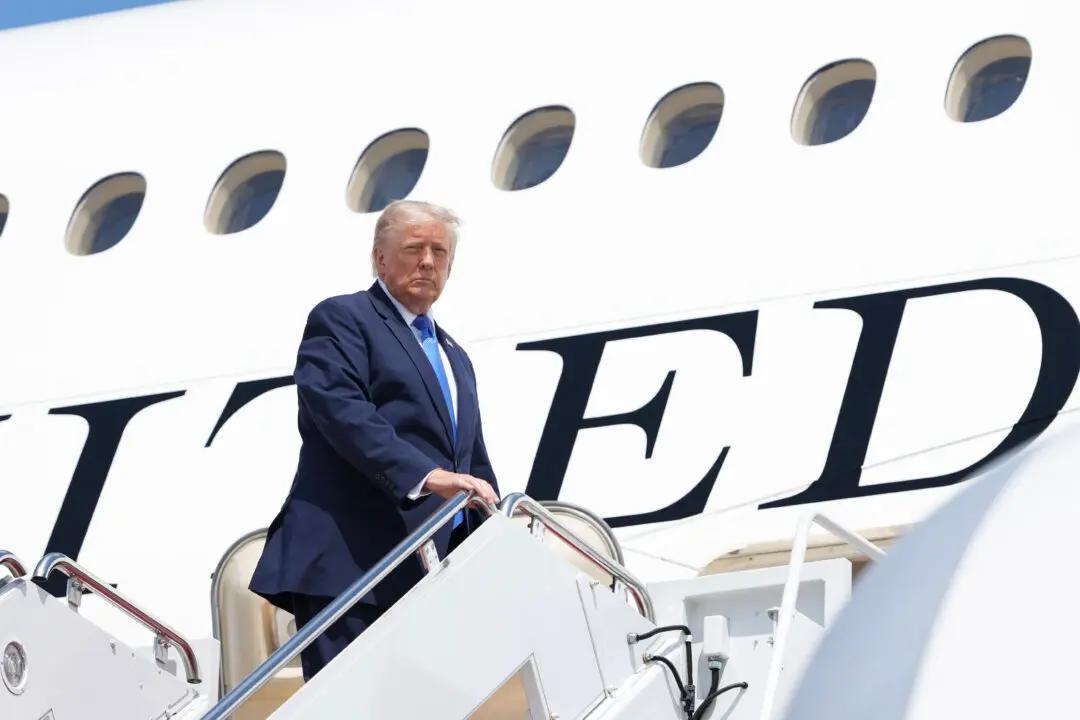
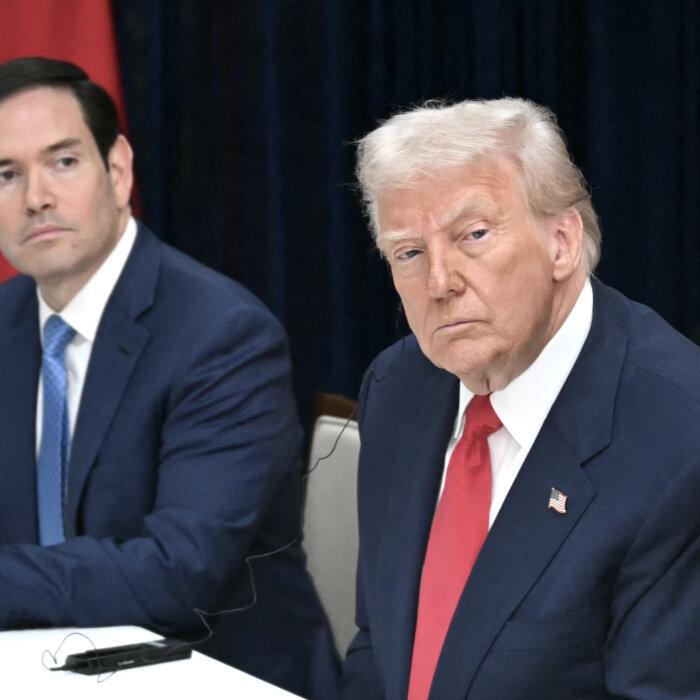
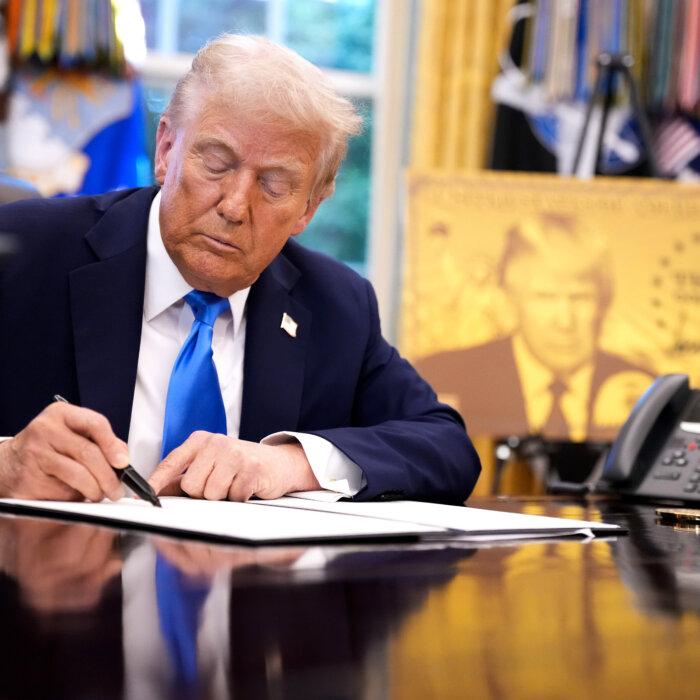
President Donald Trump defended the H-1B skilled worker visa program in an interview this week, saying that there are not enough qualified American workers to fill available jobs and that it will take time to develop enough homegrown talent to meet demand.
In the interview, Ingraham asked Trump about the H-1B visa program, saying that bringing in thousands of foreign workers would hurt efforts to raise wages for Americans.
“Well, I agree, but you also do have to bring in talent when a country—” he began.
Ingraham interjected, “Well, we have plenty of talented people here.”
“No, you don’t,” the president replied. “No, you don’t have certain talents.”
He said that it takes time to build up the necessary skills to perform specialized work.
“You can’t take people off an unemployment line and say, ‘I’m going to put you into a factory where we’re going to make missiles,’” he said.
“In Georgia, they raided because they wanted illegal immigrants out,” Trump said. “They had people from South Korea that make batteries all their lives. You know, making batteries [is] very complicated. It’s not an easy thing, and very dangerous. A lot of explosions, a lot of problems.”
Trump said that some of the South Koreans were training U.S. staff in the early stages of battery production to help get the plant running.
“You can’t just say a country is coming in, going to invest $10 billion to build a plant, and going to take people off an unemployment line who haven’t worked in five years, and they’re going to start making missiles. It doesn’t work that way,” he said.
Atlanta immigration attorney Charles Kuck, who represents four of the detained South Korean nationals, told The Associated Press in September that no company in the United States makes the machines used in the Georgia battery plant, so workers had to come from abroad to install or repair equipment on-site. He said it would take about three to five years to train someone in the United States to do that work.
“This is not something new. We’ve been doing this forever, and we do it when we ship things abroad; we send our folks there to take care of it,” Kuck said.
“Many firms are still navigating a labor shortage and want to hire but are having difficulty doing so, with labor quality being the top issue for Main Street,” NFIB chief economist Bill Dunkelberg said in a statement.
Thirty-two percent of small-business owners reported job openings they could not fill in October, unchanged for the second straight month, according to the latest data.
Balancing Enforcement With Industry Needs
The Trump administration has paired its calls for tighter immigration controls with selective measures to help industries dependent on foreign labor. In an August interview on CNBC’s “Squawk Box,” Trump said that deported farmworkers who were in the country illegally would be allowed to return legally under new procedures designed to protect farmers during labor shortages.“By rooting out fraud and abuse, the Department of Labor and our federal partners will ensure that highly skilled jobs go to Americans first,” Labor Secretary Lori Chavez-DeRemer said in a statement announcing the launch of the initiative.
Critics have said that the H-1B and other work visa programs are often used to replace U.S. workers with cheaper foreign labor and don’t always attract the most highly skilled candidates.
Supporters, including major corporations and business advocacy groups such as the U.S. Chamber of Commerce, have said the visas are essential for filling roles that lack qualified American workers.