President Donald Trump’s administration intensified efforts on Wednesday to combat rising beef prices, calling on domestic cattle ranchers to lower prices for consumers while also releasing a multi-agency strategy to restock the nation’s depleted cattle herd.
“The beef, the ranchers I‘d say, who have done a great job, they’d lost their shirts for many, many years,” the president said. “They’ve really been decimated and I helped them a lot. I put tariffs on things coming into the country, including beef, and that gave them a chance to finally have a decent industry.”
He said his administration will be in talks with the cattle ranching industry.
“They’re great people but they’ve been hurt for 25, 30 years. They’ve been losing because other countries have taken advantage of them. And by putting tariffs on, they’ve been able to make a few dollars,” he said. “They’ve been able to have an industry. But I also want to keep the beef prices low.”
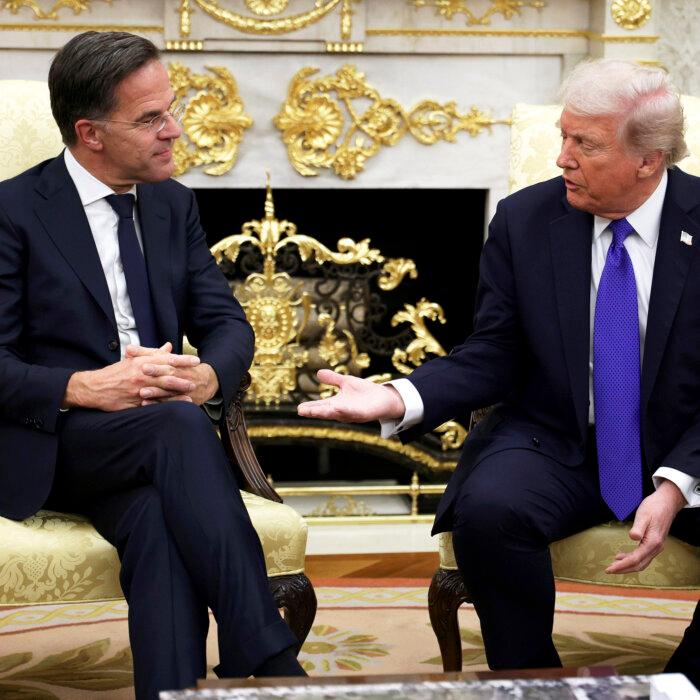

Trump in a Truth Social post called on ranchers to prioritize affordability for consumers.
“The Cattle Ranchers, who I love, don’t understand that the only reason they are doing so well, for the first time in decades, is because I put Tariffs on cattle coming into the United States, including a 50% Tariff on Brazil,” Trump wrote. “They also have to get their prices down, because the consumer is a very big factor in my thinking, also!”
The announcements follow Trump’s suggestion to import beef from Argentina to lower prices, a policy idea that the agricultural sector has protested. The moves come amid recent losses for U.S. soybean producers to Argentine competitors in sales to China.
The departments of Agriculture, Interior, Health and Human Services, and the Small Business Administration published a collaborative plan to revitalize the U.S. cattle herd, including considering expanded grazing opportunities on federal lands and increasing payments to ranchers via livestock programs.
Moreover, the Department of Agriculture (USDA) will enforce the accuracy of the voluntary “Product of USA” labeling beginning Jan. 1, 2026, so that domestic producers capture premium pricing for U.S.-raised beef.
Eight lawmakers, led by Rep. Julie Fedorchak (R-N.D.), sent a letter to Trump seeking details on the Argentine import proposal.
“[We] urge your administration to ensure that any future decisions are made with full transparency, sound science, and a firm commitment to the U.S. cattle industry,” the letter reads.
Ranching experts and economists have said that rapid increases in cattle numbers are not possible, in part due to the amount of time it takes to rear a cow to maturity.
“The economics and the biology of it are really a tough nut to crack,” said David Anderson, agricultural economist at Texas A&M University.
And although Trump wants lower prices for consumers, higher prices are what motivate ranchers to expand their herds.