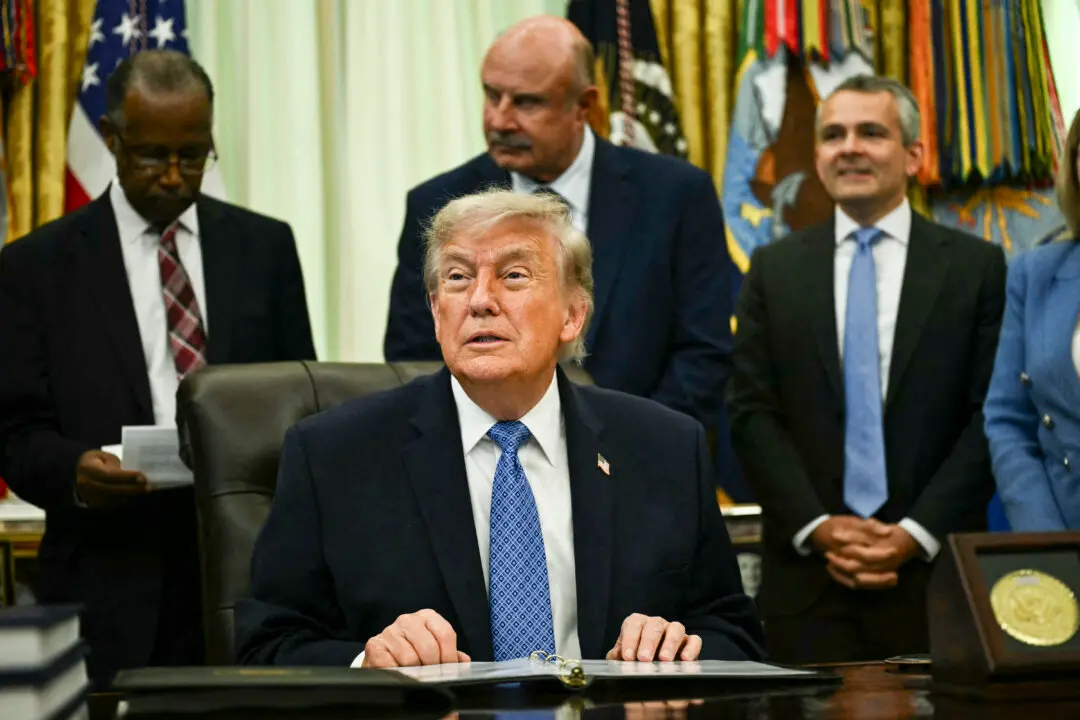
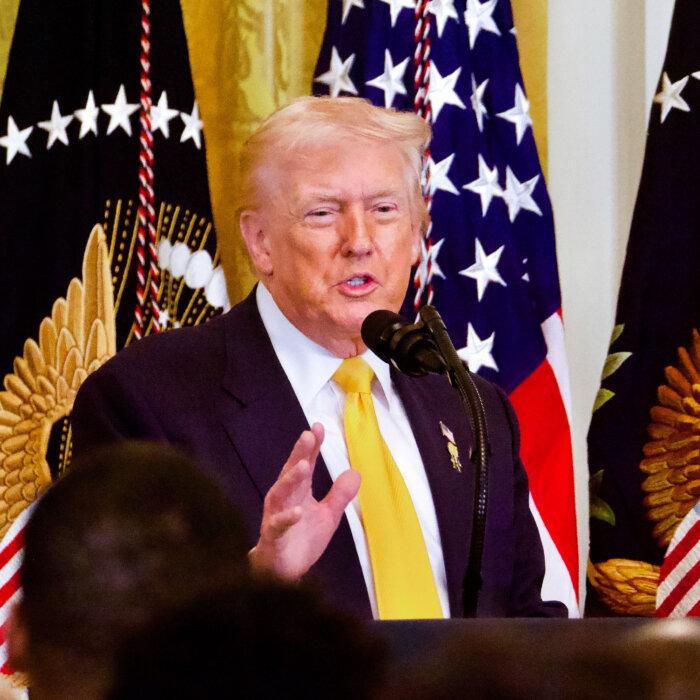
President Donald Trump awarded Medals of Honor to three U.S. Army soldiers in a White House ceremony on March 2, commending their courageous acts during military conflicts.
The recipients were retired Command Sgt. Maj. Terry P. Richardson, Master Sgt. Roderick W. Edmonds, and Staff Sgt. Michael H. Ollis, with Edmonds and Ollis receiving the award posthumously.
Richardson was recognized for his heroic actions during the Vietnam War, which were credited with saving the lives of 85 of his fellow service members.
When his unit came under attack by a North Vietnamese Army battalion on Sept. 14, 1968, Richardson braved intense enemy fire to drag three wounded soldiers back to safety.
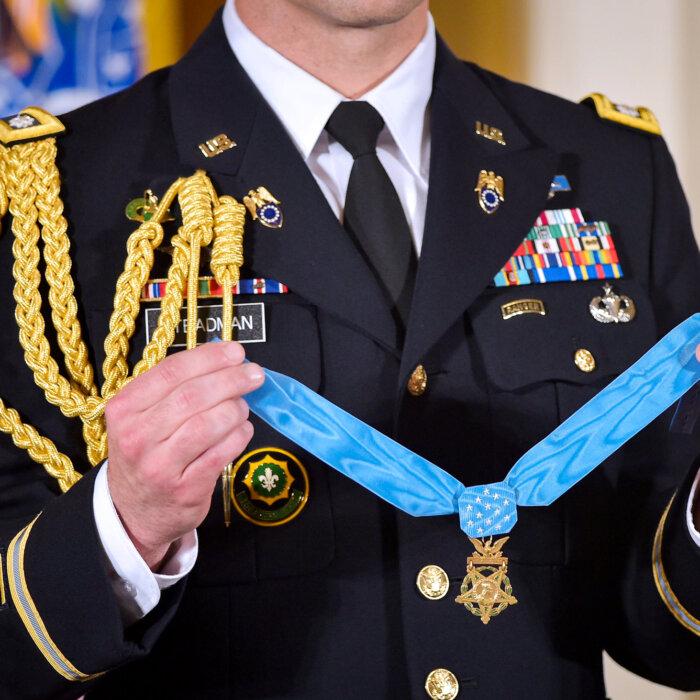
Ollis, who was killed in action in Afghanistan in 2013, was honored posthumously, with his parents accepting the Medal of Honor on his behalf. He was credited with saving a wounded Polish officer.
On Aug. 28, 2013, an enemy attack was launched against the Forward Operating Base in Afghanistan, where Ollis was stationed. The attack involved car bombs, suicide vests, indirect fire, and small-arms fire.
When an insurgent came around a corner and engaged them with small-arms fire, Ollis positioned himself between the insurgent and the wounded Polish officer, and shot the insurgent and incapacitated him before the insurgent’s suicide vest detonated.
“Michael raised his gun and forced himself between the insurgent and the man he just met, shielding him with his own body. He knew what was going to happen. He shielded him with his own body,” Trump said. “You know, bravery is amazing. You never really know who’s brave, who’s not, until they’re really tested.”
Edmonds, who died in 1985 in Knoxville, was honored for his bravery during World War II, with his son accepting the award on his behalf.
Later that day, German officials ordered Edmonds that only Jewish American prisoners report for roll call the following morning. Knowing that segregating more than 200 Jewish prisoners would put them at risk of persecution and possible death, Edmonds ordered all 1,200 American prisoners to stand for roll call.
He told the Nazi commandant, “We are all Jews here,” and cited the Geneva Convention’s protections for all prisoners. The commandant eventually withdrew without pursuing further attempts to segregate the Jewish prisoners from the larger group.
“The WWII hero, at gunpoint, refused German orders to identify Jewish-American soldiers in captivity, saving over 200 lives,” the White House said in a post on X.