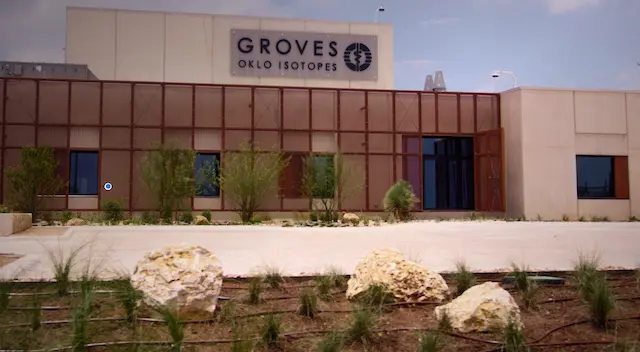
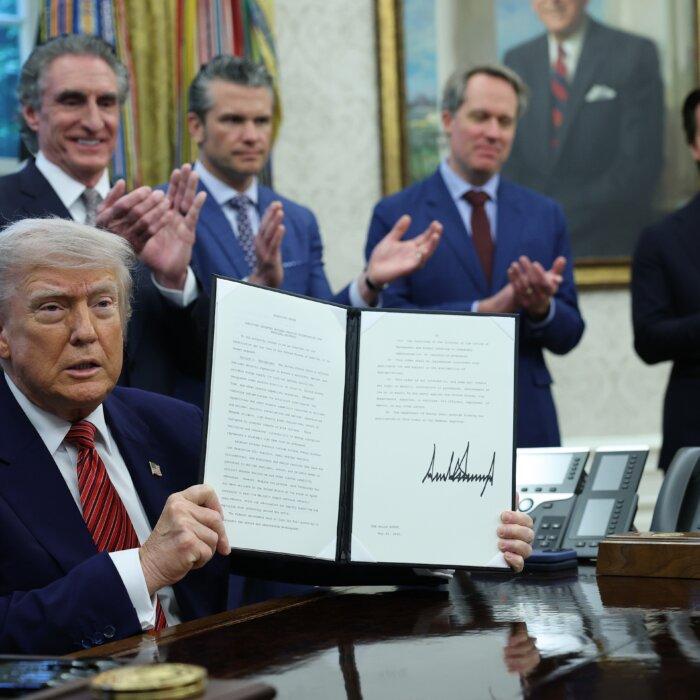
President Donald Trump has tapped Ho K. Nieh to chair the five-member Nuclear Regulatory Commission (NRC), the third leadership change in less than a year at the nation’s nuclear safety agency.
Nieh was among two commissioners appointed in December 2025 to fill seats vacated by Christopher Hanson, who was fired in June after being removed as chair on the president’s first day in office, and Annie Caputo, who resigned in July.
Hanson, a Democrat appointed by President Joe Biden in 2021, and Caputo, a Republican appointed by Trump in 2017, were succeeded by Nieh and Douglas Weaver, both Republicans. Commissioners serve five-year terms. No more than three may be of the same political party.
Republican David Wright had been serving as chair since July 2025. He will remain on the commission.

Southern Nuclear operates eight nuclear units in Georgia and Alabama, including Georgia Power Vogtle 3 and 4 plants, the only new nuclear reactors to be built in the United States in three decades.
“With the support of Executive Order 14300 and the ADVANCE Act, the NRC is designing the future of nuclear safety regulation,” Nieh said, referring to the bipartisan 2024 bill that authorizes billions of dollars for nuclear energy development.
Reps. Frank Pallone (D-N.J.), Kathy Castor (D-Fla.), Marc Veasey (D-Texas), and Rob Menendez (D-N.J.) accused Trump of “politicalizing” the NRC’s independence and transparency by making it “a political arm of the White House, where the rules can change every election.”
The Democrats said the administration is fostering uncertainty with investors and concerns about safety and that the public is only now becoming more receptive to nuclear energy in the wake of the Three Mile Island, Chernobyl, and Fukushima accidents.
They each queried four industry witnesses who testified at the hearing about those concerns and received acknowledgments that the administration’s actions are raising issues within the industry and with investors. There was little pushback from panel Republicans.
The administration’s “attacks on the NRC’s independence undermines the very gold standards in safety that makes our technology the most desirable in the world,” Veasey said.