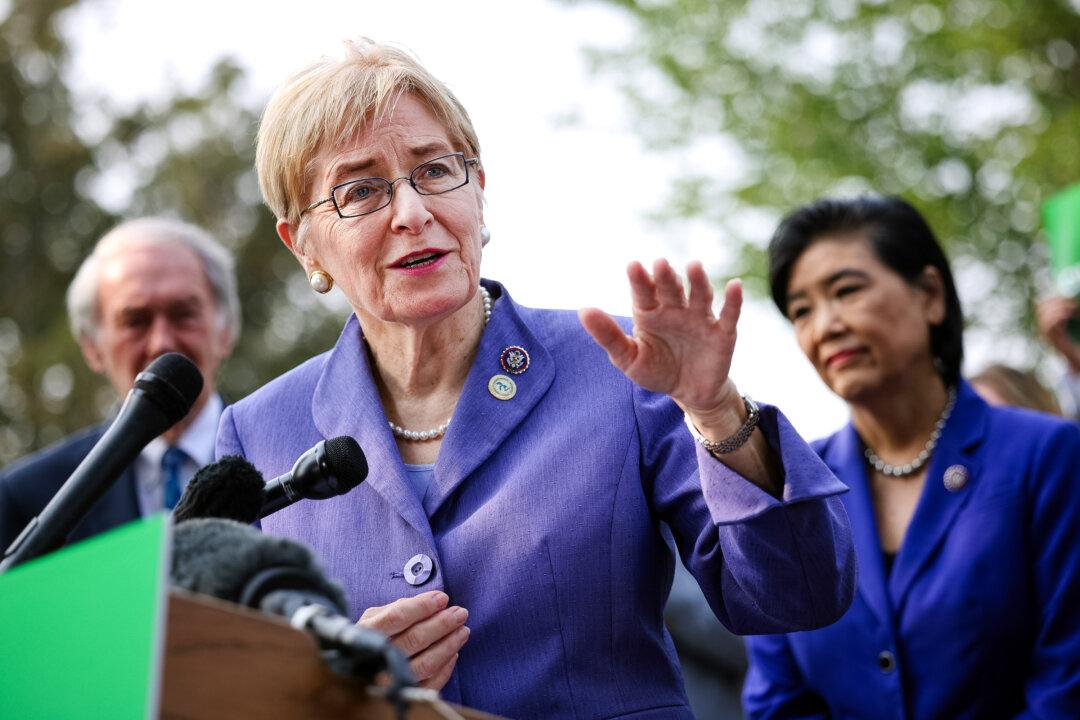
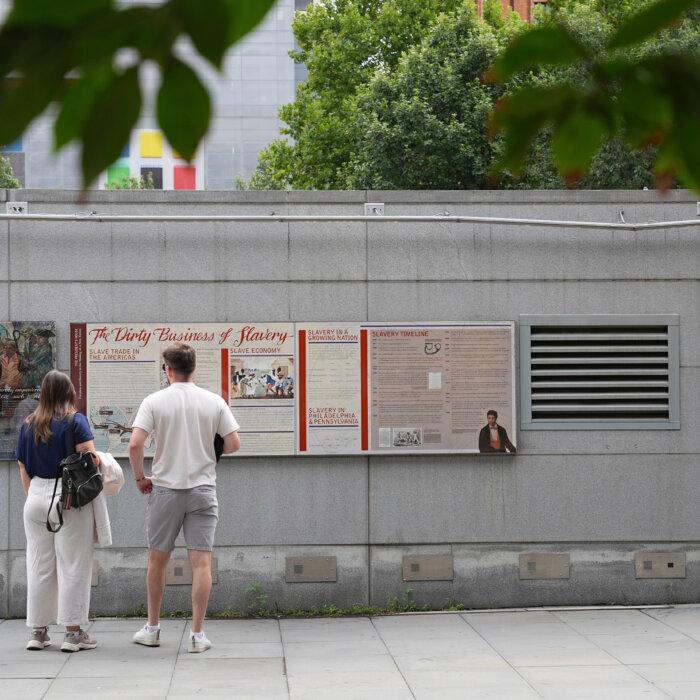
The Trump administration on July 15 put up new information panels on slavery at President George Washington’s Philadelphia home, part of a broader effort to revise displays it says present a distorted view of U.S. history.
The changes are part of a nationwide sweep under a March 2025 executive order that currently directs federal agencies to remove museum and park displays, which the administration says will reverse a “widespread effort to rewrite our Nation’s history.”
Washington and First Lady Martha Washington lived at the President’s House with slaves as the first president guided the nation’s formation. Philadelphia was the temporary U.S. capital at the time and the site where the Declaration of Independence was adopted at Independence Hall on July 4, 1776.
The new President’s House exhibit examines the founding of the nation alongside the realities of slavery, highlighting the people who lived and worked in the presidential household and the broader struggle for liberty, freedom, and equality.
The exhibit also references figures such as Joseph Bunel, a representative of Haitian revolutionary leader Toussaint Louverture; abolitionist Frederick Douglass; Native American dignitaries; and the nine members of the first president’s enslaved household.
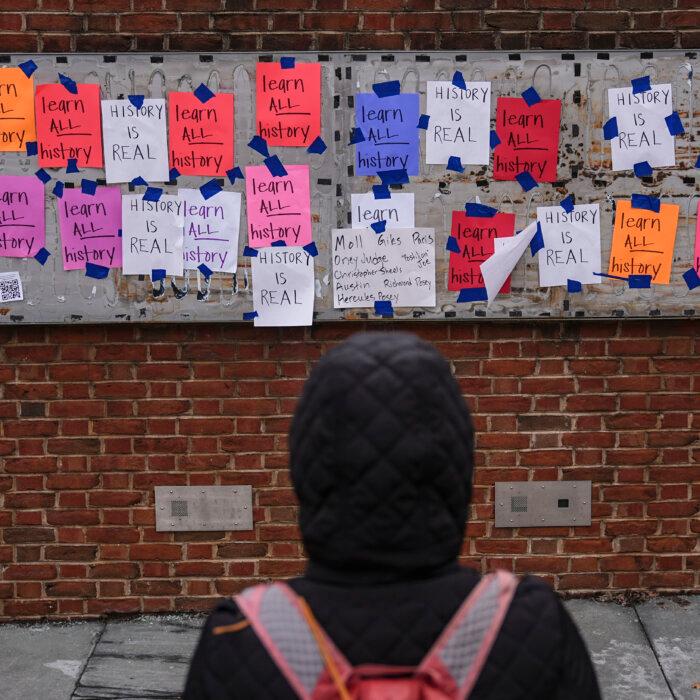
The city of Philadelphia sued that month, and the old exhibit was partially restored under a preliminary injunction issued in February. The Third U.S. Circuit Court of Appeals vacated that injunction on June 18, and the newly written panels were installed on July 15.
The unanimous ruling by the three-judge panel said in June that a lower court judge wrongly interpreted Philadelphia’s contract claims, noting that the city merely having standing to sue did not mean that its arguments had merit. The panel also praised the plans for the replacement installation, writing that they were “full of historical context.”
In its ruling, the appeals panel said the maintenance portion of the contract between the city and the federal government could not be interpreted to mean that the site would remain as it was when it was completed.
The federal government on July 15 removed some headlines in the earlier panels, such as “The Dirty Business of Slavery.” The new panels instead read, “Celebrating Independence Throughout the Years.”
Philadelphia Mayor Cherelle Parker said, “Overnight, under the cover of darkness, the federal government removed panels at the President’s House that told a thorough history of Philadelphia.”
The Department of the Interior said the new panels “acknowledge the evils of slavery.”
“These new panels are full of historical context and highlight the momentous events that took place in the President’s House and the other sites at Independence National Historical Park,” it said.
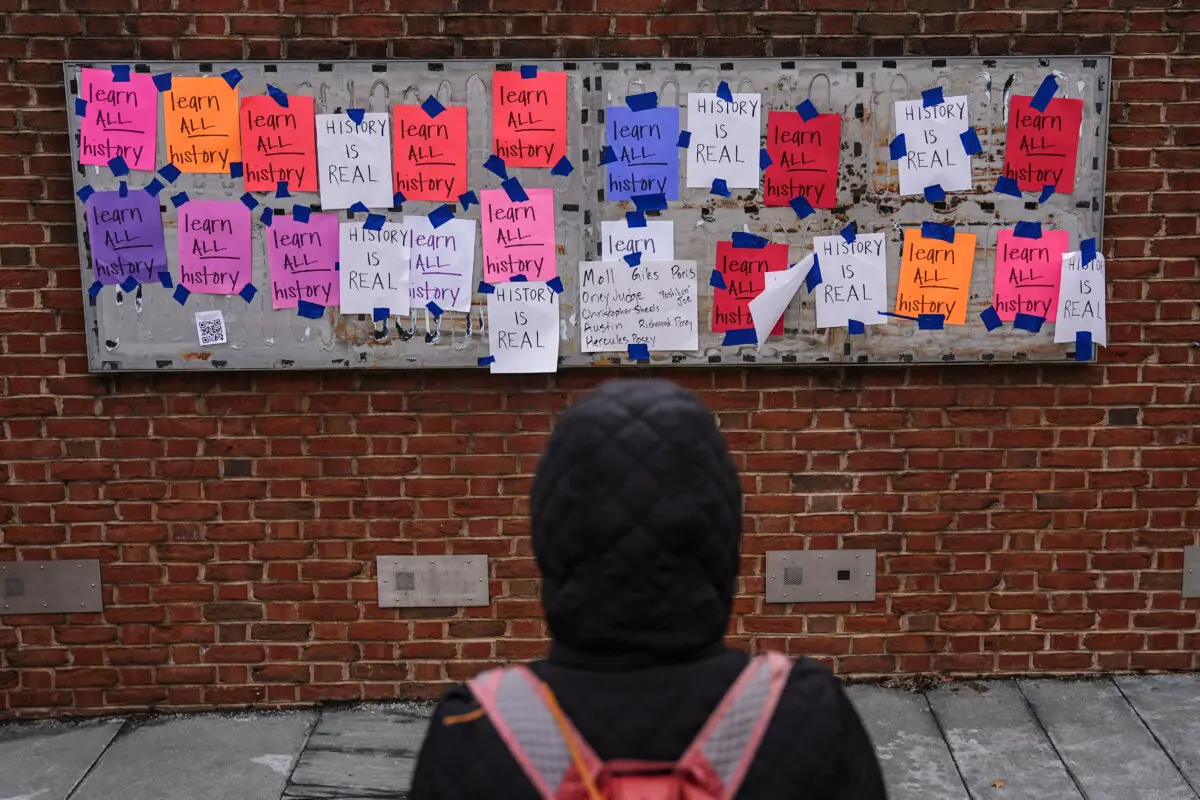
Trump’s March 2025 executive order states that federal museums and parks had adopted a “distorted narrative driven by ideology rather than truth.”
It states that there is a “revisionist movement” that “seeks to undermine the remarkable achievements of the United States by casting its founding principles and historical milestones in a negative light.”
At least 51 exhibits from 37 sites have been removed or discarded from parks nationwide to comply with Interior Secretary Doug Burgum’s implementation of the executive order.
Democracy Forward, a progressive legal advocacy group that has brought numerous lawsuits challenging Trump administration policies, is representing the organizations contesting the removal of the park exhibits.
Democracy Forward characterizes the Trump administration’s actions as the “censorship and erasure of American history and science at national parks.”
One of the groups, the National Parks Conservation Association, listed some of the sites where signs were removed in February.
These included climate action signs at Cadillac Mountain and Great Meadow in Acadia National Park and at Fort Sumter, the site of the start of the Civil War.
On exhibits related to climate action, the executive order does not name a particular approach, but states that signs and displays relating to natural features should focus on the landscape’s “beauty, abundance, and grandeur.”
Signs providing information about women and race from the Muir Woods National Monument have also been removed.