The Department of Agriculture (USDA) will fund food stamps for November at reduced levels, Trump administration officials said on Nov. 3.
That means that many Supplemental Nutrition Assistance Program (SNAP) recipients will receive only half as much in benefits as they usually do, the lawyers said.
The government met its deadline of noon on Nov. 3 to give an update on funding the federal food stamp program for November.
Judge Jack McConnell of the U.S. District Court for the District of Rhode Island previously ruled that the USDA had to at least partially fund the November benefits by using contingency money allocated in federal law “as may become necessary to carry out program operations.”
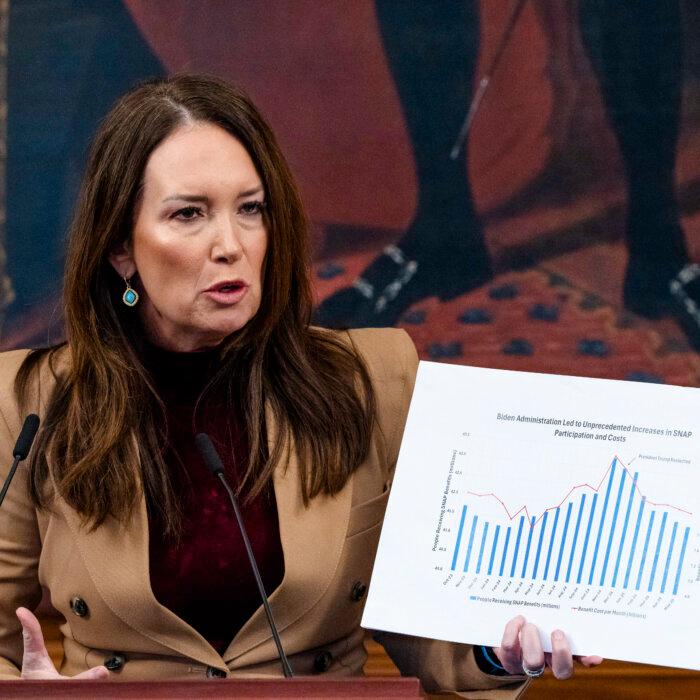
Congress allocated $6 billion in contingency funds, but nearly $1 billion has already been spent, according to administration officials. Officials had resisted using the contingency money, saying that it was unavailable because there was no more underlying funding for SNAP in place because of the government shutdown that started on Oct. 1. Congress has not yet reached a deal to reopen the government or provide new funding for SNAP.
Trump wrote that SNAP benefits would “unfortunately be delayed while states get the money out.”
SNAP payments were suspended on Nov. 1 as that unfolded, although some states, including Vermont and Virginia, have been using state funds to pay SNAP recipients.
It costs about $9 billion to fund SNAP each month. SNAP pays an average of $187.20 per month to electronic cards for about 42 million people, according to the USDA.
McConnell suggested on Nov. 1 that officials should “find the additional funds necessary (beyond the contingency funds) to fully fund the November SNAP payments.” They could draw from a tranche of more than $23 billion that came from tariffs, he said.
He said that if officials choose to fully fund November payments, they must do so by the end of Nov. 3; however, if officials decide to not fully fund the November benefits, they are to use the total remaining contingency funds to make a partial payment by Nov. 5.
Officials said on Nov. 3 that they recently paid $450 million in contingency funds to states for SNAP administrative expenses and $300 million for unrelated grants. They said they will pay another $450 million for SNAP operations and an additional $150 million for Nutrition Assistance Program grants.
People whose SNAP applications are verified in November will not receive any money, according to the document.
The USDA is preparing to notify states of the update on Nov. 3, which will prompt states to calculate how much in benefits each household will receive, Penn said.
States will likely have difficulty distributing the reduced SNAP benefits, he said.
“For at least some States, USDA’s understanding is that the system changes States must implement to provide the reduced benefit amounts will take anywhere from a few weeks to up to several months,” he wrote in the declaration.
Officials said they opted to not use tariff revenue or additional money because those funds are required for child nutrition efforts and other programs.
Skye Perryman, president of Democracy Forward, which is representing plaintiffs in the case that prompted McConnell’s ruling, said in a statement, “We are reviewing the administration’s submission to the court and considering all legal options to secure payment of full funds.”