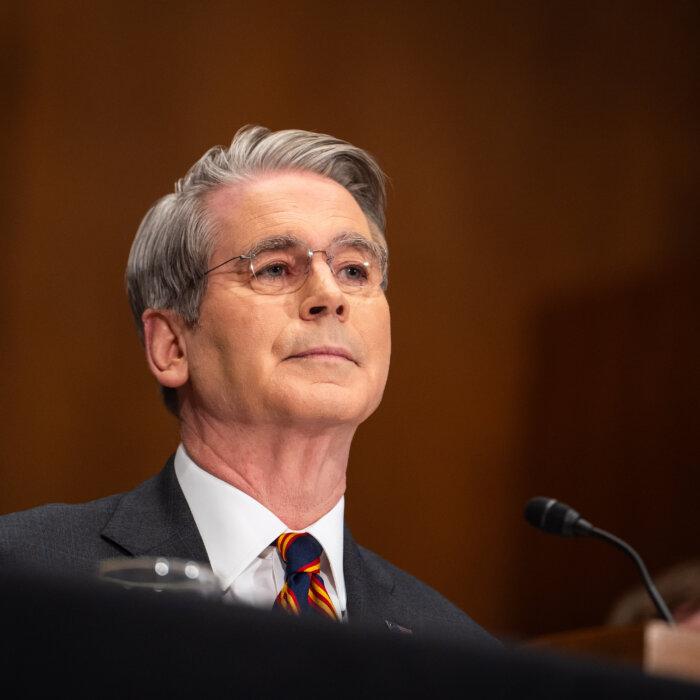
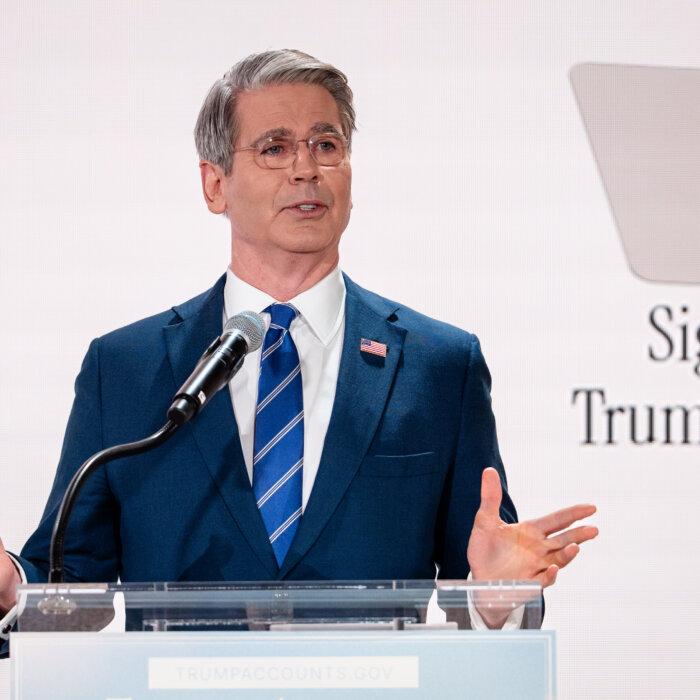
Treasury Secretary Scott Bessent warned this week that a Supreme Court ruling against the administration’s widespread use of tariffs could cause a “big loss” to the United States.
The Trump administration has cited a law at issue in the Supreme Court case, the International Emergency Economic Powers Act (IEEPA), to impose tariffs on national security grounds, such as dealing with drug-related crises.
“President [Donald] Trump has used his IEEPA authority consistently throughout the year to negotiate better deals for the American people,” Bessent told Fox News’ “Sunday Morning Futures” on Feb. 8, referring to the 1977 law.
He added that the law provides the federal government with “emergency authority” in trade matters.
“What was an emergency if it wasn’t the fentanyl crisis?” he asked. “We are seeing Canada, Mexico, [and] China come to the table to stop this scourge of the American people.”
If the court removes the administration’s authority to impose tariffs to respond to crises, “it would be a big loss” to the United States, Bessent said.
The Supreme Court is considering whether the government misapplied the IEPPA in imposing tariffs on nearly every country in the world, starting last year. Oral arguments were heard in the case in November 2025. Trump and Bessent have frequently stated that the duties are necessary for U.S. national security and to generate revenue for the government.
A number of companies, including retail giant Costco, sued the Trump administration, arguing that the law was imposed in an illegal manner. Several lower courts have since ruled against the administration, which appealed those decisions to the U.S. high court.
Trump has said that the import duties are necessary to bring back wealth that was taken from the United States, and that they will narrow America’s decades-old trade deficit and bring manufacturing back to the country.
This past week, the United States and India announced a framework agreement on trade. Tariffs on goods from India would be lowered to 18 percent, from 25 percent, after Indian Prime Minister Narendra Modi agreed to stop buying Russian oil, Trump had said.
The Supreme Court is expected to rule on the tariff case sometime in 2026, although it’s not clear exactly when it will do so. The high court does not announce in advance when it will issue rulings.