Flight delays throughout the country could increase as more and more controllers call in sick over their first full missed paycheck due to the ongoing government shutdown, officials warned on Tuesday.
“This job is stressful enough,” Daniels said Tuesday at La Guardia International Airport in New York. “We go to work day in and day out and make thousands of decisions. We do it five days a week. Most of us actually do it six and five is hard enough, and we do it in 10 hours a day. Now, you add in the fact that we had a partial paycheck already and we missed a full paycheck.”
The FAA limits landings and takeoffs amid shortages, causing disruptions that last from 30 minutes to more than two hours long. Staffing shortages can even result in temporary ground stops.
Aviation data shows no sharp spike in overall delays, despite the government shutdown beginning Oct. 1.
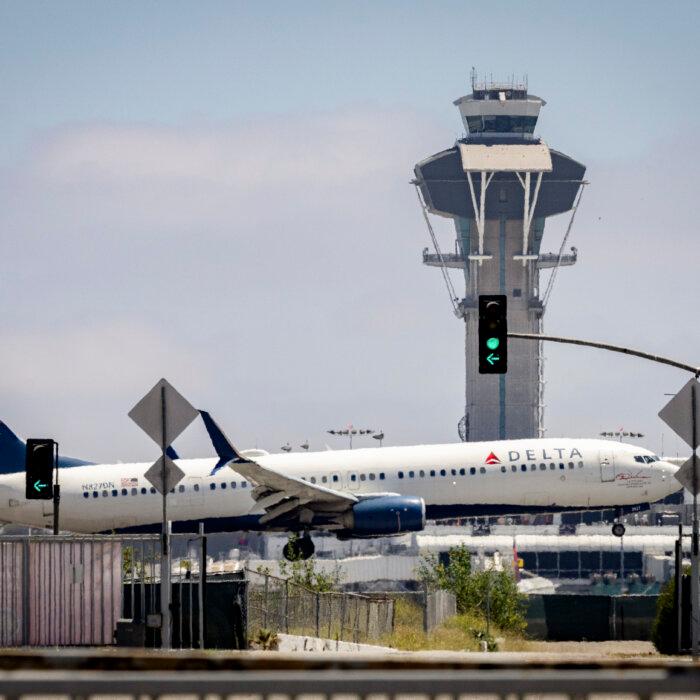
Analytics firm Cirium determined that about 80 percent of flights at 14 major U.S. airports were on time this month, in line with historical patterns where approximately 20 percent of flights face delays longer than 15 minutes for various reasons.
Although a two-hour staffing-related ground stop at Los Angeles International Airport (LAX) on Sunday caused numerous delays, Cirium data shows 72 percent of LAX flights departed on schedule that day.
Controllers held demonstrations at 20 airports nationwide, distributing leaflets calling for an end to the shutdown.
“The pressure is real,” Segretto said. “We have people trying to keep these airplanes safe. We have trainees—that are trying to learn a new job that is very fast-paced, very stressful, very complex—now having to worry about how they’re going to pay bills.”
“The shutdown is adding stress to air traffic controllers and their families,” he wrote.
Duffy also said that the shutdown, now in its 28th day, has led to students dropping out of the air traffic controller academy in Oklahoma City, adding that it will therefore be harder to close the staffing gap at airports. He said younger controllers might choose a different career path because they can’t go without pay.
“This shutdown is making it harder for me to accomplish those goals,” Duffy said.