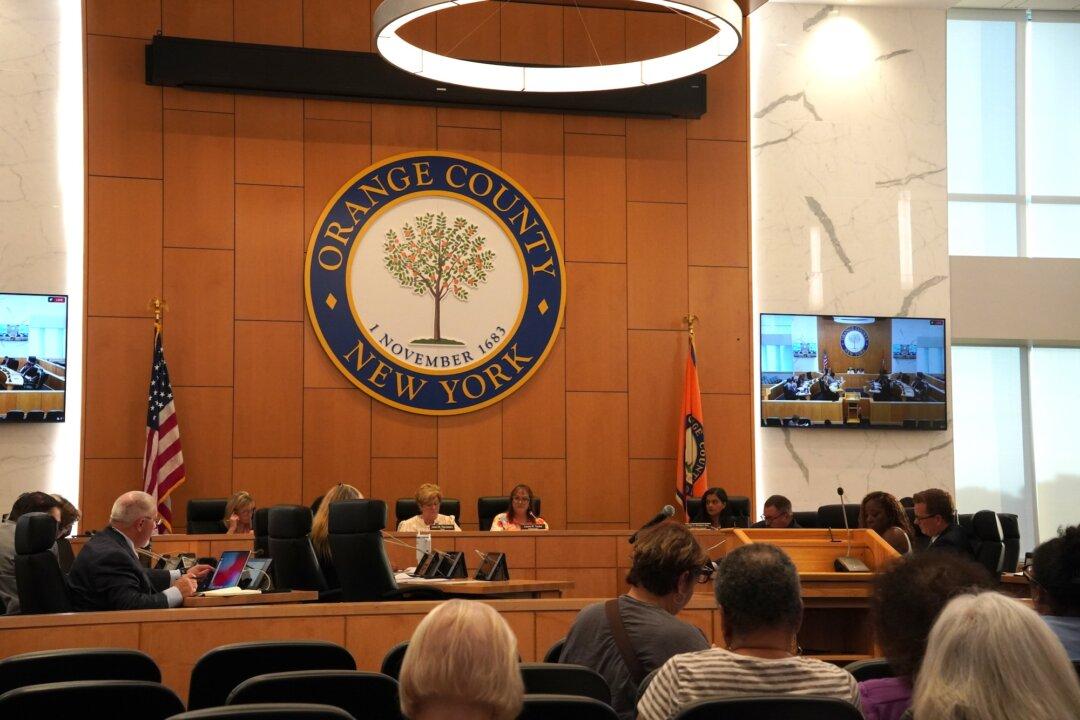
ORANGE COUNTY, N.Y.—The Wallkill Town Board voted on July 24 to begin the process of applying for grants to pay for upgrades to the Wallkill Wastewater Treatment Plant (WWTP). The town plans to devote $7.9 million to upgrade the essential facility.
A 2025 Engineering Report by Dutch engineering and consultant company Arcadis identified improvements that could be made to the WWTP. Improvements would replace equipment currently in use that is at risk of operational failure and could have high maintenance costs in the future. The replacements would be newer and more energy efficient machines that are more reliable and have lower operational downtime.
The funds for the project will come out of the Town of Wallkill Water and Sewer Fund Balance. The town is also applying for financial assistance under the 2025 New York State Environmental Facilities Corporation Water Infrastructure Improvement Act. The law allows for grants for municipalities to undertake important wastewater and drinking water infrastructure projects.
Wallkill Commissioner of Public Works John Dauley told The Epoch Times that the grant the town is applying for would reimburse 25 percent of the project costs, or about $2 million.
Dauley said that the council needed to affirm the plan before the town could apply for state grants.
He predicted that if the plan goes ahead, there will be no disruption to water supplies or sewage services as the upgrades are made.


Asked if there are any current or possible future problems with the WWTP, Dauley said, “These upgrades that we’re going after are just an opportunity for us to replace things before they get to the point of being in emergency repair.”
Town of Wallkill Supervisor George Serrano told The Epoch Times: “These upgrades are essential not only to improve the overall efficiency of the system but also to address areas of aging infrastructure that must be evaluated and, in some cases, replaced.
“Maintaining and modernizing our wastewater treatment capabilities is critical to protecting public health, supporting future development, and ensuring compliance with environmental standards.
“By proactively investing in these improvements now, we aim to avoid more costly repairs in the future while enhancing the reliability of our services.”